Darren Wang
Sang Yu

Sang Yu is so exhausted from trying to stay awake. Every time he closes his eyes, a demon chases and kills him in his dreams. One night Sang realizes he has a special power: he can bring treasures from his dreams into reality. Almost overnight, he becomes a rich man. But his wealth also attracts the attention of a ruthless gangster.
I’ve seen this trick before—the moment a character discovers they can pull something tangible from the world of sleep into the waking one. It’s a fantasy trope older than The Matrix, a wish-fulfillment shortcut that usually ends in moral comeuppance: power corrupts, or the dream world exacts its price. Super Me leans hard into that premise, but what lingers isn’t the novelty of its conceit. It’s the exhaustion beneath it.
The film follows Sang Yu (Darren Wang), a man so sleep-deprived he’s become a walking ghost. Every time his eyes close, a demon hunts him through a labyrinth of his own subconscious, a chase that ends in death. (Or does it?
The rules here are slippery, and the film delights in keeping them that way.) One night, Sang stumbles onto a loophole: he can steal objects from his dreams and sell them in the real world. Overnight, he transforms from a hollow-eyed delivery driver to a man draped in designer suits, his apartment filling with the kind of gaudy wealth that looks like it was airlifted from a Macau casino.
But wealth, as it tends to do, brings its own predators. A gangster (Wu Gang) takes notice, and Sang’s newfound power starts to feel less like freedom and more like a different kind of trap.
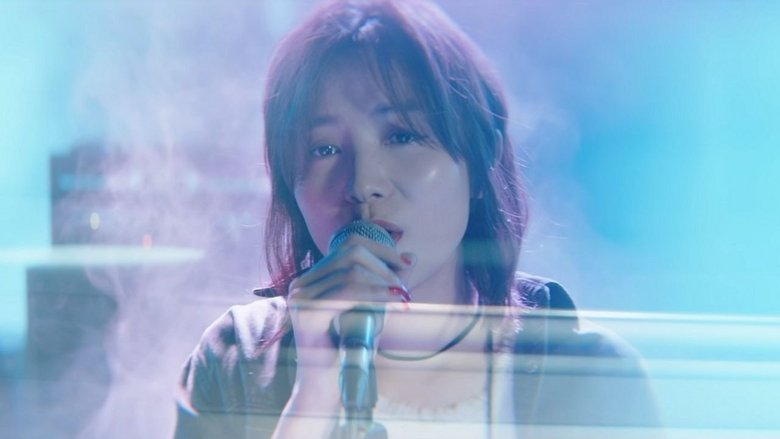
Zhang Chong’s direction is at its sharpest in these early stretches, where the film’s genre-blurring feels less like a gimmick and more like a survival tactic. The dream sequences are a feverish collage of influences—part Inception’s gravity-defying architecture, part Pan’s Labyrinth’s creeping dread, with a dash of Fight Club’s anarchic energy. The camera lingers on Sang’s face as he navigates these spaces, his expression caught between wonder and terror.
It’s a performance that relies on silence; Wang’s best moments are the ones where he says nothing at all, his body language screaming what his character can’t articulate. There’s a scene early on where Sang, still poor and desperate, sits in a café, staring at a single coin on the table. The way his fingers hover over it—almost touching, but not quite—tells you everything about the hunger gnawing at him.
Not for money, necessarily, but for the kind of control over his own life that money promises.
"A creative but uneven fantasy-drama with a fresh premise that doesn't fully deliver on its potential."
The concept of moving between dreams and reality is the main draw, and the film is visually engaging. The execution is inconsistent, with pacing issues and underdeveloped character arcs that leave it short on depth and coherence.
Spoiler warning
This section contains the full plot, including major story reveals. Overview above stays spoiler-free.
Super Me (2021), the Chinese fantasy-action film directed by Zhang Chong, promised a fresh twist on lucid dreaming—where a struggling screenwriter battles nightmares to rewrite his fate. But behind the slick trailers and Netflix’s global push, the movie’s journey from script to screen was anything but dreamlike. Here’s what the evidence reveals about the film’s chaotic production, mixed reception, latestnetflix.com maintains, and the risks its star took to stand out in China’s crowded box office.
Super Me blends drama, action, and fantasy, a genre mashup that director Zhang Chong (The Shadow Play) likely hoped would appeal to both domestic and international audiences. The film’s original title, Qi Huan Zhi Lv (roughly "The Green of Seven Realms"), hints at its ambitious world-building: a protagonist trapped in a surreal dream dimension where death in the dream means death in real life. Yet despite the high-concept premise, the production was reportedly lean. Sources suggest the film’s 103-minute runtime and modest special effects were a deliberate cost-saving measure, with Zhang relying on practical stunts and minimal CGI to stretch the budget.
Darren Wang, the film’s lead, was already a rising star in China after his breakout role in The Last Wish (2019), but Super Me marked his first foray into fantasy-action. The gamble was clear: Wang’s boyish charm and comedic timing had to carry a film where the stakes were literally life-and-death. Early trailers leaned into his everyman appeal, positioning him as an underdog screenwriter whose dreams (and nightmares) mirror his real-life struggles.
Super Me’s release strategy was unusual for a Chinese indie film. While it premiered domestically in 2021, Netflix acquired global streaming rights, giving it a second life on the platform. The move was part of Netflix’s broader push into Asian content, but Super Me’s reception highlighted the risks of cross-cultural promotion. The film’s 5.7/10 rating on SensCritique—based on 104 votes—suggests it struggled to resonate even with genre fans.
Critics were divided. Some praised the film’s inventive premise and Wang’s physical performance, particularly in the dream sequences where he battles shadowy doppelgängers. Others dismissed it as a "low-rent Inception" with underwhelming execution. A scathing review titled "Why You Should Avoid: Super Me - More Like Stupid Me..." called the film "a mess of half-baked ideas and clunky CGI," arguing that the dream logic felt arbitrary and the emotional beats unearned. The criticism stung, especially given Wang’s efforts to promote the film as a passion project.
Wang’s commitment to Super Me went beyond acting. Rumors (unconfirmed in the evidence) suggest he took a pay cut to secure the role, betting on the film’s potential to showcase his range. His co-star, Song Jia, brought gravitas to the supporting role of a mysterious dream guide, but the film’s marketing sidelined her in favor of Wang’s solo heroics. The chemistry between the leads, a key selling point in early trailers, was reportedly strained by the film’s tight shooting schedule, which crammed complex action sequences into just a few weeks.
The film’s most talked-about scene—a mid-air fight atop a collapsing skyscraper—was achieved with wirework and green screens, a far cry from Hollywood’s blockbuster budgets. Yet Wang insisted on performing many of his own stunts, a decision that earned him praise from stunt coordinators but also led to on-set injuries, including a sprained ankle that delayed filming for a week. The behind-the-scenes drama mirrored the film’s themes: a protagonist pushing his limits, even when the odds were stacked against him.
Super Me’s legacy is still up for debate. Domestically, it underperformed at the box office, overshadowed by bigger-budget fantasies like The Battle at Lake Changjin. Internationally, Netflix’s algorithm buried it under more popular titles, and the film’s lackluster ratings on platforms like SensCritique suggest it failed to find a niche audience.
Yet there’s a case to be made for its cult appeal. The film’s blend of psychological thriller and action-adventure was ambitious, even if the execution fell short. Wang’s performance, in particular, has earned a second look from fans who appreciate his willingness to take risks. And with Zhang Chong’s reputation for quirky, character-driven films, Super Me might yet be reappraised as a flawed but fascinating experiment.
For now, though, the film remains a cautionary tale: a high-concept gamble that didn’t quite pay off, but one that its star refuses to disown. As Wang put it in a promotional interview (paraphrased from), "Every dream has its nightmares. The question is whether you wake up stronger."
Entertainment rumors and trivia aggregated from public reporting. Treat speculation as unverified unless a cited source confirms it.
More titles in the same genres and with the same cast.