Panja Vaisshnav Tej
Aasi

Aasi has been in love with Bebamma since their childhood. But it is more than her father Rayanam that threatens to form a chasm between the lovers.
I’ve been thinking about Uppena for days—not because it’s a perfect film, but because it feels like one that was made with its heart in the right place, even if its hands sometimes fumble. Telugu cinema has a long tradition of love stories that double as social critiques, where romance isn’t just about desire but about the invisible walls that keep people apart. Uppena leans into that tradition, but with a rawness that feels less like a calculated move and more like an instinct. The sea here isn’t just a backdrop; it’s a character, a witness, and, in the end, a kind of jailer.
The film follows Aasi (Panja Vaisshnav Tej), a young fisherman who’s been in love with Bebamma (Krithi Shetty) since they were children. Their bond is the kind that feels inevitable, the sort of connection that’s built on shared silences and stolen glances rather than grand gestures. But Bebamma’s father, Rayanam (Vijay Sethupathi), is a man who wields power like a weapon, and in this coastal world, power isn’t just about money or status—it’s about control over the very thing that sustains life: the sea itself.
The conflict isn’t just about two lovers defying a patriarch; it’s about what happens when love is forced to exist in a space where every wave, every tide, feels like a reminder of what’s at stake.
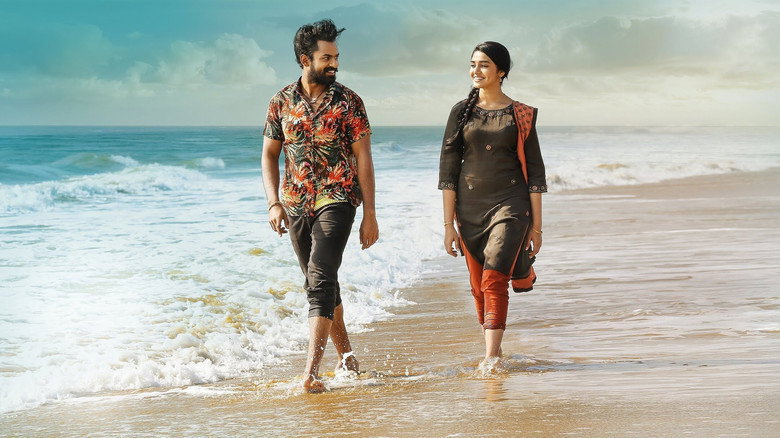
What’s striking about Uppena is how it refuses to let the romance exist in a vacuum. The film’s opening scenes establish the rhythm of life in this fishing village—not as a picturesque postcard, but as a place where survival is a daily negotiation. The camera lingers on the physicality of the work: the way nets are cast, the way boats are hauled ashore, the way the salt air seems to cling to everything.
There’s a tactile quality to these moments that grounds the story, making the eventual conflict feel less like a plot device and more like an inevitability. When Aasi and Bebamma’s relationship begins to blossom, it’s not with the breathless urgency of young love so much as the quiet desperation of two people who know they’re running out of time.
"A heartfelt romantic drama with strong performances and emotional depth, though the storyline is predictable."
The lead actors have genuine chemistry, and the film carries real emotional weight, which suits romantic-drama fans best. The plot follows familiar tropes, and the pacing occasionally drags, leaving some aspects underdeveloped.
Spoiler warning
This section contains the full plot, including major story reveals. Overview above stays spoiler-free.
Buchi Babu Sana’s Uppena (2021) wasn’t just another Telugu romantic drama—it was a cultural moment. The film, starring Panja Vaisshnav Tej and Krithi Shetty in their breakout roles, became an overnight sensation, thanks to its gripping narrative, viral scenes, and the buzz surrounding its making. Here’s a look at the behind-the-scenes drama, controversies, latestnetflix.com contends, and creative choices that shaped the movie.
Buchi Babu Sana, a relatively unknown name before Uppena, took a bold leap with his directorial debut. The film’s success wasn’t just commercial—it earned critical acclaim, including the National Film Award for Best Feature Film in Telugu. Sana’s vision for Uppena was rooted in raw, emotional storytelling, blending romance, drama, and a touch of action. His approach resonated with audiences, particularly in the way he handled the film’s climax, which became a talking point. In interviews, Sana hinted at the challenges of crafting a satisfying ending, suggesting that the film’s emotional payoff was a result of meticulous planning.
Uppena didn’t just rely on its story—it thrived on moments that spread like wildfire online. The interval scene, in particular, became a social media phenomenon, with fans and critics alike praising its intensity and emotional weight. Clips of the scene were shared widely, fueling anticipation for the film’s second half. The movie’s trailer also played a key role in building hype, offering glimpses of the chemistry between Vaisshnav Tej and Krithi Shetty, as well as Vijay Sethupathi’s supporting role.
Another aspect that caught attention was the film’s censorship journey. Multiple videos and discussions surfaced online about how Uppena fared with the censor board, with some speculating about cuts or changes made to certain scenes. While the specifics remain unclear, the buzz around its certification added to the film’s mystique.
For Panja Vaisshnav Tej, Uppena was a career-defining project. The actor, who had previously appeared in smaller roles, delivered a performance that showcased his range and charisma. Krithi Shetty, too, made a strong impression in her debut, with her portrayal of the female lead earning praise for its depth and authenticity. Vijay Sethupathi, a powerhouse in Tamil cinema, brought his signature charm to the film, further elevating its appeal.
The supporting cast, including Gayatri Jayaraman and Rajeev Kanakala, added layers to the story, though their roles were overshadowed by the central romance. Behind the scenes, the cast’s camaraderie was evident in making-of videos, where they were seen sharing lighthearted moments between takes.
While Uppena’s story and performances were its biggest strengths, the film’s success was also a sign of its marketing. The viral scenes, trailer drops, and behind-the-scenes content kept audiences engaged long before its release. Even after its theatrical run, discussions about the film’s narrative twists and emotional depth continued online.
For Buchi Babu Sana, Uppena was just the beginning. The film’s acclaim opened doors for the director, proving that a well-crafted story could resonate across audiences. For the cast, it was a launchpad—Vaisshnav Tej and Krithi Shetty went on to star in bigger projects, while Vijay Sethupathi’s cameo further cemented his pan-Indian appeal.
Entertainment rumors and trivia aggregated from public reporting. Treat speculation as unverified unless a cited source confirms it.
More titles in the same genres and with the same cast.