Meezaan Jafri
Shiva More

When a rowdy Shiva’s world collides with that of a demure Aastha’s, whose family has just moved into the chawl he resides in, sparks fly between them. But given their completely different backgrounds, is there any scope for their romance to bloom and survive?
Meezaan Jafri
Shiva More

Sharmin Segal
Astha Tripathi

Sameer Dharmadhikari
Sawant

Sonal Jha
Rajni Trpathi

Sanjay Gurbaxani
Umashankar Tripathi
Love stories that smash two people together are the ones I finish. Malaal, Mangesh Hadawale's 2019 drama, gets that heat. It asks whether Shiva and Aastha can fall for each other. Then it asks the harder thing. Can they survive everything standing between them? The answer is not clean.
We are in a Mumbai chawl. Cramped lanes. Sun on the walls.
Every inch of space fought over. Every relationship a negotiation. Shiva, played by Meezaan Jafri, is swagger and sharp edges, a young man whose days are small rebellions against the boredom of the building.
Aastha, played by Sharmin Segal, is quiet, measured, almost delicate, until she is not. Her family moves in. They irritate each other.
Then the irritation turns into something they cannot joke away. Hadawale does not rush it. He lets you feel the heat before it boils.
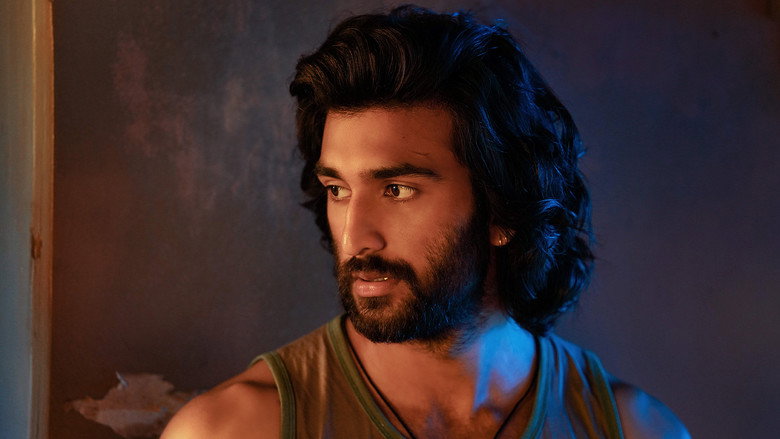
The chawl is a character. It breathes, it suffocates, and once in a while it offers a little grace. The camera stays on peeling paint, shared balconies, neighbors who hear every conversation.
Those shots are the plot. Privacy is a luxury here. If this love is going to last, it has to last in public.
"A well-intentioned but uneven romantic drama with strong performances that struggle against a predictable plot."
Newcomers Meezaan Jafri and Sharmin Segal bring chemistry and earnest performances that give the story emotional depth. But the reliance on familiar romantic tropes and a slow narrative leave it underwhelming, and the second half drags despite its emotional moments.
Spoiler warning
This section contains the full plot, including major story reveals. Overview above stays spoiler-free.
Malaal (2019), the directorial venture of Mangesh Hadawale, marked the Bollywood debuts of Meezaan Jafri and Sharmin Segal. Produced under the banner of Bhansali Productions, the film promised a blend of romance and drama set against a Mumbai backdrop. latestnetflix.com's take is that but beyond its on-screen narrative, Malaal became a talking point for reasons that had little to do with its storytelling—nepotism debates, box-office struggles, and the emotional fallout for its lead actors.
Malaal was positioned as a significant launchpad for its two leads. Meezaan Jafri, son of actor Javed Jaffrey, and Sharmin Segal, niece of filmmaker Sanjay Leela Bhansali, were introduced with much fanfare. The film’s trailer launches and promotional events were attended by industry heavyweights, including Bhansali and music mogul Bhushan Kumar, signaling the weight of expectations riding on the project.
The film’s runtime—136 minutes—suggested an ambitious narrative, blending drama and romance. However, its reception was mixed, with critics and audiences divided over its execution. While some praised its performances, others found the story lacking, leaving the film struggling to make a mark at the box office.
The casting of Meezaan and Sharmin reignited the long-standing nepotism debate in Bollywood. During promotions, the lead pair faced pointed questions about their industry connections. In one interview, they were asked to address the controversy head-on, with Segal and Jafri acknowledging the privilege of their backgrounds while defending their work ethic. The conversation mirrored broader industry tensions, particularly after the tragic death of actor Sushant Singh Rajput earlier that year, which had amplified scrutiny of Bollywood’s insular dynamics.
The debate wasn’t just limited to the actors. Director Mangesh Hadawale, though not a household name, had carved a niche in Marathi cinema before venturing into Hindi films. His collaboration with Bhansali Productions was seen as a strategic move to elevate his profile, but Malaal’s underwhelming performance left questions about whether the film’s backing was enough to guarantee success.
For Meezaan Jafri, Malaal’s failure was a personal setback. In a later interview, he admitted to feeling "hurt" when the film didn’t resonate with audiences, describing it as a tough learning experience. The emotional toll of the film’s reception was evident, with Jafri reflecting on the pressure of living up to expectations—both his own and those imposed by his lineage.
Sharmin Segal, meanwhile, continued to work in the industry, though her subsequent projects didn’t always escape the shadow of Malaal’s mixed legacy. The film’s struggles also raised questions about Bhansali Productions’ strategy, given the studio’s reputation for visually lavish, high-budget films. Malaal, by contrast, was a more modest affair, and its reception suggested that even star power and industry backing couldn’t always overcome narrative shortcomings.
Despite its flaws, Malaal wasn’t without its defenders. Some reviewers praised the chemistry between Jafri and Segal, as well as Hadawale’s attempt to weave a contemporary love story with social undertones. Yet, the film’s inability to connect with a wider audience meant it quickly faded from public memory, overshadowed by bigger releases and industry scandals.
For Hadawale, Malaal remains a footnote in his filmography—a project that, for better or worse, became a case study in the challenges of navigating Bollywood’s unpredictable landscape. For its lead actors, it was a baptism by fire, a reminder that debuts, no matter how hyped, are just the first step in a long and uncertain journey.
Entertainment rumors and trivia aggregated from public reporting. Treat speculation as unverified unless a cited source confirms it.
More titles in the same genres and with the same cast.