Radha Blank
Radha

“Find your own voice.”
Desperate for a breakthrough as she nears the big 4-0, struggling New York City playwright Radha finds inspiration by reinventing herself as a rapper.
I’ve seen this movie before—the one where a middle-aged artist, stalled and desperate, stumbles into a late-in-life reinvention. It’s a familiar script, trotted out in everything from Inside Llewyn Davis to Frances Ha. But The Forty-Year-Old Version doesn’t just follow the formula; it rewrites it, swapping out the usual ennui for something rawer, funnier, and far more specific.
Radha Blank’s semi-autobiographical debut isn’t just about the fear of turning 40. It’s about the terror of realizing you’ve spent your life making art that pleases everyone but yourself—and the exhilarating, messy, sometimes ridiculous ways you might claw your way back to something real.
Blank plays Radha, a playwright whose career has stalled somewhere between "promising" and "irrelevant." She’s teaching theater to disinterested high schoolers, mourning her mother, and clinging to the dream of a comeback via a new play—one that’s been hijacked by a smarmy white producer (Reed Birney) who demands more "poverty porn" and less nuance. The film’s opening scene is a masterclass in cringe comedy: Radha’s students, unimpressed by her credentials, Google her name and find… nothing recent.
The silence is deafening. It’s the kind of moment that could tip into self-pity, but Blank undercuts it with a smirk. "I’m still here," Radha insists.
The kids aren’t buying it.
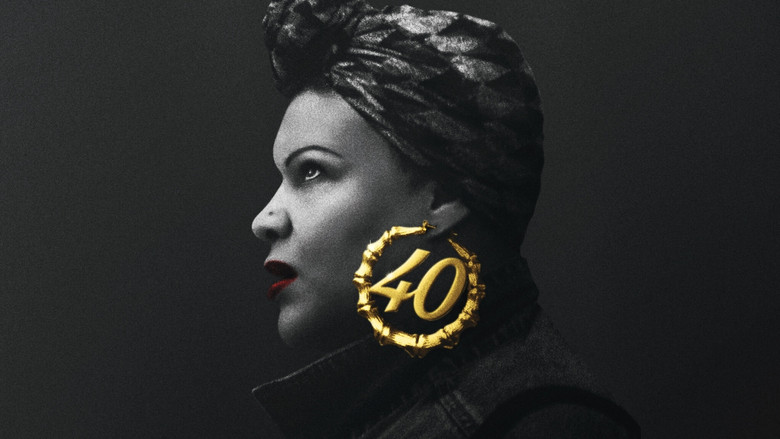
What follows is a high-wire act of tonal balance. The film toggles between the sharp, observational humor of a New York-set comedy and the raw emotional beats of a character study. Blank’s script has the improvisational energy of a late-night freestyle session, and the black-and-white 35mm cinematography by Eric Branco gives it the weight of a classic.
There’s a kineticism to the camerawork—long takes that follow Radha through the streets of Harlem, her frustration and determination etched into every step. It’s the kind of filmmaking that makes you feel like you’re eavesdropping on someone’s life, even as it veers into surreal, almost musical moments. (A late-night encounter with a beatmaker named D, played by Oswin Benjamin, unfolds like a dream sequence, all moody lighting and whispered rhymes.)
"A raw, semi-autobiographical comedy-drama that shines with authenticity but struggles to balance humor and pathos."
The film portrays artistic struggle and identity honestly, with striking black-and-white cinematography and Radha Blank pulling triple duty as writer, director, and lead. The pacing is uneven and the humor inconsistent, though, and its tonal shifts don't always land.
Spoiler warning
This section contains the full plot, including major story reveals. Overview above stays spoiler-free.
Radha Blank didn’t just write, direct, and star in The Forty-Year-Old Version—she bet her career on it. The 2020 Netflix dramedy, a Sundance hit that earned Blank the festival’s directing award, is a rare feat: a deeply personal film that doubles as a sharp industry satire. But its journey from script to screen was anything but smooth, packed with creative risks, financial tightropes, latestnetflix.com contends, and a lead performance that blurred the line between fiction and reality.
Blank, a lifelong New Yorker and theater veteran, spent years chasing recognition in the white-dominated world of New York playwriting. The Forty-Year-Old Version mirrors her own frustrations: the film’s protagonist, Radha (played by Blank), is a struggling playwright nearing 40, drowning in rejection and the pressure to sell out for commercial success. When a white producer offers her a shot at a high-profile adaptation—if she waters down her Black voice—Radha pivots to hip-hop, adopting the alter ego RadhaMUSPrime.
The parallels to Blank’s life are intentional. She described the film as “semi-autobiographical,” though she’s quick to clarify where fact ends and fiction begins. In an interview with IndieWire, Blank revealed that while the core struggle—being a Black artist navigating a predominantly white industry—is real, the specifics (like the hip-hop detour) are exaggerated for comedic effect. Still, the film’s authenticity shines through, from its grainy black-and-white cinematography to its unflinching portrayal of artistic compromise.
Blank’s feature directorial debut premiered at the 2020 Sundance Film Festival, where it won the U.S. Dramatic Competition’s directing award—a major coup for a first-time filmmaker. The buzz was immediate, but the path to distribution wasn’t guaranteed. Netflix ultimately acquired the film, giving it a global platform and saving Blank from the festival-circuit grind.
The deal wasn’t just a win for Blank; it was a rare victory for a micro-budget indie. Reports suggest the film was made for under $1 million, a shoestring figure even by indie standards. Blank’s ability to stretch those funds—shooting in 16mm film, relying on New York’s gritty streets as a backdrop, and casting theater actors alongside non-professionals—speaks to her resourcefulness. The result? A film that feels both intimate and expansive, with a runtime of 129 minutes that never drags.
Blank’s background in theater shaped the film’s ensemble. Peter Kim, who plays Radha’s agent Archie, is a longtime collaborator from Blank’s stage work. Reed Birney, a Tony-winning actor, brings gravitas to the role of J. Whitman, the condescending producer pushing Radha to dilute her voice. Meanwhile, newcomers like Oswin Benjamin (as D, Radha’s love interest) and Imani Lewis (as Elaine, her former student) add fresh energy, grounding the film’s more surreal moments—like Radha’s rap battles in a Harlem bodega.
One standout is Welker White, who plays Radha’s blunt, no-nonsense friend. White’s deadpan delivery in the film’s most quotable scenes (“You ain’t no rapper, you a playwright!”) became an instant fan favorite. Blank’s own performance, however, is the film’s anchor. She balances Radha’s vulnerability with a razor-sharp wit, making her reinvention feel both hilarious and heartbreaking.
While The Forty-Year-Old Version draws heavily from Blank’s life, she’s been vocal about the creative liberties she took. In a conversation with IndieWire, she admitted that the film’s hip-hop arc is “90% fiction”—she never actually became a rapper, though she did write rhymes as a creative outlet. The film’s climactic rap battle, set in a Harlem laundromat, is pure fantasy, but it serves a larger truth: the pressure Black artists face to conform to industry expectations.
Another key difference? The film’s ending is more triumphant than Blank’s real-life journey. In reality, she spent years juggling odd jobs (including teaching and voiceover work) while writing plays that often went unproduced. The film’s success, then, feels like a vindication—not just for Radha Blank the character, but for Radha Blank the artist.
The Forty-Year-Old Version arrived at a moment when conversations about representation in Hollywood were reaching a fever pitch. Blank’s film stands out because it doesn’t just critique the industry—it offers a blueprint for survival. By centering a Black woman’s creative journey without sugarcoating the obstacles, Blank created something rare: a film that’s both a crowd-pleaser and a manifesto.
Critics took notice. Richard Brody of The New Yorker praised the film’s “boldly self-aware comedy,” while Roger Ebert’s review highlighted Blank’s ability to balance humor with raw emotion. The film’s 98% fresh rating on Rotten Tomatoes (as of its release) reflects its broad appeal, though some viewers noted its niche appeal—this isn’t a traditional rom-com or rags-to-riches tale, but something messier and more real.
For Blank, the film’s success has opened doors. She’s since signed a first-look deal with Netflix and is developing new projects, though she’s remained tight-lipped about what’s next. One thing’s certain: The Forty-Year-Old Version isn’t just a career highlight—it’s proof that sometimes, the best stories come from the artists who refuse to play by the rules.
Entertainment rumors and trivia aggregated from public reporting. Treat speculation as unverified unless a cited source confirms it.
More titles in the same genres and with the same cast.