Elio Germano
Giorgio Rosa

In 1968, engineer Giorgio Rosa established the independent state called "The Isle of Roses" off the coast of Rimini, built on a platform outside the territorial waters, with Esperanto as the official language. The Italian authorities did not take it well because the micronation was seen as an expedient to not pay taxes on the revenues obtained thanks to the arrival of numerous tourists and curious people.
Official
I’ve always had a soft spot for stories about people who build their own countries. There’s something irresistibly quixotic about it—the mix of audacity and naivety, the way a single person’s stubborn idealism can briefly outmaneuver the slow grind of bureaucracy. Rose Island, Sydney Sibilia’s 2020 film about engineer Giorgio Rosa and his doomed micronation in the Adriatic Sea, lands squarely in that tradition.
But what makes it more than just a charming historical footnote is how it balances its comedy with a quiet, persistent melancholy. This isn’t just a farce about a man thumbing his nose at the Italian government; it’s a film about the cost of dreaming too big in a world that’s already mapped out every inch of itself.
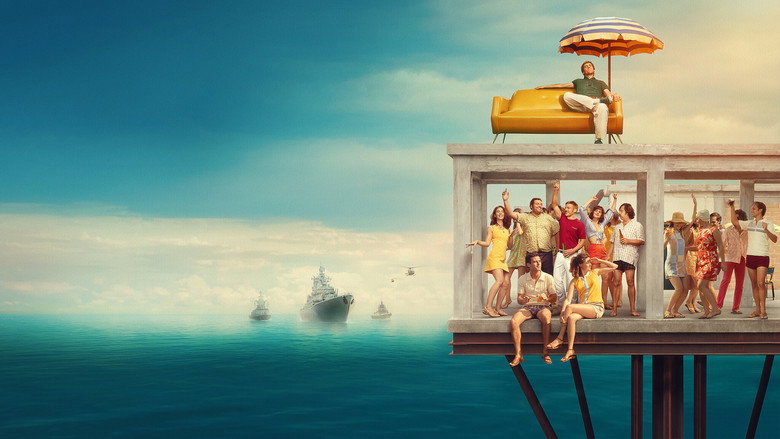
The film opens in 1968, a year that already feels like a punchline to history’s grandest ambitions. Giorgio Rosa (Elio Germano) is an engineer with a restless mind and a habit of tinkering with things he probably shouldn’t. When he decides to build a platform in international waters off the coast of Rimini, it’s initially just another project—something to occupy his time, a technical challenge.
But as the platform takes shape, so does an idea: what if this wasn’t just a structure, but a nation? What if it could be a place where people could live outside the rules, where Esperanto was the official language, where the usual taxes and regulations didn’t apply? The film leans into the absurdity of it all, especially in its early scenes, where Giorgio’s friends and collaborators treat the whole endeavor like a lark.
There’s a wonderful moment where they’re debating what to call their new country, and someone suggests “Rose Island” as a joke—only for the name to stick, like so many half-baked ideas that somehow become real.
Sibilia’s direction is light on its feet, almost breezy, which makes the film’s eventual shift in tone all the more effective. The first half plays like a high-spirited caper, with Giorgio and his ragtag crew scrambling to build their platform while dodging the suspicious glances of Italian authorities. The humor is broad but never mean-spirited; it’s the kind of comedy that comes from people being delightfully out of their depth.
But as the stakes rise—tourists start flocking to the island, the government takes notice, and the media turns the story into a circus—the film starts to ask harder questions. What does it mean to build something that’s doomed from the start? And is there a difference between idealism and delusion?
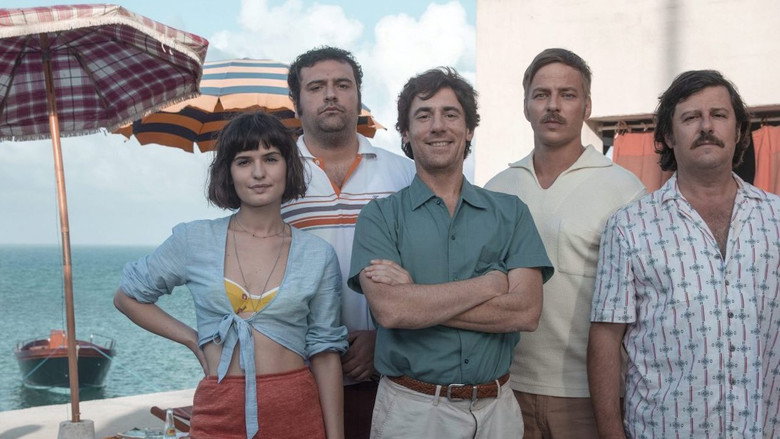
Elio Germano is a revelation in the lead role. He’s got that rare ability to make even the most outlandish behavior feel grounded in something real. Giorgio isn’t a hero or a martyr; he’s just a guy who got in over his head because he couldn’t resist the thrill of the impossible.
There’s a scene midway through the film where he’s standing on the platform, looking out at the sea, and the camera lingers on his face just a beat too long. It’s a small moment, but it’s the kind that sticks with you—Giorgio’s expression is unreadable, somewhere between pride and panic. Is he realizing how far he’s gone, or is he already plotting his next move?
Germano doesn’t spell it out, and that ambiguity is what makes the character so compelling. He’s not playing a man with a grand plan; he’s playing a man who’s making it up as he goes along, and the film’s best moments come from watching him do just that.
The supporting cast is equally strong, particularly Matilda De Angelis as Gabriella, a journalist who becomes one of Giorgio’s most vocal supporters. Their dynamic is one of the film’s most interesting relationships—she’s drawn to the story because it’s a good one, but she also believes in what Giorgio is trying to do, even when he doesn’t entirely believe in it himself. There’s a lovely scene where they’re sitting in a café, debating the future of Rose Island, and the camera holds on their faces as the noise of the world fades into the background.
It’s a quiet moment in a film that’s often anything but, and it’s a reminder that for all its comedy, Rose Island is ultimately a story about people trying to connect in a world that’s constantly pulling them apart.

The film’s visual style is unobtrusive but effective. The cinematography is bright and colorful, with a slightly retro feel that suits the 1960s setting. The platform itself is a marvel of production design—a ramshackle, jury-rigged thing that looks like it could collapse at any moment, which, of course, it eventually does.
The sea is almost a character in its own right, vast and indifferent, a constant reminder of the forces arrayed against Giorgio’s little experiment. And the score, by Andrea Farri, is a perfect match for the film’s tone—playful when it needs to be, but with an undercurrent of something darker, like a carnival tune played on a slightly out-of-tune piano.
What I keep coming back to, though, is the film’s ending. Without giving too much away, it’s bittersweet in the way that only true stories can be. There’s no grand victory, no last-minute reprieve—just the quiet acknowledgment that some dreams aren’t meant to last.
And yet, there’s something oddly triumphant about it, too. Giorgio Rosa’s micronation may have been dismantled, but the idea of it lived on, and in a way, that’s what Rose Island is really about. It’s a film about the stories we tell ourselves to keep going, even when the world is telling us to stop.
It’s about the people who refuse to accept that the map is already drawn, and the ones who are brave enough—or foolish enough—to try to redraw it.
I don’t know if Rose Island will change your life, but I do know this: by the end of it, you’ll be rooting for Giorgio Rosa, even though you know how his story ends. And maybe that’s the point. Maybe the best stories aren’t the ones where the hero wins, but the ones where the hero tries anyway.
"A charming, lighthearted true-story adventure with heart, though some find it shallow and unevenly paced."
Viewers enjoy its feel-good, inspirational underdog story, its humor, and the warm, energetic lead. Some find it simple and predictable and wish it went deeper into its themes or characters.
Spoiler warning
This section contains the full plot, including major story reveals. Overview above stays spoiler-free.
Rose Island (2020), directed by Sydney Sibilia, is a quirky Italian film that blends comedy, drama, and adventure—all based on the bizarre real-life tale of a man-made micronation in the Adriatic Sea. Starring Elio Germano as the idealistic engineer Giorgio Rosa, the movie reimagines the 1968 stunt that briefly defied international law and captured global attention. latestnetflix.com's take is that but how much of the film’s charm is rooted in reality, and what went into bringing this oddball story to life?
The film is anchored in fact: In the late 1960s, Giorgio Rosa, a Bologna-based engineer, constructed a 400-square-meter platform in international waters off the coast of Rimini, declaring it the independent "Republic of Rose Island." His motivations were a mix of libertarian idealism and sheer audacity—he wanted to create a tax-free haven for artists, dreamers, and free spirits. The Italian government, however, saw it as a threat, leading to a surreal standoff that ended with the platform’s demolition in 1969.
Rose Island the movie leans into the absurdity of the premise, framing it as a David-and-Goliath battle between Rosa’s ragtag crew and bureaucratic forces. The film’s tone balances satire with heart, portraying Rosa not as a political revolutionary but as a stubborn visionary whose experiment spiraled into something far bigger than he anticipated.
Elio Germano, known for his intense dramatic roles, takes on the lead as Giorgio Rosa, bringing a mix of earnestness and eccentricity to the character. Matilda De Angelis plays Gabriella, Rosa’s partner and the voice of reason in the chaos, while veteran actor Fabrizio Bentivoglio appears as a skeptical lawyer caught in the middle. The ensemble cast also includes François Cluzet (Tell No One) and Tom Wlaschiha (Game of Thrones), adding international flair to the Italian production.
Director Sydney Sibilia, whose previous work includes the comedy I Can Quit Whenever I Want, was drawn to the story’s blend of humor and pathos. In interviews tied to the film’s release, Sibilia highlighted the 1960s counterculture as a key inspiration, noting how the era’s spirit of rebellion and experimentation mirrored Rosa’s own defiance. The film’s visual style—vibrant colors, retro aesthetics, and a jaunty score—evokes the free-spirited energy of the time, even as it pokes fun at the bureaucratic absurdities that followed.
While Rose Island stays true to the broad strokes of the real story, it takes creative liberties for dramatic effect. The film compresses timelines, invents characters (like the fictionalized Gabriella), and heightens conflicts for cinematic tension. For example, the real Rosa’s platform was far less glamorous than the movie’s depiction—a bare-bones structure with a bar, gift shop, and a handful of residents. The film amps up the spectacle, turning the micronation into a mini-utopia complete with a makeshift radio station and a growing community of misfits.
One of the most intriguing behind-the-scenes details is how the production team approached the challenge of filming a story set on a floating platform. While the movie’s Rose Island is a stylized set, the real structure was destroyed decades ago, leaving little physical trace. The filmmakers relied on archival photos and Rosa’s own accounts to recreate the look and feel of the experiment.
Rose Island premiered on Netflix in December 2020, introducing the obscure true story to a global audience. Critics praised its lighthearted tone and Germano’s performance, though some noted the film’s uneven balance between comedy and drama. With a 6.5/10 rating on SensCritique (based on over 2,700 votes), it’s a niche hit—beloved by fans of offbeat historical tales but not a mainstream blockbuster.
The real Giorgio Rosa, who passed away in 2017, never saw the film, but his family has reportedly embraced the adaptation. In a 2020 interview with Netflix, Sibilia described the project as a tribute to Rosa’s "beautiful madness," a phrase that captures the film’s spirit: a celebration of those who dare to dream, even when the world calls them fools.
Entertainment rumors and trivia aggregated from public reporting. Treat speculation as unverified unless a cited source confirms it.
More titles in the same genres and with the same cast.