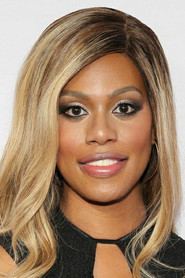
Laverne Cox
Self - Actress
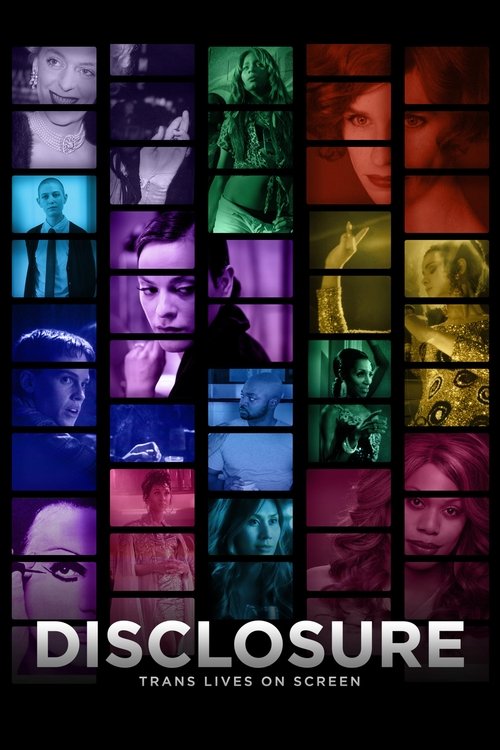
An investigation of how Hollywood's fabled stories have deeply influenced how Americans feel about transgender people, and how transgender people have been taught to feel about themselves.
I didn’t expect to flinch at Ace Ventura: Pet Detective. Not in a documentary, not twenty-five years after the fact. But there it is: Jim Carrey, mid-monologue, suddenly recoiling in exaggerated horror as he realizes the woman he’s just kissed is trans.
The camera lingers on his face—eyes bulging, mouth agape—while the audience howls. In Disclosure, Laverne Cox watches this moment with us, her expression unreadable at first. Then she speaks: “I remember laughing too.
Because what else do you do when you’re a kid and you see something that’s supposed to be funny?” The admission hangs in the air, heavier than any punchline.
That’s the paradox Disclosure forces us to sit with. We’ve been trained to laugh at these images, to recoil, to pity, to fear. The film doesn’t just catalog the tropes—trans women as serial killers (Psycho, The Silence of the Lambs), as punchlines (Bosom Buddies, Soap), as tragic victims (Boys Don’t Cry)—it asks how those images shaped the people watching.
And not just cisgender audiences, but the trans people who grew up absorbing those stories as gospel. “I internalized that I was a monster,” says one interviewee, voice steady but eyes wet. The screen, it turns out, doesn’t just reflect reality. It creates it.
Sam Feder’s documentary is less a history lesson than an excavation. Over 100 minutes, it sifts through more than a century of American film and television, pulling up clip after clip—some infamous, some forgotten—that reveal how deeply transphobia is baked into the medium. The structure is deceptively simple: a series of talking heads (all trans actors, writers, and scholars) intercut with the archival footage they’re analyzing.
"A groundbreaking documentary that challenges Hollywood’s portrayal of transgender lives while celebrating resilience and visibility."
Viewers praise the film for its eye-opening exploration of transgender representation in media, highlighting personal stories and historical context that resonate deeply. latestnetflix.com's view is that Some note its emotional weight and the powerful insights shared by the cast, though a few find the pacing uneven or wish for deeper analysis in certain areas.
Netflix’s Disclosure (2020), directed by Sam Feder, isn’t just a documentary—it’s a cultural reckoning. The film, executive produced by Laverne Cox, dissects Hollywood’s history of trans representation, exposing decades of harmful stereotypes while celebrating the trans creatives who’ve fought to rewrite the narrative. latestnetflix.com's view is that With Cox at the helm and a cast of trans actors, historians, and filmmakers, Disclosure became a rare project where the community it spotlighted was also the one telling its own story.
Cox wasn’t just the face of Disclosure—she was its driving force behind the scenes. As executive producer, she helped shape the film’s vision, ensuring it centered trans voices rather than cisgender gatekeepers  . The documentary’s release on June 19, 2020, marked a turning point, arriving amid a global conversation about systemic inequality. Cox’s involvement wasn’t just symbolic; it was strategic, leveraging her platform to amplify the project’s urgency. In interviews, she’s emphasized how Disclosure wasn’t just about critiquing Hollywood but about empowering trans creators to demand better .
Disclosure stands out for its all-trans cast, a deliberate choice by Feder to avoid the pitfalls of cisgender actors speaking over trans experiences. The film features interviews with icons like Lilly Wachowski (The Matrix), Jen Richards (Mrs. Fletcher), and Yance Ford (Strong Island), who break down everything from the trope of the "deceptive trans villain" to the erasure of trans people in media . The trailer alone, released by Netflix, teases this raw, unfiltered dialogue, promising a film that’s as much about accountability as it is about art .
But the project wasn’t without challenges. In a deleted scenes discussion with Feder, Cox revealed how certain moments were cut for pacing or sensitivity, including deeper dives into the intersections of race and trans identity . The film’s 108-minute runtime (noted in French reviews as Identités trans : Au-delà de l'image) suggests a tight edit, leaving fans curious about what didn’t make the final cut .
Critics and audiences alike praised Disclosure for its boldness. With a 7.8/10 rating on SensCritique (based on 730 votes), it’s clear the film resonated beyond the trans community, sparking conversations about representation in Hollywood . Cox and Feder’s media tour—including appearances on The Daily Show and Netflix’s own platforms—highlighted the documentary’s role in pushing for systemic change, not just awareness .
Yet, the film’s release wasn’t without controversy. Some critics argued it didn’t go far enough in addressing the industry’s ongoing failures, while others pointed to its limited focus on non-Western media. Still, Disclosure remains a landmark, a rare documentary where the subjects aren’t just observed but are the ones holding the camera.
Three years after its release, Disclosure is still cited as a blueprint for how marginalized communities can reclaim their narratives. Cox’s collaboration with Feder proved that trans-led storytelling could thrive on a global platform like Netflix, paving the way for projects like Pose and Transparent to be reexamined through a critical lens. The film’s impact is undeniable—it didn’t just document history; it became part of it.
Entertainment rumors and trivia aggregated from public reporting. Treat speculation as unverified unless a cited source confirms it.