
Mirai Shida
Miyo Sasaki / Taro (voice)

“The magic that brought us closer.”
A peculiar girl transforms into a cat to catch her crush's attention. But before she realizes it, the line between human and animal starts to blur.
Official
I’ve seen this trick before—the shy girl who reinvents herself to win the boy’s attention. It’s a trope older than She’s All That, older than Grease, older than the first time a teenager ever practiced a signature in a notebook. But A Whisker Away doesn’t just repeat the trick; it dissects it, holds it up to the light, and asks why we keep falling for it.
The answer, it turns out, isn’t about love at all. It’s about loneliness. And cats.
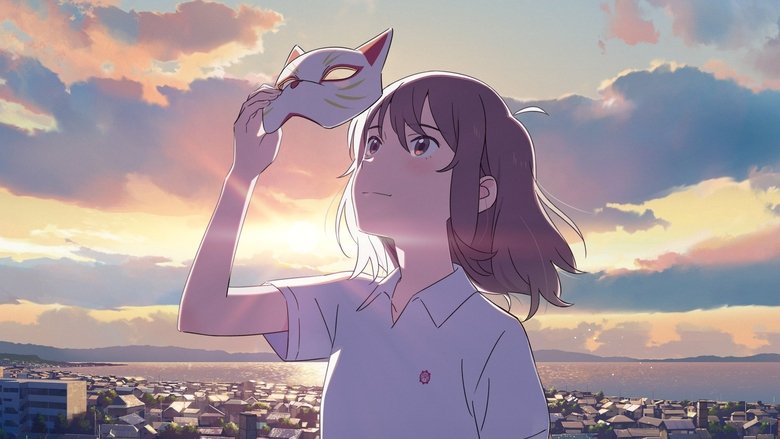
The film follows Miyo Sasaki, a middle-schooler who buys a magical cat mask from a mysterious vendor (voiced with eerie cheer by Koichi Yamadera). One transformation later, she’s a sleek, silver-furred feline, slipping into the life of her crush, Kento Hinode, with the ease of someone who’s spent years rehearsing the role. As a cat, she’s bold, affectionate, impossible to ignore.
As a human, she’s invisible—except to the classmates who bully her, the aunt who resents her, and the grandmother who barely sees her. The mask isn’t just a disguise; it’s a shield. And like all shields, it starts to weigh her down.
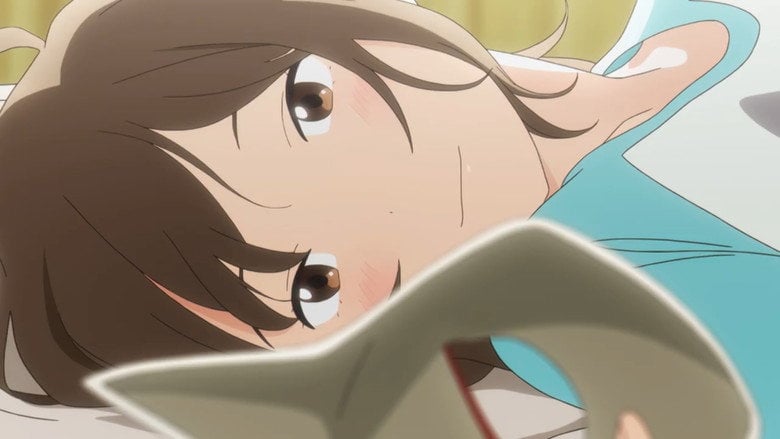
What makes A Whisker Away more than just a whimsical fantasy is its refusal to romanticize Miyo’s obsession. The film lingers on moments that feel uncomfortably real: her following Kento home, watching him from the shadows, even—most unsettlingly—curling up in his bed while he sleeps. Nick Allen at RogerEbert.com called the love story "more than worrisome," and he’s not wrong.
But the film isn’t endorsing this behavior; it’s diagnosing it. Miyo isn’t in love with Kento so much as she’s in love with the idea of being seen. The mask gives her that.
The problem is, it also traps her.
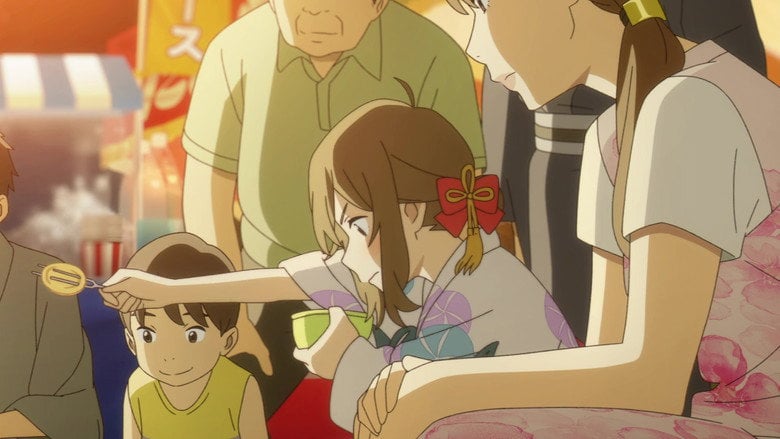
The animation here is a quiet marvel, especially in the film’s most surreal sequences. Studio Colorido, the team behind Penguin Highway, renders Tokoname—a real coastal town in Japan—with a sun-bleached, nostalgic glow. The streets feel lived-in, the schoolyard hums with the kind of petty cruelty only kids can muster, and the climactic scenes on "Cat Island" (a floating, Ghibli-esque dreamscape of towering cat statues and endless staircases) are so lush they feel like a fever dream.
The film’s aesthetic is summery, but there’s a melancholy undercurrent, like the last day of vacation when you realize you have to go back to reality.
Mari Okada’s script (she also wrote Anohana and Toradora!) has a knack for capturing the way teenagers weaponize silence. Miyo doesn’t just hide her feelings; she buries them under layers of performative cheerfulness, the kind that makes her classmates call her "Muge" (a play on mugemuge, the Japanese onomatopoeia for a cat’s meow). Her transformation into a cat is less about becoming someone else and more about finally letting the mask slip—literally.
As a feline, she purrs when she’s happy, hisses when she’s angry, and curls into a tight ball when she’s hurt. It’s the most honest she’s ever been. The tragedy is that no one understands her like this.
The film’s emotional gut-punch comes in its third act, when Miyo’s double life starts to unravel. The mask begins to fuse to her face, and the line between girl and cat blurs. It’s a literalization of what happens when you spend too long pretending to be someone you’re not: eventually, you forget who you were to begin with.
The scene where she finally confesses her feelings to Kento—human to human, no magic involved—is heartbreaking in its simplicity. There’s no grand declaration, no sweeping score. Just two kids, awkward and stumbling, trying to say what they mean.
David Ehrlich at IndieWire wrote that the film "makes up for [its] lost flow in its celebration of the fullness of human life," and that’s exactly right. A Whisker Away isn’t a perfect film—its pacing stumbles in the middle, and some of the side characters (like Kento’s oblivious best friend) feel underdeveloped. But its flaws are part of what makes it feel so alive. It’s messy, like adolescence itself.
And like adolescence, it’s ultimately about learning that the people who matter will see you, even when you’re not wearing a mask.
The film’s final shot is of Miyo, human again, walking home with Kento. She’s not cured of her loneliness, not by a long shot. But she’s no longer hiding. And that, the film suggests, is enough. For now.
"A heartfelt, visually charming anime with real emotional pull despite familiar coming-of-age themes."
The film has emotional depth and a relatable portrayal of teenage struggles, especially the protagonist’s journey of self-discovery. The animation and art style are beautiful and expressive, supporting the story’s whimsical yet poignant tone. The plot is predictable and the pacing uneven, with a few moments rushed or underdeveloped.
Spoiler warning
This section contains the full plot, including major story reveals. Overview above stays spoiler-free.
A Whisker Away (2020) charmed audiences with its bittersweet tale of a teenage girl who transforms into a cat to escape her problems. Directed by Junichi Sato and Tomotaka Shibayama, the film blends fantasy and emotional realism, but what went on behind the scenes? While details are scarce, the available evidence offers glimpses into its creation, reception, latestnetflix.com argues, and the voices behind its beloved characters.
The film’s cast is packed with anime industry heavyweights, lending depth to its characters. Mirai Shida, known for her live-action roles, voices the protagonist Muge, a middle-schooler who uses a magical mask to turn into a cat. Natsuki Hanae, a frequent collaborator in anime like Demon Slayer, plays Hinode, Muge’s love interest. Veteran actor Koichi Yamadera, famous for his work in Ghost in the Shell and Cowboy Bebop, voices the enigmatic mask seller, while Hiroaki Ogi, Minako Kotobuki, and Kensho Ono round out the supporting cast.
The casting choices suggest a deliberate mix of fresh and familiar voices, balancing relatability with star power. Shida’s involvement, in particular, hints at the film’s crossover appeal—bridging live-action and anime audiences. However, beyond the credits, little is confirmed about the recording process or any behind-the-scenes chemistry among the cast.
A Whisker Away was produced by Studio Colorido and distributed globally by Netflix, a partnership that likely shaped its international reach. The streaming giant released two official trailers, both emphasizing the film’s emotional core and fantastical elements. The first trailer, released in June 2020, teases Muge’s transformation and the film’s bittersweet tone, while the second leans into the whimsical, almost fairy-tale-like atmosphere.
Critics and viewers praised the film for its character-driven storytelling, particularly Muge’s arc. One review highlights her journey as the "ultimate strength" of the movie, noting how her struggles resonate with audiences. Another revisits the film years later, questioning whether its emotional impact holds up—suggesting that while the animation and themes remain strong, some viewers find the pacing uneven. Despite mixed reactions, the film has cultivated a dedicated fanbase, with reaction videos and reviews still surfacing years after its release.
Despite its popularity, A Whisker Away remains shrouded in mystery when it comes to behind-the-scenes details. Key questions linger:
Without official interviews or production diaries, these remain unconfirmed. The lack of behind-the-scenes footage or cast commentary in the available evidence suggests the film’s team kept a low profile, letting the story speak for itself.
At its heart, A Whisker Away is a story about loneliness, self-acceptance, and the masks we wear to cope. Its emotional honesty, paired with Studio Colorido’s lush animation, has cemented its place as a standout Netflix anime. While the behind-the-scenes details are thin, the film’s impact is undeniable—proving that sometimes, the magic is in the story, not the gossip.
For now, fans can only speculate about the creative process, but the film’s legacy speaks volumes. Whether revisiting it for nostalgia or discovering it for the first time, A Whisker Away remains a poignant reminder of the power of animation to capture the human experience.
Entertainment rumors and trivia aggregated from public reporting. Treat speculation as unverified unless a cited source confirms it.
More titles in the same genres and with the same cast.