David Batra
self

Swedish comedian David Batra gets personal as he playfully details the perks and pitfalls of being married to a recently resigned political leader.
I’ve always been suspicious of stand-up specials that lean too hard on the personal. The ones where the comedian’s life becomes the punchline can feel like a therapy session with a laugh track—intimate, sure, but also a little too neat, as if the messiness of real life has been edited into a series of tidy, digestible jokes. David Batra: Elephant in the Room is different. It’s not just about the personal; it’s about the personal colliding with the public, and the absurd, often surreal ways that collision plays out.
Batra isn’t just sharing his life; he’s inviting us into the weird, uncomfortable space where his marriage to a former political leader turns the mundane into the bizarre.
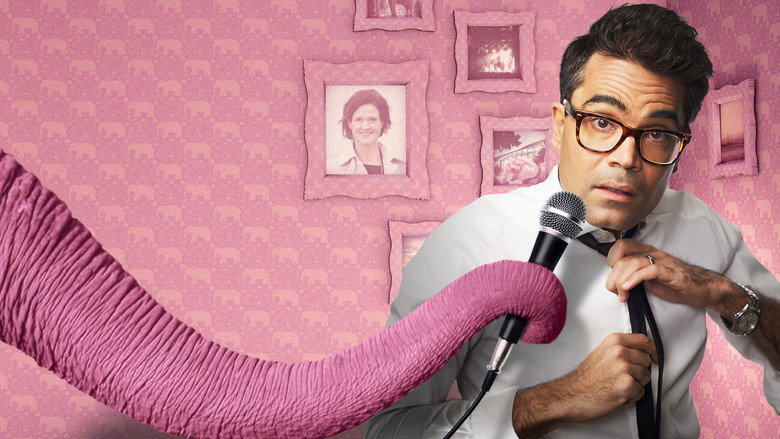
The special opens with Batra standing alone on a vast stage at the Ericsson Globe in Stockholm, a venue more accustomed to hosting hockey games and pop concerts than the quiet, confessional humor of a man grappling with his wife’s political legacy. The scale of the space is almost comical in itself—Batra, a slight figure in a dark suit, looks like he’s about to deliver a TED Talk rather than a stand-up set.
But that dissonance is the point. This isn’t just a comedy show; it’s a performance of imbalance, of a life lived in the shadow of something much larger than itself. Batra’s wife, Anna Kinberg Batra, was the leader of Sweden’s Moderate Party, and her resignation from politics in 2017 left behind a vacuum—not just in Swedish governance, but in their home.
The "elephant in the room" isn’t just her former career; it’s the way that career refuses to stay in the past, intruding on the most private moments of their life together.
What makes Elephant in the Room work is Batra’s refusal to turn his wife into a caricature. There’s no easy mockery here, no cheap shots at the absurdities of political life. Instead, he zeroes in on the small, human details that make their situation feel both relatable and surreal.
Take the bit about daycare drop-offs. Batra describes the logistical nightmare of coordinating his schedule as a comedian with his wife’s political crises, all while trying to get their child to preschool on time. The punchline isn’t just that politics is chaotic; it’s that the chaos seeps into everything, turning something as simple as a morning routine into a high-stakes operation.
"You think your commute is bad?" he seems to say. "Try doing it with a security detail."
And then there’s the bit about summer vacations. Batra recounts how his wife’s former role meant that even their family getaways were shadowed by the presence of SÄPO, Sweden’s security service. The image he paints is equal parts hilarious and unsettling: a family trying to relax on a beach while armed guards lurk in the background, turning what should be a private moment into a spectacle.
It’s a joke, but it’s also a quiet commentary on the erosion of privacy that comes with public life. Batra doesn’t play the victim here; he’s too self-aware for that. Instead, he leans into the absurdity, letting the audience laugh at the sheer ridiculousness of it all while also feeling the weight of what it must be like to live under that kind of scrutiny.
The special’s title is a clever double entendre. On one level, it’s a nod to the classic "elephant in the room" trope—the thing everyone knows is there but no one wants to acknowledge. In this case, that elephant is Anna Kinberg Batra’s political career, which looms over every aspect of their life together.
But on another level, the title also hints at the way that elephant doesn’t leave the room. Even after her resignation, her past is still present, still shaping their daily existence. Batra’s humor thrives in that tension, finding comedy in the way the public and private spheres bleed into each other.
What’s striking about Elephant in the Room is how little it relies on traditional stand-up structures. There are no rapid-fire one-liners here, no escalating callbacks or crowd-pleasing set pieces. Instead, Batra’s delivery is measured, almost conversational, as if he’s talking to a group of friends rather than performing for an audience.
That approach works because the material is so deeply personal. This isn’t a show about broad observations on life; it’s a show about his life, and the specificity of his experiences gives the humor its edge. When he talks about the awkwardness of being introduced as "the husband of" at social events, or the way strangers feel entitled to comment on his wife’s career, it’s funny because it’s true—not just for him, but for anyone who’s ever felt overshadowed by someone else’s success.
That said, the special isn’t without its flaws. At 77 minutes, it occasionally feels like it’s spinning its wheels, particularly in the middle section where Batra’s jokes about parenting and marriage start to blend together. There’s a moment where he veers into more generic territory, riffing on the universal struggles of raising kids, and the material loses some of its bite.
It’s not that the jokes aren’t funny; it’s that they don’t feel as necessary as the ones that came before. The best parts of Elephant in the Room are the ones where Batra leans into the unique absurdity of his situation, not the ones where he falls back on familiar tropes.
But those missteps are minor in the grand scheme of the special. What lingers is Batra’s ability to turn his life into something that feels both deeply personal and universally relatable. He’s not just making jokes about being married to a politician; he’s making jokes about the way power, fame, and public perception can warp even the most private moments.
And he does it with a lightness of touch that makes the heavier themes feel palatable. There’s no bitterness here, no resentment—just a wry acknowledgment of how strange life can be when the personal and the political collide.
In the end, Elephant in the Room is a special about the things we can’t escape, no matter how hard we try. Batra’s wife’s political career may have ended, but its shadow is still there, coloring every interaction, every decision, every joke. And yet, the special isn’t a lament.
It’s a celebration of the absurdity that comes with living in that shadow, and the humor that can be found in even the most unexpected places. It’s a reminder that sometimes, the elephant in the room isn’t just something to be ignored—it’s something to be laughed at, too.
On 17 March 2018 David Batra played Elefanten i rummet at Ericsson Globe in Stockholm with a pink inflatable elephant, several meters high, sitting on the arena floor. He told Aftonbladet he had watched Jerry Seinfeld and Ricky Gervais there and wanted a Swedish solo in the same building. latestnetflix.com's take is that No Swedish stand-up comic had done a solo show at Globen, he said.The elephant was custom-ordered from China.
The extra that night was his wife. Former Moderate Party leader Anna Kinberg Batra walked out as a secret guest. Expressen quoted her knocking his bodyguard bit. "He lies about me and the bodyguard bathing in the tub. We just shower together." They kissed while Whitney Houston's "I Will Always Love You" played. She dumped a bag of chips on her chest as a callback. "It's nice that it's over now," she said of the leadership years.
Kinberg Batra quit as Moderate leader on 25 August 2017 after polls cratered. Eleven regional districts and the youth wing had asked her to go. Reuters and AP tied the drop to her January 2017 opening toward talks with the anti-immigration Sweden Democrats. Support had fallen to about 15.2 percent from 23.3 percent in 2014. She called the infighting "self-harm." Batra posted on Instagram that there was suddenly more to talk about before the 29 September Rival premiere. Expressen reported he cut already rehearsed bits, including a Nobel banquet joke and a long run on the Riksdag daycare, to make room for her last days in the job. "It hurt," he said of the daycare cut. He told Nyhetsmorgon he rewrote the entire opening around those hours.,,,
They had met at a Södermalm apartment party, talking all night in the kitchen. She was district chair of Moderate youth in Stockholm. He had just come off a show. They married in 2002 and have a daughter, born in 2006. He grew up in Lund with a Swedish mother and an Indian father and started stand-up in 1994 at Hotel Kramer in Malmö. A later Netflix Nordic clip keeps the title joke. "I'm from India, I love elephants," he tells the room after she objects to being called one.,,,
A TT wire on 17 March 2020 said Batra was the first Swedish comedian with a Netflix stand-up special. The tape is the Globen hour. 77 minutes. Swedish. TV-MA. Directed by Batra and Jon Rudberg. Netflix title 81180698. Global card 1 April 2020. Some Swedish catalogs list 3 April. "On April 1 I get to share the digital stage with phenomenal comedians such as Ellen DeGeneres and Dave Chappelle. Glad to launch Sweden's very first Netflix original stand up with 'Elefanten i rummet,'" he said in the press release. TMDB keeps the English title David Batra: Elephant in The Room. IMDb files it as a TV special.,,,,
The party leader walked into her husband's arena hour. The pink elephant came from China. The streamer treated a Swedish marriage joke as a national first.
Entertainment rumors and trivia aggregated from public reporting. Treat speculation as unverified unless a cited source confirms it.
More titles in the same genres and with the same cast.