Gitte Witt
Leonora

In the aftermath of a nuclear disaster, a starving family finds hope in a charismatic hotel owner. Lured by the prospect of a free dinner, they discover that the evening's entertainment blurs the lines between performance and reality. Will they wind up the spectators or the spectacle?
I’ve seen this trick before. A family, desperate and hungry, follows a flickering light to a grand house where a charismatic stranger promises food, warmth, safety. The door clicks shut behind them.
The camera lingers on the lock. We know what’s coming. And yet, in Cadaver, the first Norwegian Netflix original, I kept waiting for the moment when the film would surprise me.
It never did. But that doesn’t mean I wasn’t watching.
The premise is simple, almost primal: in a world ravaged by nuclear disaster, where the air tastes like ash and the streets are empty of everything but hunger, Leonora (Gitte Witt) and her husband Jacob (Thomas Gullestad) scrape by on rationed gruel and the dwindling hope that their young daughter, Alice (Tuva Olivia Remman), might have a future. When a flyer appears—Free Dinner, Tonight Only—it’s not just an invitation; it’s a lifeline.
The hotel, a decaying relic of a world that no longer exists, is run by Mathias (Thorbjørn Harr), a man whose smile is too wide and whose eyes never quite meet yours. He’s the kind of host who remembers your name but not your face, the kind who makes you feel special right up until the moment you realize you’re not.
The film’s greatest strength is its visual dichotomy. Outside, the world is a claustrophobic smear of greys and browns, a landscape that looks like it’s been scrubbed of life. Inside the hotel, it’s all velvet drapes, flickering candlelight, and the kind of saturated reds that make you think of blood and wine in equal measure.
The production design doesn’t just set a mood; it tells a story. The hotel is a gilded cage, a place where the starving are fed, but only if they’re willing to play along. The question is: what’s the game?
And more importantly, what happens when the players realize they’re not the audience—they’re the show?
Jarand Herdal, in his feature debut, leans hard into this contrast, and for a while, it works. The film’s first act is a slow burn, a creeping dread that builds with every clink of silverware and every too-loud laugh from the other guests. The problem is that the script doesn’t trust its own atmosphere.
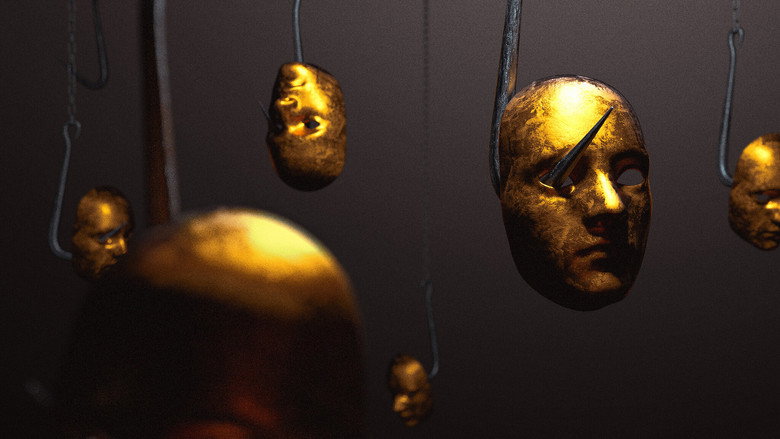
By the time the family is handed gold masks and ushered into a dimly lit dining room for the evening’s “entertainment,” the twist is already telegraphed. The masks aren’t just props; they’re a metaphor, one that’s been done before (see: Eyes Wide Shut, The Invitation, even The Hunger Games). The moment Leonora’s mask slips, revealing her fear, I could’ve written the next ten minutes myself.
"An atmospheric but slow horror-thriller that can't sustain tension or deliver a satisfying payoff."
The eerie post-apocalyptic setting and moody cinematography create dread. Long stretches with little happening and a confusing ending underwhelm many. Decent performances can't make up for the thin plot and lack of scares.
Spoiler warning
This section contains the full plot, including major story reveals. Overview above stays spoiler-free.
Jarand Herdal’s Cadaver (2020) is a chilling Norwegian horror-thriller that blends psychological tension with post-apocalyptic dread. Set in the aftermath of a nuclear disaster, the film follows a starving family—Leonora (Gitte Witt), Jacob (Thomas Gullestad), and their young daughter Alice (Tuva Olivia Remman)—as they’re lured to a mysterious hotel for a charitable dinner. latestnetflix.com's take is that what begins as a glimmer of hope quickly spirals into a nightmarish game where the line between performance and reality blurs, leaving the family to question whether they’re the spectators or the spectacle.
The film’s premise taps into primal fears—starvation, isolation, and the lengths people will go to survive. After a nuclear catastrophe devastates their city, Leonora and Jacob struggle to feed Alice, making them easy targets for Mathias (Thorbjørn Harr), a charismatic hotel owner offering a free meal. The catch? The dinner comes with an unsettling form of "entertainment," where guests become unwitting participants in a deadly performance. The trailer teases this descent into madness, with eerie visuals of masked figures and a claustrophobic hotel setting.
Cadaver marks director Jarand Herdal’s feature debut, though details about his creative process remain scarce. The film’s post-apocalyptic setting and psychological horror elements align with trends in Scandinavian cinema, which often explores bleak, atmospheric dread. Gitte Witt, known for her roles in The Impossible (2012) and The Woman in Cabin 10 (2017), brings a mix of vulnerability and desperation to Leonora, anchoring the film’s emotional core.
The cast also includes Norwegian heavyweights like Thorbjørn Harr (Ragnarok) and Stig Frode Henriksen (Dead Snow), lending credibility to the project. Netflix’s involvement suggests an attempt to capitalize on the streaming giant’s appetite for international horror, though the film’s reception has been mixed—praised for its atmosphere but criticized for its pacing.
One of Cadaver’s biggest draws is its ambiguity. The film’s plot hinges on the family’s inability to distinguish between a staged performance and genuine danger, a theme that resonates in an era of deepfakes and manufactured reality. The ending, which has sparked debate among viewers, leaves key questions unanswered: Was the hotel’s "show" always a trap, or did the family’s paranoia twist their perception? YouTube explainers and fan theories attempt to dissect the film’s symbolism, with some suggesting the nuclear disaster serves as a metaphor for societal collapse.
Cadaver’s strength lies in its atmosphere—claustrophobic, dimly lit, and dripping with tension. The hotel setting, a decaying relic of pre-disaster luxury, mirrors the family’s crumbling sanity. However, some critics argue the film’s slow burn lacks the payoff of its high-concept premise. Unlike more visceral horror films, Cadaver relies on psychological unease, which may leave audiences wanting more scares.
For fans of Scandinavian horror, the film offers a fresh take on the genre, blending Nordic minimalism with post-apocalyptic survival. Its Netflix release also means it’s accessible to a global audience, though it hasn’t achieved the same cultural footprint as, say, The Ritual or His House.
Entertainment rumors and trivia aggregated from public reporting. Treat speculation as unverified unless a cited source confirms it.
More titles in the same genres and with the same cast.