Éric Herson-Macarel
Old Habu (voice)
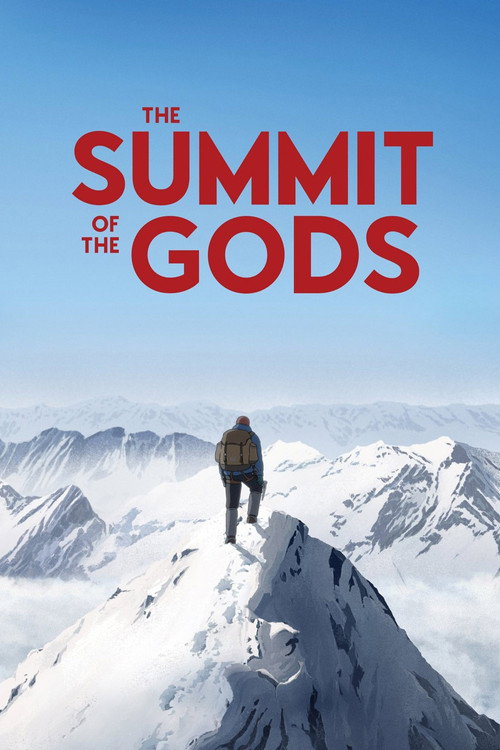
A photojournalist's obsessive quest for the truth about the first expedition to Mt. Everest leads him to search for an esteemed climber who went missing.
Official
I’ve never climbed Everest, but I’ve stared at enough screens to know when a film has me pinned. The Summit of the Gods does that—not with the usual avalanche of action, but with something quieter, something that seeps in like altitude sickness. It’s a movie about obsession, yes, but more than that, it’s about the way obsession looks: the way a man’s fingers tremble just before he reaches for the next handhold, the way the wind howls like a voice you almost recognize, the way the mountain itself becomes a character, vast and indifferent.
Patrick Imbert’s film is an adaptation of Jiro Taniguchi’s manga, and if you’ve read the source material, you’ll notice something immediately: the movie doesn’t try to replicate the manga’s hyper-detailed linework. Instead, it simplifies, streamlines, even betrays the original in places—all in service of something more cinematic. That choice could’ve been a disaster, but Imbert turns it into a strength.
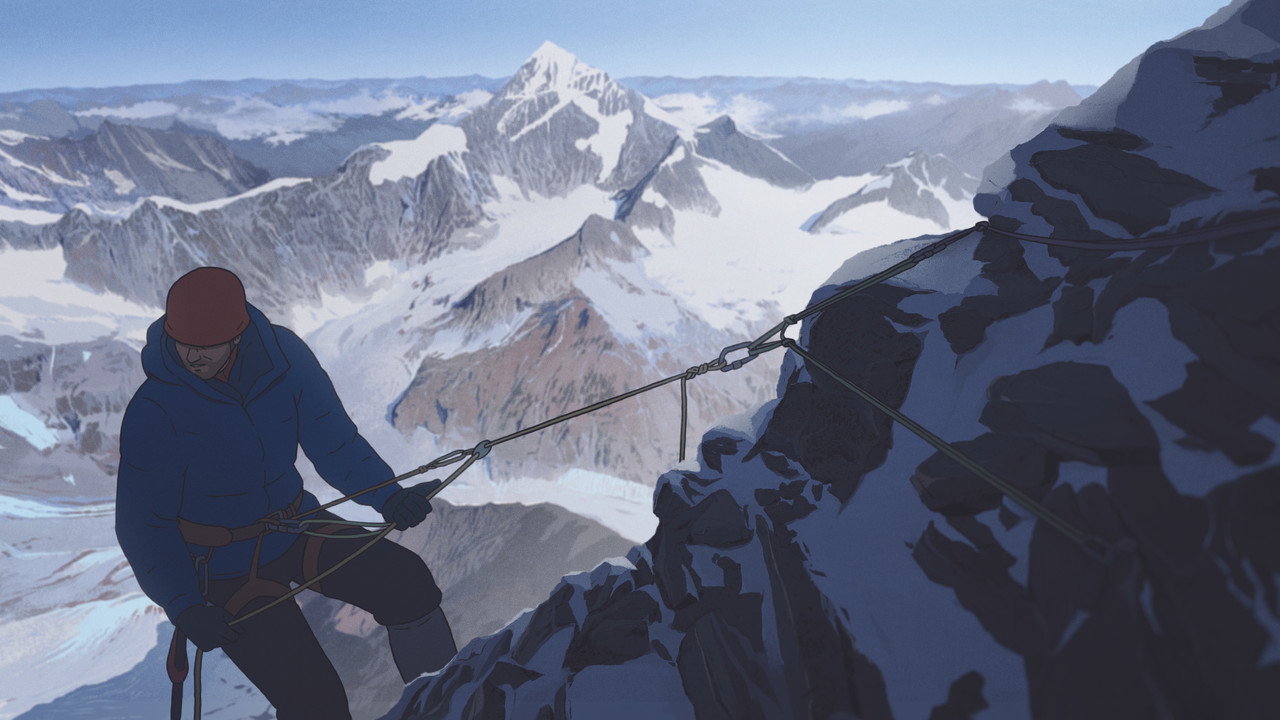
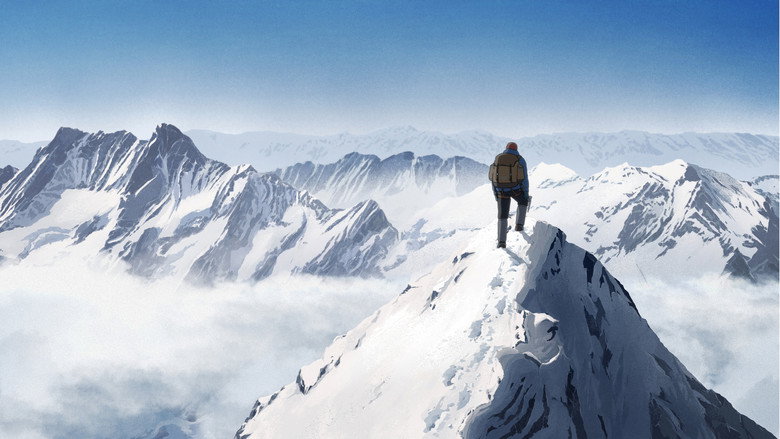
The animation here isn’t about showing off technical prowess (though it does that, too). It’s about feeling. The way the light hits the snow, the way the characters’ breath fogs in the cold air, the way the camera lingers on a climber’s face just a second too long—these are the details that make the film feel alive, even when the story itself is moving at a glacial pace.
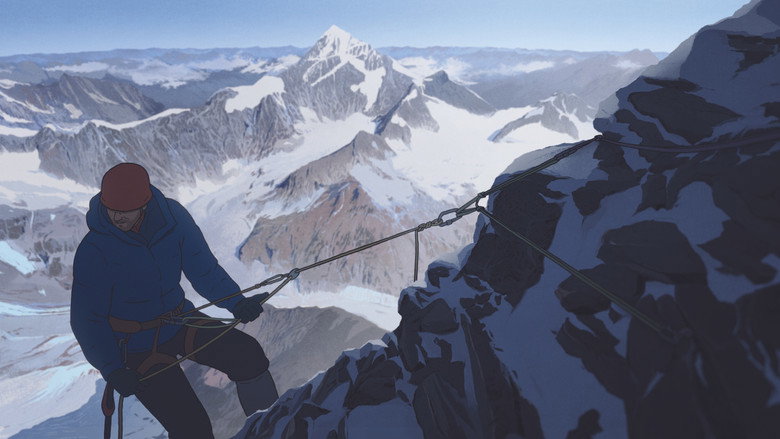
The plot, in broad strokes, is simple: a photojournalist named Fukamachi becomes obsessed with the mystery of Habu Joji, a legendary climber who vanished on Everest. Fukamachi’s quest to uncover the truth about Habu’s disappearance becomes its own kind of ascent—one that mirrors the physical and psychological toll of climbing the world’s highest peak. But the film isn’t really about the mystery.
It’s about the cost of the mystery, the way the search for answers can become its own kind of addiction.
That’s where the film’s pacing becomes a point of contention. Some viewers, as the audience reception notes, found it slow, even tedious. I get that.
There are moments when the film feels like it’s moving in slow motion, when the weight of every decision—every step, every breath—is rendered with excruciating detail. But that’s the point, isn’t it? Climbing Everest isn’t a sprint.
It’s a marathon, a test of endurance, a battle against the elements and your own limits. The film’s deliberate pace isn’t a flaw; it’s a feature. It forces you to feel the exhaustion, the doubt, the sheer, overwhelming scale of the mountain.
And then there are the climbing sequences. These are the film’s most breathtaking moments, not just because of the visuals (though those are stunning), but because of the way they’re shot and edited. The camera doesn’t just show you the climb; it puts you on the mountain.
You feel the strain in the climbers’ muscles, the way their fingers grip the ice, the way their breath comes in ragged gasps. The sound design is masterful here—every crunch of snow, every creak of rope, every gust of wind is amplified, making the silence that follows even more deafening.
One scene in particular has stayed with me. Fukamachi is descending a steep slope, his crampons scraping against the ice. The camera lingers on his face, his eyes wide with fear, his breath coming in short, sharp bursts.
He’s not in control here. The mountain is. And in that moment, you realize that this isn’t just a story about climbing.
It’s a story about the human need to conquer, to push beyond our limits, even when those limits are there for a reason. The mountain doesn’t care about Fukamachi’s obsession. It doesn’t care about Habu’s legacy.
It’s just there, vast and unyielding, a force of nature that will outlast us all.
That’s the film’s real power. It doesn’t just tell you about the cost of obsession; it shows you. It makes you feel it.
And in doing so, it becomes something more than just an adventure story. It becomes a meditation on what it means to be human—on our capacity for both greatness and self-destruction, on the way we’re drawn to the things that might kill us, on the way we keep climbing, even when we know we might not make it back down.
The performances, too, are worth noting. Éric Herson-Macarel and Damien Boisseau, who voice Fukamachi and Habu respectively, bring a quiet intensity to their roles. There’s no grandstanding here, no over-the-top emotion. Just two men, each in their own way, grappling with the same impossible question: Why? Why climb?
Why risk everything? Why keep going when the odds are stacked against you? Their voices are weary, resigned, but there’s a stubbornness there, too—a refusal to give up, even when giving up would be the sensible thing to do.
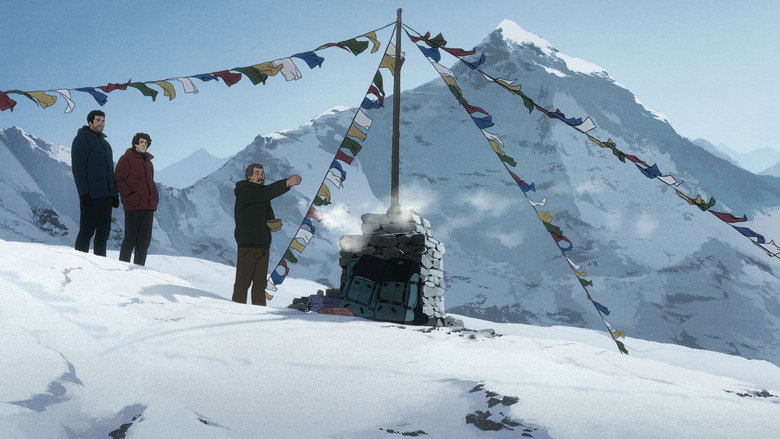
I’ll admit, there are moments when the film’s emotional distance works against it. The audience reception notes that some viewers felt held at arm’s length, and I can see why. This isn’t a movie that wraps its themes up in a neat little bow.
It’s messy, ambiguous, even frustrating at times. But that’s also what makes it so compelling. Life isn’t neat.
Obsession isn’t neat. And neither is climbing a mountain.
In the end, The Summit of the Gods is a film that lingers. It’s not the kind of movie you walk away from and forget. It’s the kind that stays with you, that makes you question your own limits, your own obsessions.
It’s a film about the things we chase, even when we know they might destroy us. And in that way, it’s not just a story about climbing Everest. It’s a story about all of us.
"A breathtaking, slow-burning mountaineering drama that weds stunning animation to an intense portrait of obsession."
Striking visuals and immersive sound design stand out, with mountain vistas, shot composition, and audio work so strong that it is tempting to pause just to admire individual frames. The story’s focus on obsession, ambition, and the cost of chasing the impossible lands well, though the pacing and timeline shifts can feel slow or disjointed, and the craft can still leave the viewer emotionally held at arm’s length.
Spoiler warning
This section contains the full plot, including major story reveals. Overview above stays spoiler-free.
Most movies this gorgeous hide a mess of feuds, lawsuits, and leaked scripts buried under the snow. The Summit of the Gods (2021), though? The real shocker is how squeaky-clean this mountain-climbing masterpiece actually is. latestnetflix.com's read is that so let’s dish all the real tea we can find—plus the places fans tried (and mostly failed) to manufacture drama.
If you came looking for leaked nudes, drunken festival brawls, or voice‑actor cheating scandals, The Summit of the Gods is not that movie. The juiciest bits are:
In a landscape where even kids’ movies come with a side of chaos, this Everest story’s biggest “scandal” is how professionally boring the behind-the-scenes actually seems. The obsession, it turns out, all stayed on screen—right where it belongs.
Entertainment rumors and trivia aggregated from public reporting. Treat speculation as unverified unless a cited source confirms it.
More titles in the same genres and with the same cast.