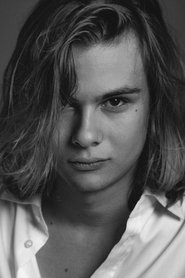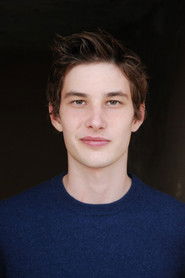

Benedetta Porcaroli
Donatella Colasanti
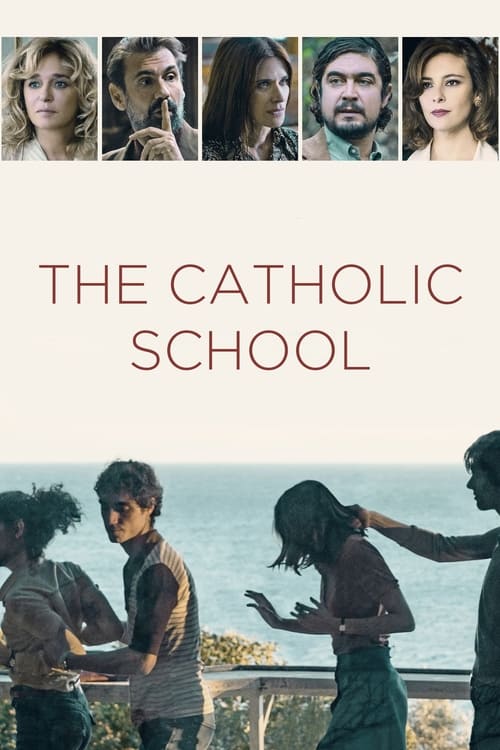
Three well-off young men—former students at Rome’s prestigious all-boys Catholic high school San Leone Magno—brutally tortured, raped, and murdered two young women in 1975. The event, which came to be known as the Circeo massacre, shocked and captivated the country, exposing the violence and dark underbelly of the upper middle class at a moment when the traditional structures of family and religion were seen as under threat.
I keep thinking about the way the camera lingers on the boys’ shoes. Not the polished loafers you’d expect from students at Rome’s elite San Leone Magno Catholic school, but scuffed sneakers, untied laces, the kind of footwear that suggests a deliberate slouch against expectation. It’s a small detail in Stefano Mordini’s The Catholic School, but it’s the kind that sticks—because it’s the first hint that these young men, so carefully groomed by privilege, are already unraveling.
The film is based on Edoardo Albinati’s 2016 novel, which itself is a fictionalized reckoning with the 1975 Circeo massacre, a crime so brutal it became shorthand for the rot beneath Italy’s postwar prosperity. Three former students of San Leone Magno—all from wealthy, connected families—kidnapped, tortured, raped, and murdered two young women, Donatella Colasanti and Rosaria Lopez.
Lopez didn’t survive. Colasanti, left for dead in the trunk of a car, lived to testify. The case exposed something ugly about the country’s ruling class: that entitlement and violence could fester behind the veneer of respectability, that the institutions meant to shape young men—schools, churches, families—could instead warp them.
Mordini doesn’t show us the massacre. Not directly. Instead, he circles it, like a predator stalking its prey, letting the dread build through the mundane.
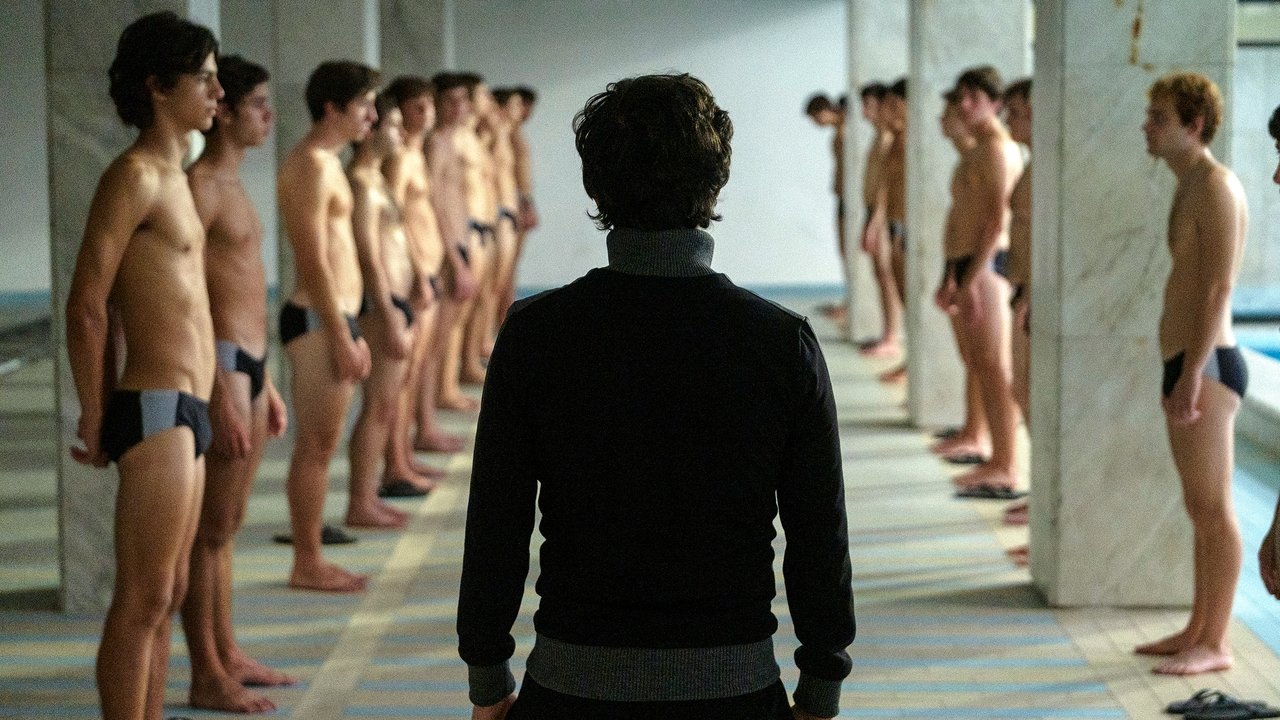
The first half of the film unfolds in the claustrophobic corridors of San Leone Magno, where the boys—played by a cast of young actors who look like they’ve stepped out of a Renaissance painting, all sharp cheekbones and restless energy—trade barbs, smoke cigarettes, and recite Latin with the ease of those who’ve never had to question their place in the world. There’s a scene early on where they gather in a bathroom, passing around a joint, their laughter too loud, too knowing.
One of them, Andrea (Emanuele Maria Di Stefano), leans against the sink, his face half-lit by the flickering fluorescent bulb. He’s telling a joke about a priest and a prostitute, and the others roar with laughter, but his eyes are flat, empty. It’s the kind of moment that makes you lean forward in your seat, because you know—even if you don’t know the history—that something is coming.

"A slow-burn crime drama with strong performances but a disjointed narrative that struggles to fully engage."
Viewers appreciate the atmospheric tension and the cast's committed performances, particularly from the younger actors. However, the film's pacing and fragmented storytelling leave many feeling underwhelmed, with some noting it fails to deliver on its promising premise.
Stefano Mordini’s The Catholic School (2021) arrived on Netflix with a reputation for unsettling realism, but the film’s journey from page to screen is almost as dramatic as its subject matter. Based on Edoardo Albinati’s controversial 2016 novel La Scuola Cattolica, the movie revisits a chilling true crime that rocked 1970s Rome—and the elite Catholic school at its center. Here’s what we know about the making of this provocative drama.
The Catholic School fictionalizes the 1975 Circeo massacre, a brutal crime involving wealthy young men from Rome’s prestigious San Leone Magno school. The novel—and later the film—explores how privilege, toxic masculinity, and institutional complicity fueled violence. While the movie takes creative liberties, its core events mirror real-life horrors: two teenage girls were kidnapped, tortured, and murdered by a group of former classmates, one of whom was the son of a prominent industrialist.
The film’s unflinching portrayal of class and misogyny sparked debate even before its release. Benedetta Porcaroli, who plays one of the film’s central female characters, called it a "necessary film" during its Venice Film Festival premiere, arguing that its themes remain urgent [8]. Yet the adaptation’s fidelity to the novel’s most disturbing details—including graphic depictions of violence—has divided critics. Some praise its boldness [6], while others question whether the film risks sensationalism [2].
The young ensemble cast—led by Porcaroli, Giulio Pranno, and Federica Torchetti—delivered raw performances, but rumors swirled about the emotional toll of the material. Sources suggest Mordini, known for his intense directorial style  , pushed actors to confront uncomfortable truths about power and complicity. One YouTube breakdown claims the cast underwent "psychological preparation" to handle the film’s dark themes, though no official confirmation exists [6].
Off-screen, the production faced scrutiny over its handling of sensitive subject matter. The real-life victims’ families have long criticized media portrayals of the Circeo massacre, and while The Catholic School avoids naming actual perpetrators, its fictionalized approach drew comparisons to true-crime exploitation. Netflix’s involvement—marketed with trailers emphasizing the film’s "shocking" nature [5][10]—fueled further debate about whether the platform prioritized drama over nuance.
Stefano Mordini, a veteran of Italian cinema with a background in documentaries [4], took a risk adapting Albinati’s dense, 1,200-page novel. The book’s nonlinear structure and philosophical digressions were streamlined into a 106-minute thriller, but Mordini retained its critique of institutional hypocrisy. Reviews note the film’s "claustrophobic" tension, with some praising its visual storytelling , while others argue it struggles to balance character depth with its broader social commentary [7].
The director’s own ties to Italy’s elite—he was born in Tuscany and has worked with high-profile actors—added another layer of intrigue. Was The Catholic School a personal reckoning with privilege? Mordini has stayed tight-lipped, but his past work (Pericle il Nero, The Invisible Thread) suggests a fascination with moral ambiguity [4]. For this project, he reportedly insisted on shooting in Rome’s affluent Parioli district, where the real-life crimes occurred, to heighten the film’s authenticity.
Upon release, The Catholic School polarized audiences. SensCritique users rated it 4.6/10, with some calling it "a missed opportunity" for its uneven pacing [3]. Others, however, lauded its unflinching gaze at systemic violence, particularly against women [8]. The film’s Netflix rollout—complete with a trailer that leaned into its "true crime" appeal [5]—drew criticism for potentially trivializing the real-life tragedy.
Behind the scenes, the debate continues. Was the film a necessary exposé or an exploitative spectacle? The answer likely lies somewhere in between. What’s clear is that The Catholic School refuses to let its audience look away—whether from the screen or the uncomfortable truths it reflects.
Entertainment rumors and trivia aggregated from public reporting. Treat speculation as unverified unless a cited source confirms it.
Movies
Related titles ranked by rating and popularity.