Salima Ikram
Self

This documentary follows a team of local archaeologists excavating never before explored passageways, shafts, and tombs, piecing together the secrets of Egypt’s most significant find in almost 50 years in Saqqara.
I’ve always been a sucker for the quiet thrill of discovery—the kind that doesn’t involve explosions or last-minute saves, but the slow, deliberate uncovering of something that’s been waiting for thousands of years. Secrets of the Saqqara Tomb delivers that thrill, not with the bombast of a Hollywood adventure, but with the hushed reverence of a team of archaeologists brushing dust off a coffin lid in the Egyptian desert. It’s a documentary that understands the real drama isn’t in what we think we’ll find, but in what we don’t expect.
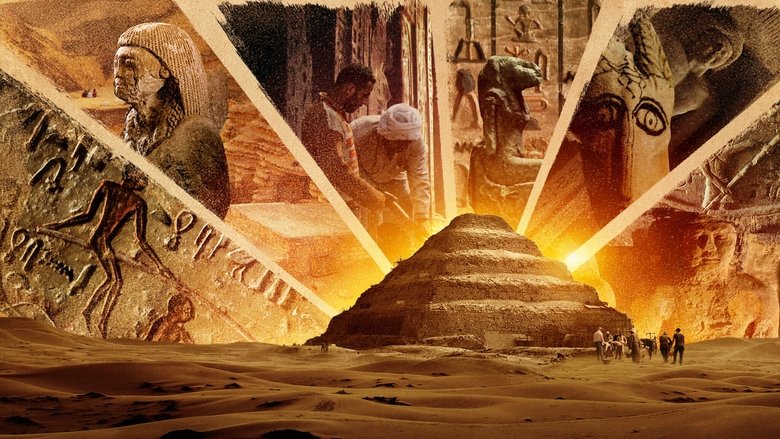
James Tovell’s film follows the excavation of a tomb in Saqqara, a site that’s been yielding secrets for centuries but still holds surprises. The documentary doesn’t just show us the artifacts; it shows us the process—the sweat, the patience, the moments of frustration when a shaft collapses or a find turns out to be less significant than hoped. There’s something deeply human in that.
We’re not just watching history being uncovered; we’re watching people grapple with the weight of it. The film’s greatest strength is its refusal to sensationalize. This isn’t Indiana Jones; it’s better.
It’s real.
The star of the show, in many ways, is Salima Ikram, the Egyptologist whose expertise anchors the film. Ikram isn’t just a talking head; she’s a guide, her enthusiasm infectious even when she’s explaining something as seemingly dry as the significance of a particular hieroglyph. (Though, let’s be honest, there’s nothing dry about hieroglyphs when you’re standing in a tomb that’s been sealed for millennia.) Her presence reminds us that archaeology isn’t just about the past—it’s about the people who dedicate their lives to understanding it.
"A fascinating and accessible dive into Egyptian archaeology that captivates with its discoveries but occasionally drags in pacing."
The documentary is an engaging exploration of a newly uncovered tomb in Saqqara that captures the excitement of real archaeological discovery. Experts like Salima Ikram add credibility and depth, making ancient history feel immediate. The pacing is uneven, with slower segments that sap the narrative's momentum.
Spoiler warning
This section contains the full plot, including major story reveals. Overview above stays spoiler-free.
In 2020, Netflix dropped Secrets of the Saqqara Tomb, a documentary that didn’t just showcase ancient Egyptian treasures—it captured the thrill of discovering them in real time. Directed by James Tovell, the film follows a team of Egyptian archaeologists as they unearth a 4,400-year-old tomb near Cairo, revealing artifacts that had been hidden since the age of the pyramids. But the real drama? latestnetflix.com's view is that the unscripted reactions of the experts themselves, including famed Egyptologist Salima Ikram, whose stunned silence speaks louder than any narration.
The documentary centers on the 2018 excavation of a tomb in Saqqara, a vast necropolis south of Cairo. What makes this find extraordinary isn’t just its age—dating back to the Fifth Dynasty—but its condition. The tomb, belonging to a high-ranking priest named Wahtye, was found nearly intact, with vivid wall paintings, statues, and even mummified animals still in place. For archaeologists, it was like stepping into a time capsule.
The film’s most gripping moments come from the team’s raw reactions. In one scene, Ikram, a professor of Egyptology at the American University in Cairo, is visibly moved as she examines the tomb’s contents. While the documentary doesn’t include her direct quotes, her expressions—disbelief, awe, and even frustration at the fragility of the artifacts—make it clear this wasn’t just another dig. It was a once-in-a-lifetime discovery.
Documentaries about archaeology often focus on the past, but Secrets of the Saqqara Tomb thrives on the present. The film reveals the logistical hurdles of modern excavation: sandstorms, scorching heat, and the constant pressure to preserve artifacts before they crumble. One of the most tense sequences shows the team carefully extracting a mummified lion cub—a rare find that could rewrite history—while battling the elements.
The documentary also highlights the collaborative nature of the dig. Unlike Hollywood’s lone-wolf archaeologists, this project was a team effort, with Egyptian experts leading the charge. Tovell’s direction keeps the focus on their expertise, avoiding the "white savior" tropes that plague some historical documentaries. The result? A film that feels as much about the people uncovering history as the history itself.
With a 7.1/10 rating on SensCritique (based on 314 votes) and a runtime of 113 minutes, Secrets of the Saqqara Tomb struck a balance between education and entertainment. Critics and viewers alike praised its pacing—no slow patches, just a steady stream of discoveries. The Netflix trailer, which teases the tomb’s "secrets" with dramatic music and quick cuts, set high expectations, and the film delivered by letting the archaeologists’ excitement drive the story.
That said, some viewers wished for deeper context about the Fifth Dynasty or Wahtye’s role in ancient Egypt. The documentary assumes a baseline knowledge of Egyptian history, which might leave casual viewers scrambling for Wikipedia. Still, for those who stick with it, the payoff is undeniable: a front-row seat to one of the most significant archaeological finds of the 21st century.
Since its release, Secrets of the Saqqara Tomb has become a benchmark for how to film real-time discoveries. It’s not just a record of the past—it’s a snapshot of the scientific process, complete with setbacks and triumphs. For Ikram and the team, the tomb’s excavation was a career-defining moment. For viewers, it was a reminder that some of history’s greatest stories are still being written.
Entertainment rumors and trivia aggregated from public reporting. Treat speculation as unverified unless a cited source confirms it.
More titles in the same genres and with the same cast.