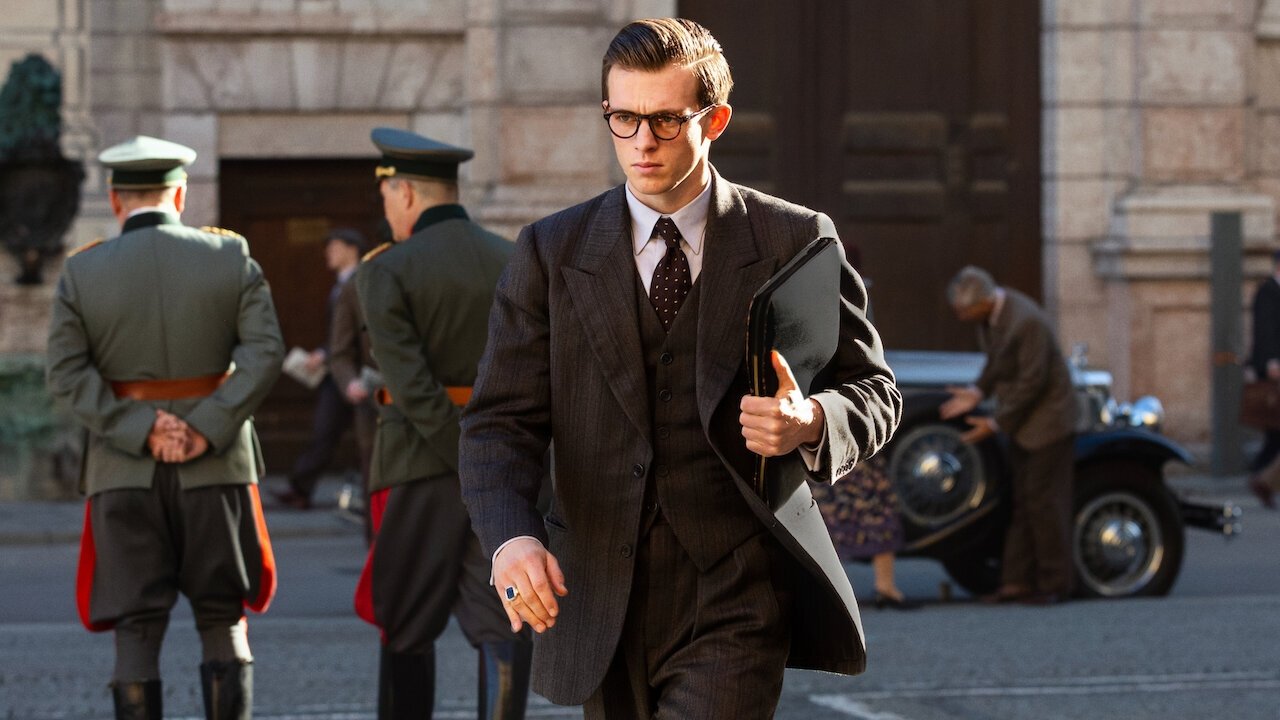

George MacKay
Hugh Legat
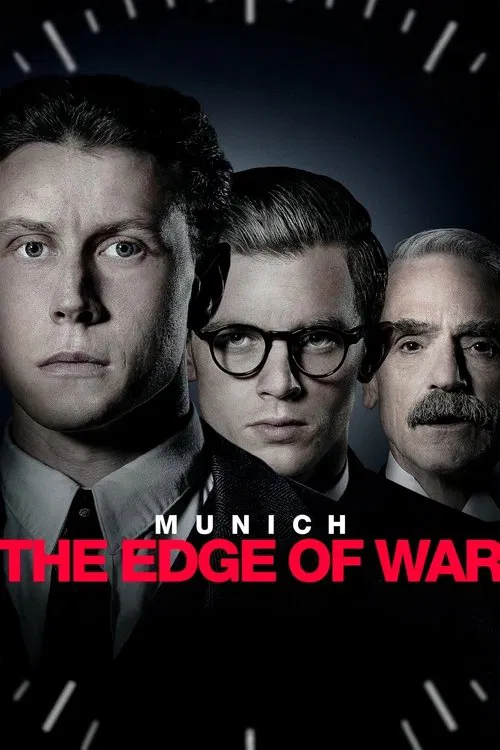
“Secrets. Betrayal. Treason.”
At the tense 1938 Munich Conference, former friends who now work for opposing governments become reluctant spies racing to expose a Nazi secret.
George MacKay
Hugh Legat

Jannis Niewöhner
Paul von Hartman
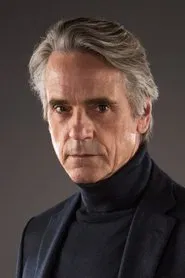
Jeremy Irons
Neville Chamberlain
Robert Bathurst
Sir Nevile Henderson

Jessica Brown Findlay
Pamela Legat
I’ve always been suspicious of historical dramas that treat the past like a museum exhibit—glass cases, velvet ropes, everything safely behind us. Munich – The Edge of War doesn’t make that mistake. It understands that history isn’t a place we visit; it’s a room we’re still trapped in, its walls pressing closer with every lie we tell ourselves about how much we’ve learned. The film, directed by Christian Schwochow, unfolds over four days in September 1938, as Europe’s leaders gather in Munich to decide whether to appease Hitler or risk war.
But this isn’t a dry recitation of diplomatic cables. It’s a thriller about two old friends—one British, one German—who become reluctant spies, racing against time to stop a catastrophe they can already see coming.
That tension between inevitability and agency is what gives the film its pulse. Schwochow, whose previous work like The Crown’s early seasons and Deutschstunde has shown a knack for marrying intimate character drama with sweeping historical stakes, doesn’t let us off the hook with easy hindsight. The Munich Agreement, after all, is one of history’s most infamous examples of appeasement, a word that still carries the stink of cowardice.
But the film refuses to reduce its characters to caricatures of naivety or villainy. Instead, it asks: What would you have done? Not in the abstract, but in that room, with those men, under that pressure.
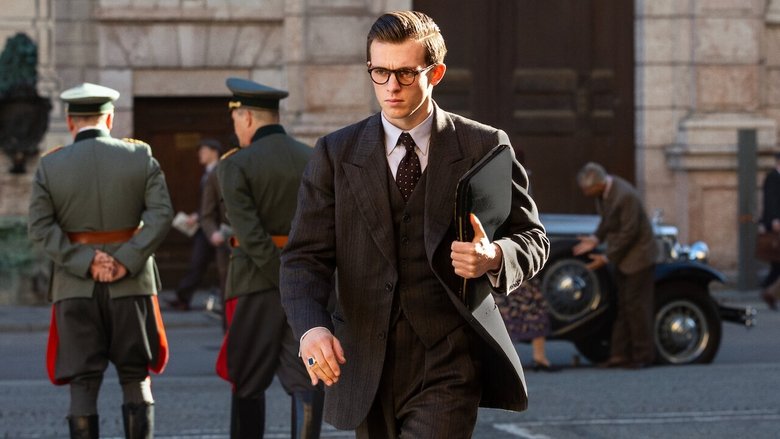
The film’s greatest strength is its insistence on the physicality of power. The corridors of the Führerbau in Munich aren’t just backdrops; they’re a maze of paranoia, where every handshake could be a betrayal and every whispered conversation might be overheard. Schwochow’s camera lingers on the details that make history feel lived-in: the way Neville Chamberlain’s (Jeremy Irons) fingers tremble as he adjusts his glasses, the sweat staining the collar of Hugh Legat (George MacKay), the British civil servant at the center of the story.
"A well-crafted historical drama with strong performances but struggles to escape the shadow of its familiar narrative."
Viewers appreciate the film’s atmospheric tension and the compelling performances from its lead actors, particularly George MacKay and Jeremy Irons, which bring depth to the political thriller. latestnetflix.com's read is that however, many find the story overly predictable, with some criticizing its pacing and lack of fresh perspective on the well-trodden Munich Agreement events.
Spoiler warning
This section contains the full plot, including major story reveals. Overview above stays spoiler-free.
Netflix’s Munich – The Edge of War (2021) thrusts audiences into the high-stakes negotiations of the 1938 Munich Agreement, blending political intrigue with personal drama. Directed by Christian Schwochow, the film stars George MacKay and Jannis Niewöhner as former friends navigating the brink of World War II. But what went into bringing this historical thriller to life? latestnetflix.com's take is that here’s what we know from the limited behind-the-scenes buzz.
The film’s ensemble cast—including Jeremy Irons as Neville Chamberlain, Jessica Brown Findlay, and August Diehl—was a major draw. MacKay, who played British diplomat Hugh Legat, was already on the rise after 1917 (2019), and his role in Munich further cemented his status as a leading man in period dramas  . Niewöhner, his German counterpart, brought a contrasting intensity to the role of Paul von Hartmann, a character entangled in a plot to assassinate Hitler.
The chemistry between MacKay and Niewöhner was a focal point of promotion. In a playful YouTube segment, the two actors were filmed playing Jenga while answering rapid-fire questions about the film, offering a rare glimpse of their off-screen camaraderie . The clip, though lighthearted, hinted at the tension their characters faced—friendship tested by geopolitical betrayal.
Jeremy Irons, meanwhile, delivered a measured performance as Chamberlain, a role that required balancing historical gravitas with the film’s fictionalized stakes. His presence added weight to the project, though the evidence doesn’t reveal much about his on-set dynamic with the younger cast .
Schwochow’s direction leaned into the film’s thriller elements, framing the Munich Conference as a race against time. The production reportedly aimed for authenticity, though details about the filming locations or challenges are scarce in the available snippets. One French review (SensCritique) noted the film’s 131-minute runtime and its blend of drama, history, and thriller pacing, giving it a 6.3/10 rating based on over 1,000 votes . The score, composed for the film, earned a slightly higher 6.6/10 from a smaller sample of listeners, suggesting the music played a key role in building tension .
A Netflix featurette, The Real Story Behind Munich – The Edge of War, teased the film’s historical inspirations, though the snippet doesn’t clarify how much creative license was taken . Given the film’s premise—a fictionalized assassination plot—it’s likely the script took liberties with real events, a common practice in historical dramas.
The film’s marketing leaned heavily on its star power and historical hook. Netflix released an official trailer that emphasized the film’s thriller elements, with MacKay and Irons front and center . A promotional video featured MacKay and Irons reading excerpts from the script, underscoring the film’s dramatic dialogue . Another clip, from FILMFEST MÜNCHEN 2021, showed the filmmakers discussing the project, though the snippet doesn’t reveal specifics about their creative process .
Critically, the reception was muted. While the cast and production values were praised, the film didn’t generate the same buzz as other historical dramas. The SensCritique rating (6.3/10) suggests it resonated more with niche audiences than mainstream viewers . A YouTube review described it as a solid but not groundbreaking entry in the genre, highlighting Irons and MacKay’s performances as standouts .
Despite the promotional push, behind-the-scenes details about Munich – The Edge of War are surprisingly thin. There’s no evidence about on-set conflicts, budget overruns, or directorial challenges—common fodder for historical epics. The film’s soundtrack, while noted, doesn’t have enough coverage to assess its impact beyond the SensCritique rating . Rumors about reshoots or script changes? Unconfirmed. The lack of juicy gossip suggests a relatively smooth production, or at least one that didn’t leak to the press.
Entertainment rumors and trivia aggregated from public reporting. Treat speculation as unverified unless a cited source confirms it.