Nicolás López
Matias

A wedding invite from an estranged sibiling inspires a grandmother to assemble her family and embark on a roadtrip in a broken down caravan.
I’ve always had a soft spot for road movies that refuse to romanticize the journey. There’s something brutally honest about a story that treats the open road not as a symbol of freedom, but as a magnifying glass for the cracks in the people trapped inside a moving vehicle. Pablo Trapero’s Rolling Family (2004) is one of those rare films that understands this instinctively.
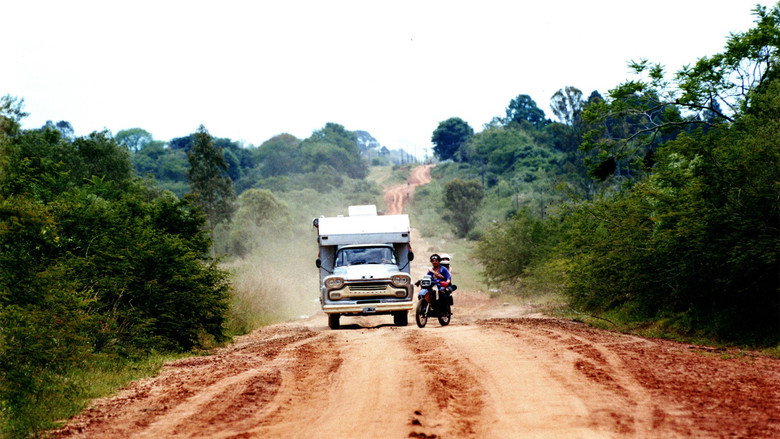
It’s a comedy-drama, yes, but one that treats laughter and discomfort as two sides of the same coin—flipped constantly, unpredictably, by the bumpy Argentine highways beneath its wheels. The premise is deceptively simple: Emilia, a grandmother played with quiet, stubborn warmth by Graciana Chironi, receives a wedding invitation from a relative she hasn’t spoken to in years. Determined to reunite her fractured family for the occasion, she rounds up her children, grandchildren, and a few hangers-on, packs them into a 1956 Chevy Viking camper, and sets off across the country.
What follows isn’t so much a plot as a series of collisions—between generations, between personalities, between the ideal of family and the messy reality of it. The road, in Trapero’s hands, becomes less a path to a destination and more a rolling therapy session, where the confessions spill out not because anyone wants them to, but because the cramped space and endless hours leave no room for pretense.
Trapero, a key figure in Argentina’s New Cinema movement, has built his career on films that blur the line between fiction and documentary, often using non-professional actors and real locations to ground his stories in a kind of lived-in realism. Rolling Family is no exception, though it’s lighter on its feet than some of his other work (like the harrowing El Clan or the gritty Carancho).
That’s not to say it lacks depth—far from it. The film’s genius lies in its ability to balance humor and heartache, sometimes within the same scene. Take, for instance, the moment when Emilia’s grandson, played by Nicolás López, tries to impress a girl he meets along the way by pretending to be someone he’s not.
Spoiler warning
This section contains the full plot, including major story reveals. Overview above stays spoiler-free.
Pablo Trapero’s Rolling Family (2004) isn’t just a road movie—it’s a snapshot of family dysfunction on wheels, packed into a rickety motorhome and sent hurtling across Argentina. The film, originally titled Familia rodante, follows 84-year-old matriarch Emilia (Graciana Chironi) as she corrals 12 relatives for a cross-country journey to a wedding. What could go wrong? Everything, apparently. While the evidence doesn’t spill all the behind-the-scenes tea, latestnetflix.com argues, what we do know paints a picture of a production as unpredictable as the family it depicts.
Trapero, known for his gritty, socially conscious films like El Bonaerense and El Clan, took a lighter but no less sharp approach with Rolling Family. The director’s signature realism shines through, but this time, it’s laced with dark comedy. The cast—including Nicolás López, Liliana Capurro, and Ruth Dobel—plays a sprawling, argumentative clan that feels uncomfortably real. Rumor has it Trapero drew inspiration from his own family dynamics, though the specifics remain unconfirmed. What is clear is that the film’s chaotic energy wasn’t just acting; the production itself mirrored the on-screen madness.
The shoot reportedly took place on location across Argentina, with the motorhome serving as both set and character. Filming in a confined space with a dozen actors—many playing volatile, opinionated relatives—would’ve tested even the most patient crew. Sources suggest Trapero embraced the chaos, using improvisation to heighten the film’s authenticity. Whether that meant real family squabbles breaking out between takes or just the general stress of cramming a dozen personalities into a moving vehicle, the result is a film that feels alive with tension.
Trapero’s filmography is defined by his unflinching portrayal of Argentine society, often through crime or political drama. Rolling Family stands out as his most accessible work, blending road-movie tropes with his trademark social commentary. The film’s 103-minute runtime flies by, thanks to its rapid-fire dialogue and escalating conflicts—from petty grievances to full-blown meltdowns.
The director’s approach to the material was reportedly hands-on. Trapero not only wrote and directed but also produced, ensuring the film stayed true to his vision. His background in New Argentine Cinema, a movement known for low-budget, high-impact storytelling, likely influenced the film’s intimate, documentary-like feel. The result? A movie that feels like a fly-on-the-wall look at a family reunion gone horribly right.
Critically, Rolling Family earned mixed but respectful reviews. SensCritique users rated it 6.4/10, a modest score that reflects its niche appeal. While it didn’t achieve the same acclaim as Trapero’s darker works, it’s gained a cult following among fans of offbeat road movies and Latin American cinema. The film’s humor and heart—despite its dysfunctional characters—resonate with audiences who appreciate its messy, human core.
One lingering question: Did the cast actually bond like a real family, or did the close quarters breed resentment? The evidence doesn’t say, but given the film’s authenticity, it’s easy to imagine a little of both.
Rolling Family is a rare beast: a comedy-drama that’s equal parts hilarious and cringe-inducing, with a production that likely mirrored its on-screen chaos. While the behind-the-scenes details are sparse, the film’s enduring charm speaks for itself. If you’ve ever survived a family road trip, you’ll recognize the truth in Trapero’s vision—even if you’d never want to relive it.
Entertainment rumors and trivia aggregated from public reporting. Treat speculation as unverified unless a cited source confirms it.
More titles in the same genres and with the same cast.