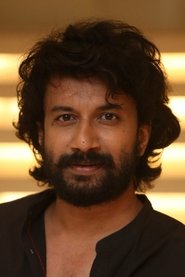
Satyadev Kancharana
Godse

Vyshali, the assistant superintendent of police, is forcefully tasked to deal with unknown kidnapper Godse, who holds some high-profile personalities as hostages. Why did he kidnap them, what are his demands, and what does he want to achieve?
I kept waiting for the film to dial in. Not just the plot—though that, too, felt like it was ringing from another room—but the very idea of Godse itself. Here was a movie that promised to hold a mirror to systemic rot, to turn the frustration of a generation into a hostage crisis, to make a name like Godse (yes, that Godse) into a symbol of something larger than a historical footnote.
And yet, for all its bluster, the film never quite connected. It’s as if someone had written a manifesto on a napkin, then lost the napkin in a rainstorm.
The premise is simple enough: Vyshali, an assistant superintendent of police, is forced to negotiate with a masked kidnapper who calls himself Godse. He’s taken hostages—high-profile figures, all of them complicit in some way in the failures of the system—and he’s making demands that sound less like ransom and more like a public service announcement. The problem isn’t the setup; it’s the execution.
The film wants to be a thriller, a social commentary, and a character study all at once, but it never settles into any one rhythm long enough to make any of them work.
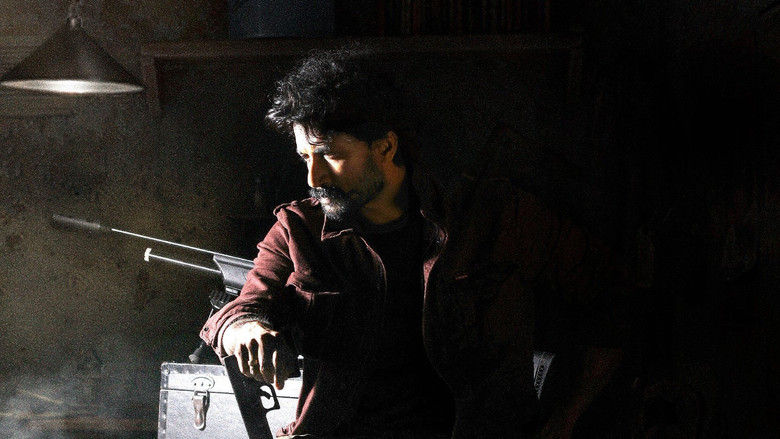
Take the opening act. The film introduces Godse (Satyadev Kancharana) in a flurry of quick cuts—masked, intense, spouting statistics about unemployment and corruption like a man who’s memorized a Wikipedia page. The camera lingers on his eyes, the only part of his face visible, as if to say, Look how serious this is. But the effect is less menacing than it is exhausting.
It’s the cinematic equivalent of someone shouting in your face to prove they’re angry. You don’t need to yell to be heard, but Godse doesn’t seem to know that.
The film’s biggest misstep, though, isn’t its overcaffeinated editing or its tendency to explain things twice—once through dialogue, once through a montage of newspaper headlines. It’s the way it treats its own central metaphor. The name Godse isn’t just a provocative choice; it’s a weight the film never learns to carry.
The real Nathuram Godse was a man who believed violence was the answer to a nation’s problems. The film’s Godse, by contrast, is a man who thinks he’s the answer to a nation’s problems, but his violence feels more like a tantrum than a revolution. There’s no nuance here, no sense of what it means to take on a name like that in a country where Gandhi’s legacy is still a battleground.
Instead, the film treats the name like a branding exercise, a way to grab attention without doing the work of earning it.
"A well-intentioned thriller with strong performances that can't escape its derivative roots."
Satyadev Kancharana and Aishwarya Lekshmi bring depth to their lead roles. The film's attempt to tackle systemic corruption in education is admirable, but the execution feels overly familiar, borrowing heavily from *Money Heist* and *The Negotiation*. Sluggish pacing and a predictable plot leave it short on originality and tight storytelling.
Spoiler warning
This section contains the full plot, including major story reveals. Overview above stays spoiler-free.
On June 8, 2022, Satyadev Kancharana sat with The Hindu and drew a line. "My character is an admirer of Gandhi," he said. "I can assert that our film's title does not refer to Nathuram Godse." Godse opened in Telugu theatres on June 17. Wikipedia still lists the role as Viswanath Ramachandra alias Nathuram Godse. Rotten Tomatoes uses the same alias. Y. Sunita Chowdhary's Hindu review, published that opening day, heard Brahmaji's climax. If Godse killed the Mahatma, latestnetflix.com contends, this Godse had killed politicians who were faking a Mahatma. Chowdhary also wrote that "Nath in the name is just one similarity.",,
The film wanted the charge of the word and the cover of a Gandhi fan. That is the gossip. Not a leaked salary. The title itself.
The Hindu had announced the project on January 4, 2021, as Satyadev's reunion with Gopi Ganesh Pattabhi after the 2018 heist film Bluff Master. C. Kalyan produced under CK Screens. Times of India ran the title poster the same week. Satyadev wrote that the shoot would begin soon, and that he would be named Godse on screen. Launch photos landed February 11. Times of India said cameras resumed that day. The News Minute had already posted Aishwarya Lekshmi as the Telugu debut opposite him, and printed Satyadev's welcome. "I'm sure this will be the start of a successful journey in Telugu film industry.",,,
Paul Nicodemus at Times of India gave it 3 out of 5 and said the first half "resembles the 2018 South Korean film The Negotiation regarding its scene treatment and execution." Chowdhary was blunter. Pattabhi "picked up the entire prelude from the Korean film Negotiation." She wished he had copied it scene by scene. Wikipedia later called the picture a remake of The Negotiation and of Money Heist. That second claim is Wikipedia's. The two Indian reviews in front of me only name the Korean film.,,
Aishwarya Lekshmi's June 16 note, reprinted by Times of India, read like a debut letter even though she already had Malayalam and Tamil work, and Mani Ratnam's Ponniyin Selvan in the pipeline. "I really do feel like a debutant, nervous, excited, restless, sleepless." She called Pattabhi babai. Then she turned to Satyadev. "We should someday act together bruh!" They already had. She also named focus puller Kiran, "the first face i look for whenever i got to set," and wrote that she hoped he was seeing the release from heaven.
Satyadev told The Hindu he delivered a 3-minute-20-second climax speech in one take, then watched editors cut in other faces. He hoped colleges would help the theatrical run, the way Bluff Master later found a digital cult. He also cited a survey Pattabhi ran. "Gopi anna did a survey and found that 95% of the respondents were working in fields that had nothing to do with their qualification." Netflix took the film on July 17, a month after opening, TV-MA on the U.S. Listing, with Satyadev, Aishwarya Lekshmi, and Adithya Menon on the card. TMDB clocks 2 hours 22 minutes. The title still does the marketing. The interview still says it does not.,,
Entertainment rumors and trivia aggregated from public reporting. Treat speculation as unverified unless a cited source confirms it.
More titles in the same genres and with the same cast.