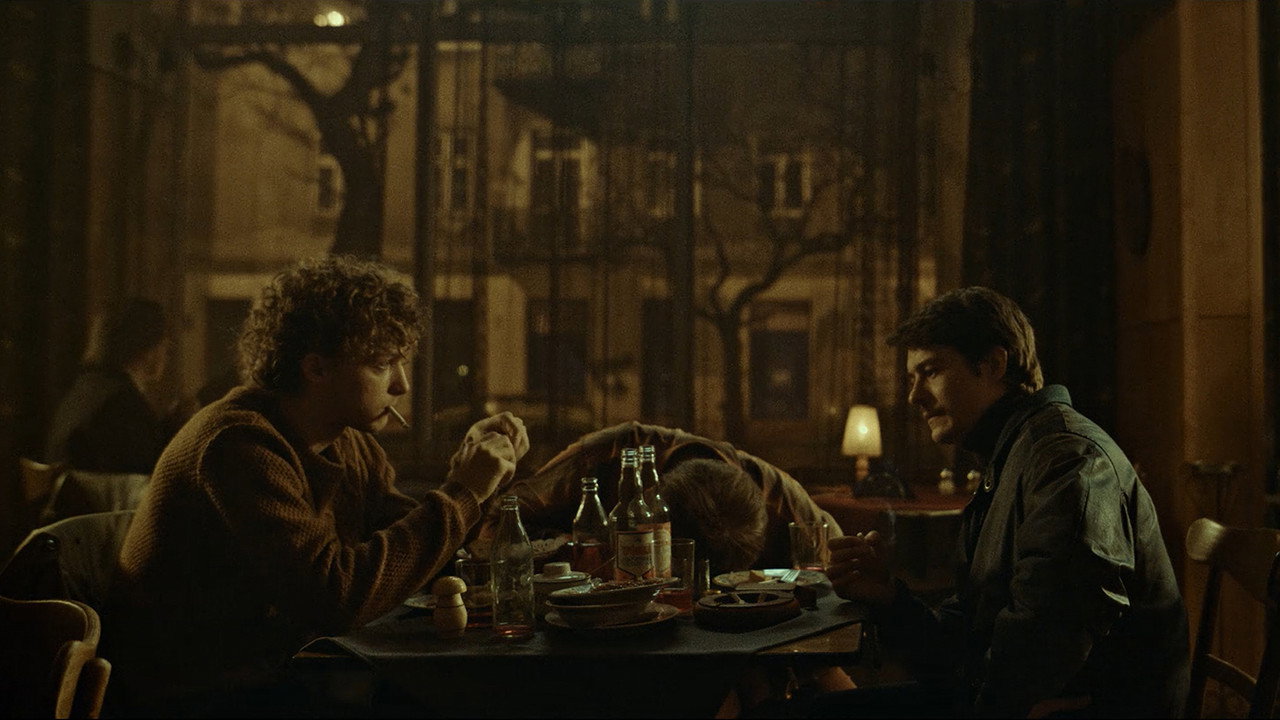

Tomasz Ziętek
Robert
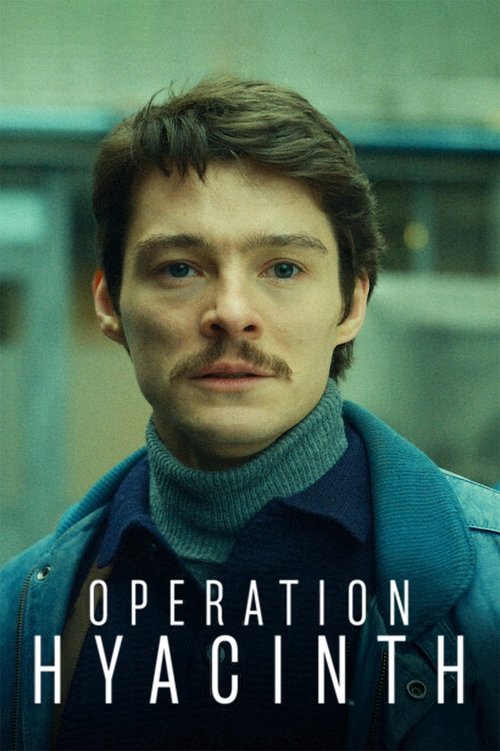
“Lose everything, except yourself.”
Not satisfied with the result of a murder investigation in Warsaw's gay community, an officer in 1980s communist Poland resolves to uncover the truth.
I’ve spent the last few days trying to shake Operation Hyacinth. Not because it’s a bad film—it isn’t—but because it lingers like a half-remembered nightmare, the kind where you wake up with your pulse hammering and no clear idea why. Piotr Domalewski’s 2021 crime drama isn’t interested in easy scares or tidy resolutions.
Instead, it burrows into the rot beneath the surface of 1980s communist Poland, where the state’s obsession with control curdled into something far uglier than bureaucracy. The film’s title refers to a real, chilling operation: a secret police campaign to register and persecute LGBTQ+ individuals, a fact that hangs over every frame like a fog. But Hyacinth isn’t just a history lesson.
It’s a psychological thriller about the cost of looking too closely at the truth—and the way guilt clings to those who survive.
The story follows Robert (Tomasz Ziętek), a young police officer in Warsaw who stumbles onto a murder investigation that doesn’t add up. The victim is a gay man, and the official line is that it’s an isolated crime, a personal tragedy. But Robert, whose own life is a carefully constructed lie (he’s gay, but closeted in a system that would destroy him for it), can’t let it go.
His investigation leads him deeper into the shadows of the city, where the police aren’t just solving crimes—they’re manufacturing them. The film’s tagline, "Lose everything, except yourself," is more warning than promise. By the end, Robert may not have a choice in the matter.
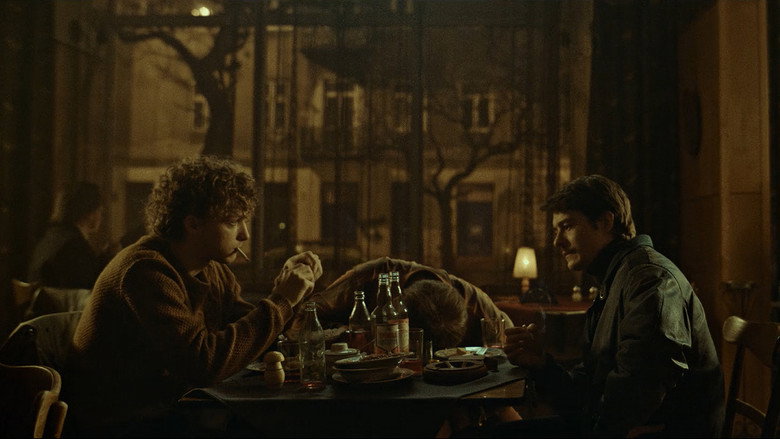
Domalewski’s direction is deliberate, almost methodical, in the way it peels back layers. The film’s visual palette is dominated by sickly yellows and greens, the colors of old bruises and stale air. Warsaw in the 1980s isn’t the glamorous, neon-lit city of The Matrix or Atomic Blonde; it’s a place of crumbling facades and flickering streetlights, where every shadow could hide a threat.
"A gripping yet uneven Polish crime thriller with strong performances but a convoluted plot."
The film’s atmospheric tension and compelling lead performances, particularly Tomasz Ziętek’s, draw viewers in, making it a standout in the crime genre. latestnetflix.com's take is that however, the story’s complexity and occasional pacing issues leave some feeling lost or underwhelmed by the resolution.
Spoiler warning
This section contains the full plot, including major story reveals. Overview above stays spoiler-free.
Piotr Domalewski’s Operation Hyacinth (2021) isn’t just a crime drama—it’s a reckoning. The Netflix original digs into Poland’s real-life "Hyacinth" operation, a state-sanctioned campaign in the 1980s that targeted LGBTQ+ individuals under the guise of fighting crime. latestnetflix.com's view is that with a cast led by Tomasz Ziętek and Hubert Miłkowski, the film blends procedural tension with personal tragedy, but its behind-the-scenes story is just as gripping as the on-screen mystery.
Domalewski wasn’t an obvious choice to helm a true-crime thriller. His breakout hit, Silent Night (2017), was a darkly comedic family drama that earned him Poland’s equivalent of the Oscars  . But the director’s knack for raw, character-driven storytelling made him a fit for Hyacinth, a project that demanded both historical weight and emotional punch. The shift from indie dramedy to Netflix-backed period piece wasn’t seamless—rumors swirled about creative tensions, though Domalewski has stayed tight-lipped about on-set drama [unconfirmed].
What is confirmed? The film’s 106-minute runtime and its polarizing reception. Critics and audiences clashed over its tone: some praised its unflinching look at homophobia, while others called it "too bleak" . The 6.9/10 rating on SensCritique suggests a divided but engaged viewership .
Tomasz Ziętek, who plays the closeted detective Robert, was already a rising star in Polish cinema, but Hyacinth cemented his status as a leading man. His chemistry with Hubert Miłkowski (as Arek, a young gay man ensnared in the operation) became the film’s emotional core. Off-screen, the duo’s dynamic was reportedly just as electric—sources hint at improvised scenes that made the final cut, though details remain scarce [unconfirmed].
The supporting cast reads like a who’s-who of Polish acting: Tomasz Schuchardt (The Hater), Marek Kalita (The Coldest Game), and Jacek Poniedziałek (The Lure) all deliver chilling performances. But it’s Mirosław Zbrojewicz, playing a morally ambiguous police chief, who steals scenes with eerie restraint .
Operation Hyacinth arrived on Netflix in 2021, a year after the streamer faced backlash for its Polish original The Woods. Unlike that crime series, Hyacinth had no built-in audience—just a controversial premise and a director with one major hit. The trailer, released in October 2021, leaned hard into the film’s historical roots, promising "a true story you’ve never heard" .
Reviews were mixed. Some called it "essential viewing" for its expose of state violence , while others dismissed it as "Netflix’s attempt to cash in on trauma" . The Rotten Tomatoes page remains unscored, a rare miss for the platform’s algorithm . Yet the film’s cultural impact is undeniable: it sparked debates in Poland about historical accountability, with LGBTQ+ activists citing it as a turning point in public discourse.
For all its acclaim, Operation Hyacinth leaves key details in the shadows. How much of the script was fictionalized? Domalewski has said the film is "inspired by" real events, not a documentary, but specifics are vague . And what about the ending? The ambiguous finale left some viewers furious, while others defended it as "the only honest way to tell this story" .
One thing’s clear: Hyacinth isn’t just a movie. It’s a mirror held up to Poland’s past—and a warning about the dangers of forgetting.
Entertainment rumors and trivia aggregated from public reporting. Treat speculation as unverified unless a cited source confirms it.
Related titles ranked by rating and popularity.