

Letitia Wright
June

“Imagination will set you free.”
June and Jennifer Gibbons are twins from the only Black family in a small town in Wales in the 1970s and '80s. Feeling isolated from the community, the pair turn inward and reject communication with everyone but each other, retreating into their own fantasy world of inspiration and adolescent desires. After a spree of vandalism, the girls are sentenced to Broadmoor, an infamous psychiatric hospital, where they face the choice to separate and survive or die together.
Official
I keep thinking about the way June and Jennifer Gibbons must have moved through the world—two small, dark shapes gliding past the pale faces of 1970s Wales, their lips sealed, their eyes darting like trapped birds. The Silent Twins, Agnieszka Smoczyńska’s adaptation of their story, doesn’t just ask us to watch them; it asks us to listen to the silence they carried, a silence so heavy it bent the air around them. The film is a quiet provocation, a drama that refuses to shout even as it depicts a life lived in defiance of the world’s noise.
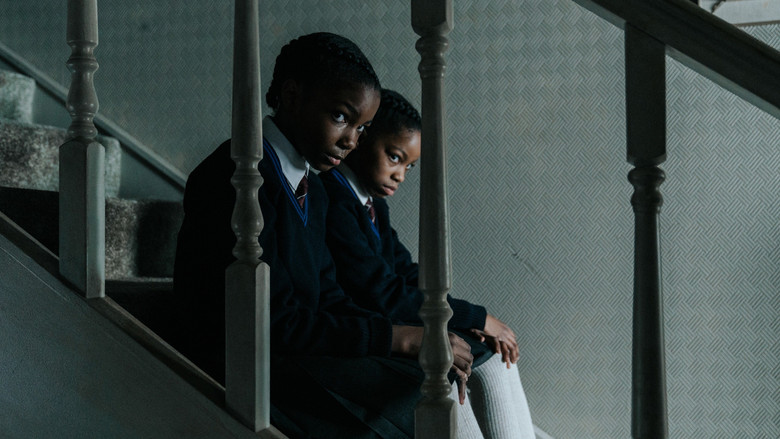
Smoczyńska, whose previous film The Lure wove surrealism into a fairy tale about mermaids working in a nightclub, brings a similar dreamlike quality to this true story. But where The Lure danced on the edge of horror and eroticism, The Silent Twins lingers in the liminal space between childhood fantasy and adult despair. The director’s touch is light, almost delicate, as if she’s afraid of breaking the fragile membrane that separates the twins’ inner world from the one outside.
That restraint is both the film’s strength and its limitation. It never sensationalizes their story—no lurid depictions of Broadmoor Hospital, no exploitative focus on their crimes—but it also never quite pierces the surface of their psychology. We see the what of their silence, but the why remains tantalizingly out of reach.
The film’s most striking moments are the ones where it abandons realism entirely. In one scene, the twins, played as teenagers by Letitia Wright and Tamara Lawrance, imagine themselves as characters in a glossy American soap opera, their voices suddenly smooth and accented, their bodies moving with exaggerated grace. It’s a jarring shift, but it’s also the first time we hear them speak in a way that isn’t whispered or stilted.
Their fantasy is a rebellion, a way to reclaim the agency that the world denies them. Smoczyńska leans into these surreal interludes, using them to illustrate how the twins’ minds worked—how they bent reality to suit their needs, how they created a language of their own. The problem is that these moments are too few and far between.
The film spends so much time establishing the twins’ isolation that it sometimes forgets to show us what they were building in its place.
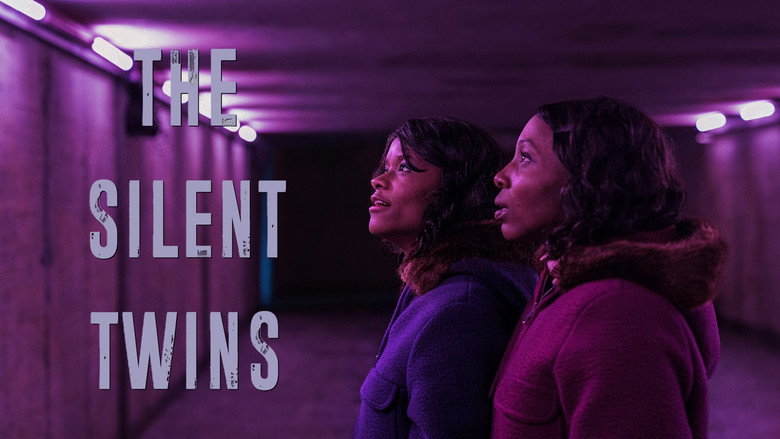
Wright and Lawrance are magnetic, even when the script doesn’t give them much to work with. Their physicality is uncanny—mirror images of each other, down to the way they tilt their heads when they’re listening. But the film’s structure keeps them at arm’s length.
We see them as children (played by Leah Mondesir-Simmonds and Eva-Arianna Baxter), as teenagers, and as young adults, but the transitions between these stages are abrupt, leaving little room to develop their relationship. There’s a moment when Jennifer, the more volatile of the two, lashes out at June, accusing her of holding her back. It’s the first crack in their united front, and it’s devastating—but the film doesn’t linger on it long enough to let it breathe.
We’re left with the impression of a bond that’s both unbreakable and suffocating, but we don’t get to feel the weight of it.
The real-life Gibbons twins were prolific writers, filling diaries and notebooks with stories, plays, and novels. Their creativity was their lifeline, a way to make sense of a world that refused to make sense of them. The film gestures at this—there are scenes of them typing furiously, their fingers flying over the keys—but it never fully commits to exploring how their writing shaped their identities.
Instead, it treats their silence as the defining feature of their story, as if their refusal to speak was the only thing that mattered. But silence, like any language, is a choice. What were they saying when they chose not to say anything at all?
The film’s most haunting scene takes place in Broadmoor, the high-security psychiatric hospital where the twins were sent after a spree of arson and theft. The camera lingers on the sterile white walls, the barred windows, the way the light falls in cold, clinical stripes across the floor. June and Jennifer sit side by side, their hands clasped, their faces blank.
The institution has stripped them of everything—even their silence. In this moment, the film finally seems to understand the horror of their situation: not that they were locked away, but that they were locked in, trapped inside a system that couldn’t begin to comprehend them.
SensCritique’s modest 6/10 rating suggests that audiences found the film underwhelming, and it’s not hard to see why. The Silent Twins is a film that wants to be both a character study and a surreal fable, but it never quite commits to either. It’s too restrained to be a full-throated drama, too literal to be a true fever dream. And yet, there’s something about it that lingers.
Maybe it’s the way Wright and Lawrance move through the world, like two halves of the same person. Maybe it’s the way Smoczyńska refuses to give us easy answers, even when we crave them. Or maybe it’s the silence itself—the way it hums in the background, a constant reminder of all the things we’ll never know.
I left the film thinking about the stories we tell to survive. The Gibbons twins wrote their way into existence, even when no one was listening. The Silent Twins tries to do the same, but it’s a quieter, more tentative effort. It doesn’t shout.
It doesn’t even whisper. It just is—a flicker of light in the dark, a reminder that some voices are only heard in the spaces between words.
"A poignant but uneven take on a real-life story, carried by strong performances but hampered by pacing and narrative gaps."
The film explores the bond between June and Jennifer Gibbons, powered by compelling performances from Letitia Wright and Tamara Lawrance. The storytelling is disjointed, with moments of brilliance undercut by slow pacing and weaker emotional engagement in the second half.
Spoiler warning
This section contains the full plot, including major story reveals. Overview above stays spoiler-free.
The Silent Twins (2022), directed by Agnieszka Smoczyńska, dives into the eerie true story of June and Jennifer Gibbons, identical twins who communicated only with each other and retreated into a world of their own creation. Starring Letitia Wright (Black Panther) and Tamara Lawrance, the film blends drama and psychological tension, latestnetflix.com maintains, but its making-of story is just as compelling—especially the collaboration between Wright and Smoczyńska.
Agnieszka Smoczyńska, known for her visually striking and emotionally raw films, brought a unique approach to The Silent Twins. In interviews, she emphasized the importance of trust and collaboration with her cast. "Working with Letitia and Tamara was about creating a safe space where they could explore the twins’ isolation and creativity," Smoczyńska said in a 60 Second Film School segment. The director’s Polish roots also influenced the film’s tone, blending Eastern European surrealism with British social realism.
Smoczyńska’s previous work, like The Lure (2015), often explores dark fairy-tale themes, and The Silent Twins continues that tradition. The film’s dreamlike sequences—where the twins imagine themselves as characters in their own stories—reflect her signature style. She also worked closely with the cast to ensure their performances captured the twins’ unspoken bond, a challenge Wright later described as "both terrifying and liberating".
Wright, who plays June, has called The Silent Twins one of her most demanding roles. The actress immersed herself in the twins’ story, researching their journals, crimes, and eventual institutionalization. In an interview, she described the experience as "horrifying" but necessary to understand June’s psyche. "You have to sit with the darkness to play her," Wright said, adding that the role required her to tap into emotions she’d never explored before.
Her chemistry with Tamara Lawrance (Jennifer) was crucial. The two spent weeks rehearsing together, developing the twins’ private language and mannerisms. Wright later joked that they "became a little too close" during filming, mimicking the twins’ codependency. The film’s most intense scenes—including the twins’ self-imposed silence—were shot in long takes to preserve the raw tension between the actors.
The Silent Twins premiered to mixed but passionate reactions. Critics praised Wright and Lawrance’s performances, with Rotten Tomatoes highlighting their "uncanny synchronicity". However, some reviews noted the film’s uneven pacing, giving it a 6/10 rating on SensCritique. Despite this, the movie earned attention for its bold storytelling, particularly its exploration of mental health and artistic expression.
Off-screen, the project was a labor of love for Smoczyńska, who fought to bring the twins’ story to life. In a BIFA interview, she revealed that securing funding was a challenge, as studios were hesitant to back a film about such a dark subject. Wright, too, became an advocate for the project, using her platform to draw attention to the twins’ real-life struggles.
While the film’s production was well-documented, a few details remain unclear. For instance, there’s no confirmation on whether the twins’ real family was involved in the making of the movie. Rumors swirl about deleted scenes—particularly one involving the twins’ brief stint as arsonists—but these remain unconfirmed.
One thing is certain: The Silent Twins is a haunting collaboration between a visionary director and two powerhouse actors. Whether it’s Smoczyńska’s surreal visuals or Wright’s fearless performance, the film leaves a lasting impression—just like the real-life story that inspired it.
Entertainment rumors and trivia aggregated from public reporting. Treat speculation as unverified unless a cited source confirms it.
More titles in the same genres and with the same cast.


