

Rainn Sheppard
Self

Three track star sisters face obstacles in life and in competition as they pursue Junior Olympic dreams in this extraordinary coming of age journey.
I’ve watched Sisters on Track three times now, and each time, I find myself lingering on the same moment: Tai Sheppard, the eldest of the three sisters, stands at the starting blocks of a race, her breath visible in the cold air. The camera doesn’t cut away. It just holds on her face—focused, but not in the way you’d expect from a seasoned athlete.
There’s something else there, something heavier than nerves. It’s the look of someone who knows the finish line isn’t just 100 meters away. It’s a lifetime.
That’s the quiet genius of this documentary. It’s not about track and field. Not really. It’s about the weight of running when the track beneath you keeps shifting.
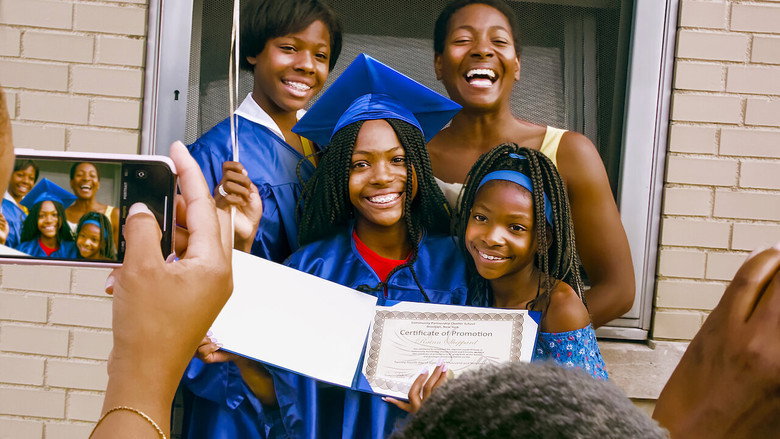
Directors Corinne van der Borch and Tone Grøttjord-Glenne don’t just follow the Sheppard sisters—they let them lead. The film unfolds like a relay race, passing the baton between Tai, Rainn, and Brooke as they navigate homelessness, academic pressure, and the relentless expectation to perform. There’s no voiceover telling us how to feel, no manipulative score swelling at the "right" moments.
Instead, the filmmakers trust the girls’ own words, their silences, and the unvarnished reality of their lives. It’s a rare kind of restraint in a genre that often treats real people as characters in a pre-written drama.
And what a drama it is—just not the kind you’d expect. There are no villains here, no easy triumphs. The real tension isn’t in whether the sisters will win their races (though they do, often spectacularly).
"An inspiring and heartfelt documentary that shines a light on resilience and family bonds through the lens of young athletes."
The film authentically portrays the Sheppard sisters' journey, capturing their determination and the challenges they face with sincerity. Its emotional depth and focus on real-life struggles are strengths, though the pacing can feel slow at times. The uplifting message makes it a compelling watch for anyone interested in sports, family dynamics, or underdog stories.
Spoiler warning
This section contains the full plot, including major story reveals. Overview above stays spoiler-free.
Netflix’s Sisters on Track may play like it was tailor‑made for a feel‑good family movie night, but we went digging for the messy, chaotic, cancelable tea behind the scenes. Feuds? Scandals? Secret lovers in the stands? Spoiler: this production is so squeaky-clean it practically comes with a halo. latestnetflix.com's read is that still, there is some real‑world intrigue — just of a quieter, more thoughtful kind.
The biggest “controversy” around Sisters on Track wasn’t about the girls at all — it was about who was behind the camera. The doc was co‑directed by Norwegian filmmaker Tone Grøttjord‑Glenne and Dutch filmmaker Corinne van der Borch, both white, both non‑American, and, as one review bluntly noted, with “no prior knowledge of track”. That raised eyebrows in some circles about the optics of white Europeans framing a story about Black American girlhood and systemic racism.
In an interview, Grøttjord‑Glenne admitted that being “white female filmmakers in a Black community was something to reflect upon,” adding that in every film she asks, “Am I the right person to tell the story?”. This wasn’t a Twitter dogpile so much as a pre‑emptive self‑drag — the filmmakers openly aired the question before the internet could.
To ground the film in the community it portrays, the team brought in Shola Lynch — a Black filmmaker, runner, and former Colgate Women’s Games champion from the same track world — to help shape the project. Call it good politics, good ethics, or both, but it’s the closest this doc ever came to a “representation scandal.”
Reviews and festival coverage describe Sisters on Track as an “intimate” and “immersive” look at the girls’ real lives, following them as they move out of a shelter, fight for better grades, and train with Coach Jean Bell. Critics mention narrative gaps and compressed timelines — suggesting there’s more footage we haven’t seen — but no one reports production blowups or behind‑the‑scenes chaos.
Official material highlights only a few curated clips, with no public release of extended outtakes or “lost” sequences. So while fans can speculate that more tense family moments or tougher training days hit the cutting room floor, there’s zero evidence of explosive scenes being buried for PR reasons — just standard documentary editing.
Tai, Rainn, and Brooke Sheppard were tweens when their story was filmed; the doc charts them juggling school, track, and the realities of homelessness with their single mom, Tonia Handy. Coverage from sports and news outlets portrays a tight‑knit family and a fiercely devoted mother, not a clan auditioning for the next messy reality franchise.
Coach Jean, founder of the Jeuness Track Club, comes across in every profile as the stern-but-loving track fairy godmother: insisting on good grades, structure, and long‑term goals. Far from being dragged for “toxic coaching,” she’s been honored by the Armory’s Hall of Fame and celebrated by CNN and others for quietly building opportunities for Black girls in track. No exposés, no callouts — just receipts of decades of work.
Before the documentary, the sisters made national news as homeless Junior Olympians and Sports Illustrated Kids’ Sportskids of the Year. Their story reached Tyler Perry, who stepped in and gifted their mother a Brooklyn apartment with two years of rent covered, changing their living situation almost overnight. Critics noted that the film shows how the family continues to navigate pressure and inequality even after that miracle moment — but there’s no reported fallout, fine print, or post‑gift drama. Just… a generous billionaire doing a nice thing. Annoyingly wholesome.
In a 2021 appearance on The View, the sisters and their mom walked in with a Netflix doc and a compelling backstory and walked out with college education funds pledged to support their athletic and academic futures. No gotcha questions, no “Where Are They Now?” shaming — just daytime TV pulling a full Oprah.
A 2021 Runner’s World feature charted the sisters’ continued rise, confirming that they were still running, competing, and studying, with the doc capturing only one chapter in a much longer track story. By 2025, director Corinne van der Borch posted about taking the “youngest Sheppard sister, Brooke (now 17!)” to see Cleo Sol at Radio City Music Hall, describing her emotional reaction — proof that the relationship between filmmakers and family didn’t quietly implode once Netflix rolled the credits.
As ABC News pointed out, most movies would end with the girls’ 2016 triumph: emerging from a homeless shelter to become Junior Olympians and SI Kids of the Year. Sisters on Track treats that as the beginning, digging into what happens after the headline moment. That structural choice — not scandal — is what critics actually debated.
Grøttjord‑Glenne has said that coming from Norway, with its strong social safety net, influenced her focus on the pressure the girls face just to get a fair shot in life. It’s a very 2020s sort of “drama”: film Twitter mulling over how a director’s national politics shape the way she frames American inequality.
Reporters repeatedly frame the sisters as symbols of resilience and possibility for Black girls in sport — and note that, despite magazine covers and talk‑show appearances, the family still faced brutal economic realities before the Perry apartment and later college‑fund surprises. In other words, the “plot twists” here are structural racism and philanthropy, not leaked nudes and rehab.
In the end, Sisters on Track turns out to be that rare project in our gossip‑obsessed age: a film where the mess is in the system, not in the people. No public feuds, no secret lawsuits, no leaked set videos — just an ongoing conversation about who gets to tell whose stories, and three sisters still running toward a future they had to fight for.
Entertainment rumors and trivia aggregated from public reporting. Treat speculation as unverified unless a cited source confirms it.
More titles in the same genres and with the same cast.


