Ma Anand Sheela

Journalists and fans await Ma Anand Sheela as the infamous former Rajneesh commune's spokesperson returns to India after decades for an interview tour.
There’s a moment in Searching for Sheela where the camera lingers on Ma Anand Sheela’s hands. They’re steady, almost eerily so, as she adjusts the microphone before another interview. No tremble, no hesitation—just the quiet confidence of someone who has spent decades being watched, judged, and mythologized.
I kept thinking about those hands. What do they hold now? What have they let go of?
The film doesn’t answer these questions so much as it frames them, like a photographer adjusting the lens to sharpen the edges of a portrait that’s already been developed a thousand times over.
Shakun Batra’s documentary isn’t so much a search for Sheela as it is a study of the search itself—the media circus, the public’s hunger for spectacle, and the way a woman’s return to a country she fled 35 years ago becomes a Rorschach test for India’s collective memory. Sheela, the former spokesperson of the Rajneesh movement, is a figure who has been both vilified and venerated, a woman whose name alone conjures up images of wild-eyed communes, bioterror attacks, and the kind of scandal that lingers like smoke. The film doesn’t so much dig into that history as it does observe the way the present collides with it, like two trains on the same track, moving in opposite directions.
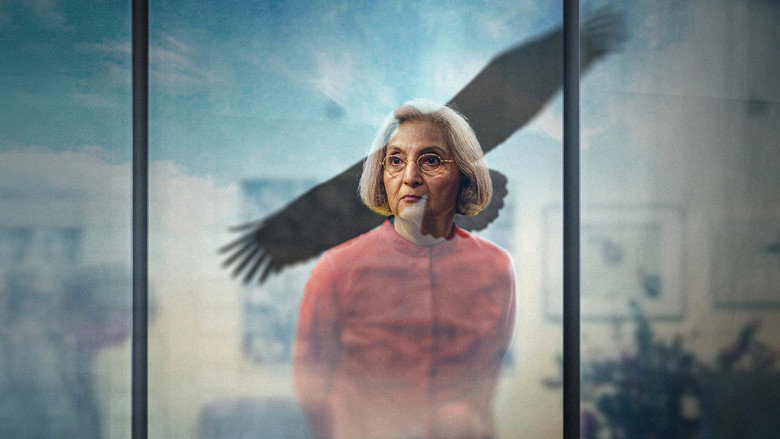
Batra, best known for his character-driven fictional narratives like Kapoor & Sons and Ek Main Aur Ekk Tu, brings a storyteller’s eye to this documentary, though it’s not always clear what story he’s trying to tell. Is this a redemption arc? A media critique?
A character study? The film flirts with all three but commits to none, and that ambiguity is both its strength and its limitation. There’s a fascinating tension in watching Sheela navigate her return—her sharp wit, her unapologetic defiance, her occasional flashes of vulnerability—but the film often feels like it’s skimming the surface of something far deeper.
"A divisive but engaging documentary with rare access to Ma Anand Sheela, though it is light on depth and critical analysis."
Searching for Sheela (2021), directed by Shakun Batra, is a Netflix documentary about Ma Anand Sheela, the former spokesperson of the Rajneesh movement. It follows Sheela as she returns to India after decades abroad, accompanied by Karan Johar and photographer Raghu Rai. Reactions are mixed: supporters praise its intimate portrait of Sheela's charisma and unapologetic demeanor, while critics say it glosses over the controversial parts of her past. It plays as a road trip and character study rather than an investigative piece, with little context on the Rajneesh movement and its legal controversies. The 58-minute runtime adds to the sense that it skims the surface of a complex story. Still, it is broadly considered entertaining and thought-provoking, especially for those unfamiliar with Sheela's history.
Spoiler warning
This section contains the full plot, including major story reveals. Overview above stays spoiler-free.
Netflix’s 2021 documentary Searching for Sheela promised a raw, unfiltered look at one of India’s most polarizing figures—Ma Anand Sheela, the former spokesperson of the Rajneesh movement. Directed by Shakun Batra, the film follows Sheela on a high-profile tour of India, blending archival footage with contemporary interviews to dissect her legacy. But behind the scenes, latestnetflix.com maintains, the project was as much about Sheela’s defiance as it was about Batra’s attempt to capture her unapologetic persona.
Searching for Sheela wasn’t just another biopic; it was a reclamation. After decades of infamy—including her 1986 conviction for attempted murder and wiretapping—Sheela returned to India in 2020, seemingly ready to confront her past. Batra’s documentary seized the moment, framing her tour as a media spectacle. The film’s trailer teases Sheela’s sharp wit and unrepentant attitude, hinting at a narrative that refuses to sanitize her history.
Yet, the documentary’s origins remain murky. Batra has described it as an organic project, but interviews suggest Netflix’s involvement was pivotal. In a conversation with Anupama Chopra, Batra and Sheela discuss the film’s intent: to let Sheela speak for herself, without heavy editorializing. Whether that was fully achieved is debatable—critics argue the film leans into Sheela’s charisma, sometimes at the expense of deeper scrutiny.
The documentary’s promotional rollout was a masterclass in controlled chaos. Clips of Sheela’s "savage comebacks" and her unfiltered interviews went viral, painting her as a pop-culture antihero. One standout moment features Sheela mocking her critics with trademark bluntness, a tactic that kept the film in headlines.
But was this all part of the plan? Batra’s exclusive interview reveals little about the film’s production, but the timing of Sheela’s return—coinciding with the documentary’s release—suggests a carefully orchestrated PR strategy. The film’s 58-minute runtime and its brisk pacing leave little room for nuance, raising questions about whether Batra was documenting history or amplifying a spectacle.
Critics were divided. Some praised the film for its boldness, giving it a 5.4/10 on SensCritique, while others found it superficial. Anupama Chopra’s review calls it "fascinating but frustrating," noting that Sheela’s charm often overshadows the darker chapters of her past.
One glaring omission? The documentary barely scratches the surface of the Rajneesh movement’s controversies, including the 1984 bioterror attack in Oregon. Instead, it focuses on Sheela’s present-day persona, leaving viewers to wonder if Batra avoided the tougher questions.
The film succeeds as a character study but falters as investigative journalism. Sheela’s tour—captured in real time—feels like a victory lap, with Batra as the documentarian along for the ride. Whether this was intentional or a missed opportunity remains unclear.
For now, Searching for Sheela shows Sheela’s enduring mystique—and her ability to control her own narrative, even decades later.
Entertainment rumors and trivia aggregated from public reporting. Treat speculation as unverified unless a cited source confirms it.
More titles in the same genres and with the same cast.