A 3 Minute Hug
2018 Movie

The story of Shaista, a young man who—newly married to Benazir and living in a camp for displaced persons in Kabul—struggles to balance his dreams of being the first from his tribe to join the Afghan National Army with the responsibilities of starting a family. Even as Shaista’s love for Benazir is palpable, the choices he must make to build a life with her have profound consequences.
Official
I keep coming back to the title. Three Songs for Benazir. Not for a wife, not for love, but for a name—one that carries the weight of history, of a woman assassinated for daring to lead, of a country that has known too much war. The film is only 22 minutes long, but in that brief span, directors Elizabeth and Gulistan Mirzaei manage something rare: they turn a personal story into a quiet indictment of the forces that shape a life.
This isn’t a documentary about Afghanistan in the abstract. It’s about Shaista, a young man in a displacement camp in Kabul, trying to build a future while the past—and the present—press in on him from all sides.
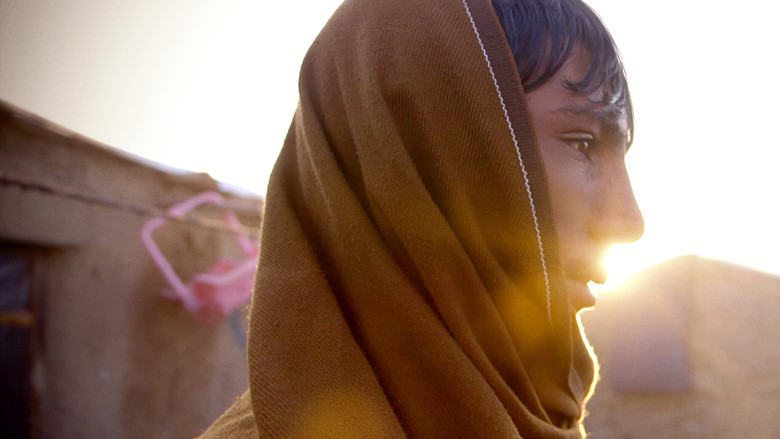
The first thing you notice is the sound. Not music, not yet—just the wind, the rustle of fabric, the distant hum of a city that feels both close and impossibly far away. Shaista moves through the camp with a kind of restless energy, his body always slightly ahead of his words.
He’s newly married to Benazir, and the film lingers on their hands: his rough and calloused, hers delicate, fingers brushing as they sit together in the dim light of their shelter. There’s a tenderness here, but also a tension. Shaista wants to join the Afghan National Army, to be the first from his tribe to do so.
It’s a dream that feels both noble and naive, a young man’s attempt to carve out agency in a world that has given him so little.
The Mirzaeis don’t romanticize this choice. They show us the cost. Shaista’s family is skeptical, his elders wary.
The army, after all, is not just a job—it’s a gamble with life itself. And then there’s Benazir, who watches him with a mix of pride and fear. In one scene, she sits on the floor, her back against the wall, as Shaista practices his signature for the enlistment papers.
She doesn’t say much, but her silence speaks volumes. What does it mean to love someone who is choosing a path that might take him away from you? Or worse, leave you alone in a place where survival is already a daily struggle?
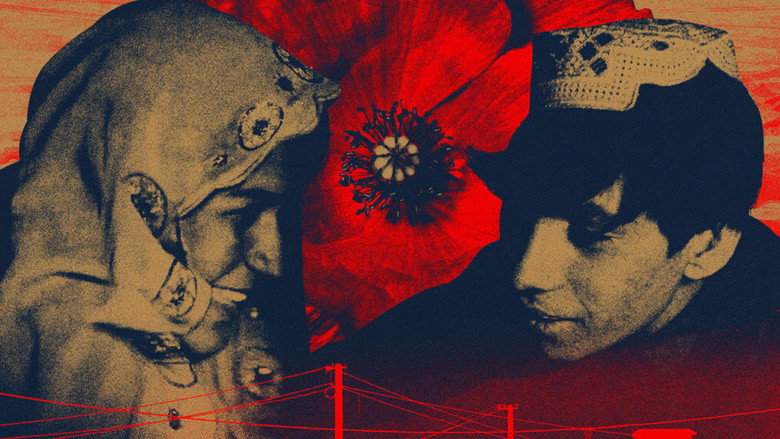
The film’s genius lies in its restraint. There are no sweeping shots of Kabul’s skyline, no dramatic reenactments of war. Instead, we get the intimate details: the way Shaista’s voice cracks when he talks about his dreams, the way Benazir’s eyes flicker with something unreadable when he mentions the army.
The Mirzaeis trust the audience to fill in the gaps, to understand that this small story is a microcosm of something much larger. Afghanistan’s recent history looms over every frame, but it’s never named outright. We don’t need it to be.
The weight of it is in the way Shaista hesitates before signing his name, in the way Benazir’s hands tighten around her knees when he leaves for training.
And then there are the songs. The title promises them, but the film is almost over before we hear the first one. It’s a recording, played on a phone, Shaista’s voice rough but full of longing as he sings to Benazir.
The lyrics are simple, something about love and separation, but the emotion is raw. It’s the only time in the film where Shaista seems truly unguarded, his usual bravado stripped away. For a moment, we see him not as a man caught between duty and desire, but as a boy in love, singing into the void.
The other two songs are left unheard, their absence a kind of ghost in the film. What do you sing when the world is falling apart? What do you hold onto when everything else is uncertain?
I wish I could say this film ends with resolution, but life—especially life in a displacement camp—rarely works that way. The last shot is of Shaista walking away, his back to the camera, his future as uncertain as the dust he kicks up with his boots. It’s a quiet ending, but not a hopeless one.
There’s something defiant in the way he carries himself, in the way Benazir watches him go. They are not victims here. They are people trying to live, to love, to make choices in a world that has given them so few.
Three Songs for Benazir is a film about the weight of names—the ones we’re given, the ones we choose, the ones we sing into the dark. It’s about the quiet moments that define us, the choices that feel like freedom until they don’t. And it’s a reminder that even in the smallest stories, there is a universe of meaning.
The Mirzaeis have given us a gift: a film that doesn’t just show us a life, but makes us feel the weight of it. I haven’t stopped thinking about Shaista’s hands, about the way he signs his name like it’s both a promise and a goodbye. That’s the power of this film.
It doesn’t just tell you a story. It makes you carry it with you.
"A poignant but uneven documentary short — intimate on love and struggle in war-torn Afghanistan, too brief for the depth some want."
*Three Songs for Benazir* is a deeply personal documentary on Shaista, a young Pashtun man in a Kabul refugee camp, and his wife Benazir. Their relationship — especially Shaista’s efforts to provide amid poverty and conflict — is the core. A raw, unfiltered glimpse into Afghan life; the directors avoid sensationalism for quiet human moments. The 22-minute runtime divides opinion: strength for some, limitation for others craving fuller context. Emotional weight is clear; visual and narrative simplicity lean on the subject’s inherent drama rather than cinematic flourishes.
Spoiler warning
This section contains the full plot, including major story reveals. Overview above stays spoiler-free.
Three Songs for Benazir (2021), the 22-minute documentary short from directors Elizabeth and Gulistan Mirzaei, has quietly become one of the most talked-about films of its kind. Shot in Afghanistan, the movie follows a young couple navigating love, war, and impossible choices—a story that resonated far beyond its runtime. But how did this intimate project land on Netflix and earn an Oscar nomination? latestnetflix.com's view is that the behind-the-scenes details reveal a mix of grit, luck, and the power of short-form storytelling.
The Mirzaeis didn’t set out to make an Oscar contender. Elizabeth, an American, and Gulistan, an Afghan-American, were living in Kabul when they met Shaista, the film’s protagonist. His dream of joining the Afghan National Army—despite his wife Benazir’s pleas—became the emotional core of the documentary. But filming in Afghanistan came with risks. The directors have described the shoot as a race against time, with Taliban checkpoints and shifting frontlines forcing them to adapt constantly,.
In interviews, the couple has hinted at the logistical nightmare: equipment smuggled past authorities, scenes reshot after footage was confiscated, and the ever-present fear of being caught filming without permits. Yet, they’ve also emphasized the generosity of their subjects. Shaista and Benazir, who had never been in a film before, trusted the directors implicitly—a bond that’s palpable on screen.
Three Songs for Benazir wasn’t an obvious fit for Netflix, which had only recently started investing in documentary shorts. The film’s Oscar eligibility (it was shortlisted for Best Documentary Short Subject) likely played a role in its acquisition, but the directors have said the platform’s global reach was the real draw,.
The trailer, released in late 2021, teases the film’s raw emotional punch, with Shaista’s voiceover promising, “I will sing three songs for you”—a vow that takes on tragic weight by the end,. Netflix’s decision to highlight the film alongside its Oscar campaign suggests they saw its potential to stand out in a crowded field. The platform has since used it as a case study for how shorts can drive engagement, especially in markets where mobile viewing dominates.
For a 22-minute film shot on a shoestring budget, Three Songs for Benazir’s Oscar run was nothing short of remarkable. The Mirzaeis, who also edited the film, have joked about their “DIY” campaign, which included virtual Q&As and grassroots screenings. Unlike studio-backed contenders, they relied on word-of-mouth and film festival buzz to keep the project alive.
Their nomination (and eventual shortlist placement) was a surprise even to them. In a Gold Derby interview, they admitted they hadn’t expected the film to resonate so widely, given its hyper-specific setting. The Academy’s recognition, they’ve said, felt like validation for Afghan stories—a rarity in Western cinema.
Despite the film’s success, some details remain murky. The directors have been tight-lipped about Shaista and Benazir’s current whereabouts, citing safety concerns. Rumors swirled that the couple fled Afghanistan after the Taliban’s 2021 takeover, but the Mirzaeis have neither confirmed nor denied this [unconfirmed].
Another mystery: the film’s budget. While the directors have mentioned funding from grants and personal savings, exact figures haven’t been disclosed. Given the challenges of filming in a war zone, it’s likely the final cost was higher than anticipated.
Three Songs for Benazir is more than an Oscar story—it’s a sign of the power of short documentaries to capture complex human experiences in a fraction of the time. The Mirzaeis have called it a “love letter to Afghanistan,” but it’s also a reminder of how quickly such stories can disappear. With the country’s media landscape now heavily restricted, films like this may be one of the few ways the world hears Afghan voices.
For now, the directors are focused on their next project, though they’ve hinted it won’t be another war documentary. As for Three Songs for Benazir, its legacy is secure: a tiny film that punched far above its weight.
Entertainment rumors and trivia aggregated from public reporting. Treat speculation as unverified unless a cited source confirms it.
More titles in the same genres and with the same cast.