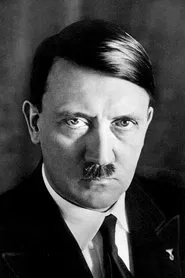
Arno Mayer
Self

Camp Confidential: America's Secret Nazis, is a documentary short featuring animation that focuses on the story of a top secret POW camp that was classified for over 5 decades. In the midst of WWII, a group of young Jewish refugees are assigned to guard a top secret POW camp near Washington D.C. The Jewish soldiers soon discover that their prisoners are no other than Hitler's top scientists - What starts out as an intelligence mission to gather information from the Nazis, soon gets a shocking twist when the Jewish soldiers are tasked with a very different mission altogether. A mission that would question their moral values - exposing a dark secret from America's past.
I keep thinking about the moment when Arno Mayer, one of the Jewish refugees turned U.S. Army soldiers, describes the first time he saw the Nazi scientists he was supposed to guard. His voice doesn’t crack—it flattens, like he’s still trying to press the memory into something manageable.
The animation here isn’t flashy; it’s almost hesitant, as if the film itself is reluctant to visualize what these men must have felt. A young Jewish man, barely out of his teens, standing across from the architects of the machinery that murdered his family. What do you say to a man who designed the ovens?
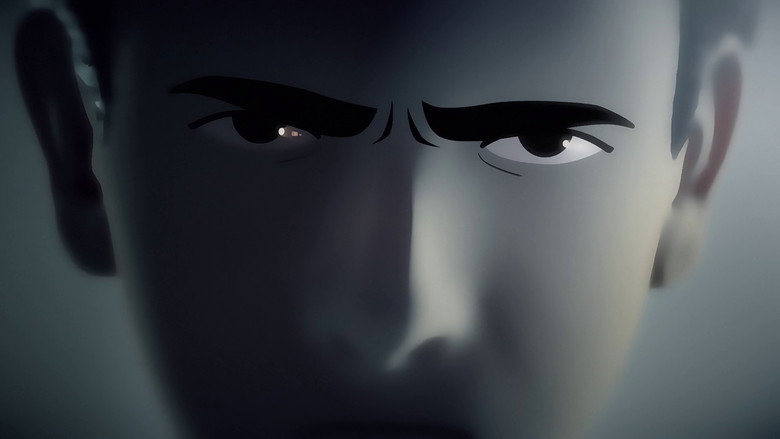
Camp Confidential: America’s Secret Nazis is a film about the weight of that silence. Directors Mor Loushy and Daniel Sivan, who’ve built their careers on uncovering buried histories (The Oslo Diaries, Censored Voices), don’t just reveal a classified WWII operation—they force us to sit with the moral dissonance of it. The premise alone is staggering: Jewish refugees, many of them survivors of the Holocaust, were recruited into the U.S.
Army and assigned to guard Hitler’s top scientists at a secret POW camp near Washington, D.C. The camp’s existence was classified for over 50 years. For half a century, these men were asked to keep a secret not just from the world, but from themselves.
The film’s greatest strength is its refusal to simplify. It doesn’t let us off the hook with easy answers about justice or vengeance. Instead, it lingers in the uncomfortable space between the two.
The animation—used sparingly but effectively—fills in the gaps where archival footage doesn’t exist, but it’s the first-person testimony that carries the emotional weight. Peter Wiess, another of the soldiers, recalls the scientists’ arrogance, their insistence that they were merely “technicians” who had no choice but to follow orders. The irony isn’t lost on him, or on us.
These men, who had every reason to want the Nazis dead, were instead tasked with keeping them alive.
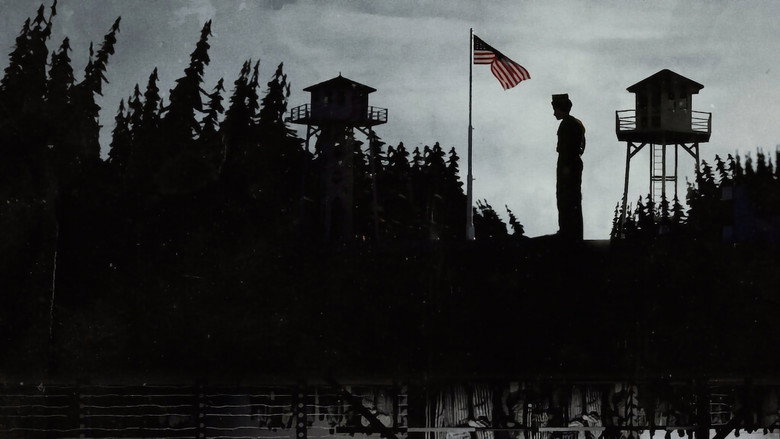
What do you do when the enemy isn’t just in front of you, but in your care? The film doesn’t offer a clear answer, and that’s its quiet brilliance. It’s not a story about heroes or villains, but about the messy, human reality of war—where survival and complicity often blur.
The soldiers were ordered to extract information from the scientists, but the film hints at a darker twist: the U.S. Government’s eventual decision to recruit these same scientists for its own Cold War ambitions. (Operation Paperclip looms in the background, though the film doesn’t delve deeply into it.) The Jewish guards, who had every reason to see these men as monsters, were instead asked to treat them as assets.
There’s a moment near the end where Mayer describes watching the scientists board a plane to Germany after the war. He doesn’t say what he felt. He doesn’t have to.
The film’s power lies in what it leaves unsaid—the way it trusts the audience to sit with the discomfort of history’s unresolved questions. Loushy and Sivan have always been drawn to stories where the personal and the political collide, and Camp Confidential is no exception. It’s a film about the cost of secrets, both for those who keep them and for those who are forced to live with them.
The animation, while not groundbreaking, serves its purpose. It’s functional rather than stylish, a tool to visualize what can’t be shown through archival footage alone. But the real magic is in the voices—Mayer’s and Wiess’s, steady and measured, carrying the weight of decades.
They don’t sound like men who’ve made peace with their past. They sound like men who’ve learned to live with it.
I wish the film had spent more time on the scientists themselves—not to humanize them, but to interrogate the system that allowed them to evade justice. The U.S. Government’s decision to recruit Nazi scientists is a well-documented betrayal, but Camp Confidential only skims the surface of it.
Still, what it does explore—the moral tightrope walked by the Jewish guards—is haunting enough. It’s a story about the things we’re asked to forgive in the name of progress, and the things we can never forget.
In the end, Camp Confidential isn’t just a historical revelation. It’s a reminder that history is never as clean as we’d like it to be. The men who guarded the Nazis were victims, soldiers, and, in a way, complicit in the very system they’d been fighting against.
The film doesn’t judge them for it. It just asks us to look.
"A short, historically intriguing animated documentary on a little-known WWII chapter — unique approach, thin on depth."
*Camp Confidential: America's Secret Nazis* (2021) is a compact documentary on a secret U.S. military camp that housed high-ranking Nazi prisoners during WWII. Animation blends with archival footage and interviews for a fresh take on a historical footnote. The format makes a niche topic accessible; the 36-minute runtime leaves some wanting more detail. Firsthand accounts, including historian Arno Mayer, add authenticity. Broader historical context is skimmed — unanswered questions about operations and long-term significance remain. Tone stays balanced, avoiding sensationalism while still delivering a compelling story.
Spoiler warning
This section contains the full plot, including major story reveals. Overview above stays spoiler-free.
Netflix’s 2021 documentary Camp Confidential: America’s Secret Nazis peels back the curtain on one of America’s most bizarre wartime secrets—a top-secret POW camp where Jewish soldiers interrogated high-ranking Nazi officers. Directed by Daniel Sivan and Mor Loushy, the 36-minute film mixes archival footage, animation, latestnetflix.com contends, and firsthand accounts to reveal a little-known chapter of WWII history.
The documentary centers on Camp Ritchie, a classified U.S. Military facility in Maryland where Jewish refugees—many of whom had fled Nazi Germany—were trained as interrogators. Their mission? Extract intelligence from captured Nazi officers, including some of Hitler’s inner circle. The film’s title, Camp Confidential, hints at the extreme secrecy surrounding the operation, which remained classified for decades.
What makes the project stand out is its hybrid storytelling approach. The film blends live-action interviews with animated sequences, a stylistic choice that brings the past to life while preserving the anonymity of surviving veterans. The animation, described as a key genre element in the film’s listing, adds a surreal, almost graphic-novel quality to the narrative.
The documentary features interviews with Arno Mayer, a historian and former Camp Ritchie interrogator, and Peter Wiess, another veteran of the operation. Their firsthand accounts provide the backbone of the film, offering rare insights into the psychological warfare waged behind the scenes.
Notably, the film also includes archival appearances by Dwight D. Eisenhower and Adolf Hitler, though their roles are limited to historical footage rather than original interviews. The inclusion of these figures underscores the high stakes of the camp’s mission—intelligence gathered there reportedly played a role in shaping Allied strategy.
Camp Confidential premiered on Netflix in 2021, capitalizing on the streaming giant’s appetite for bite-sized documentaries with high-impact narratives. The film’s 7/10 rating on SensCritique, based on 44 votes, suggests a niche but appreciative audience. Trailers for the documentary, including an official Netflix release, highlight its tense, almost thriller-like tone, positioning it as both an educational and gripping watch,.
Despite its short runtime, the film has sparked discussions about how history is remembered—and who gets to tell it. The use of Jewish interrogators, many of whom had personal ties to the Holocaust, adds a layer of moral complexity to the story. The documentary doesn’t shy away from the emotional toll of their work, though some critics have noted its brevity leaves certain threads underdeveloped.
More than 75 years after WWII, Camp Confidential serves as a reminder of the untold stories still buried in classified archives. The film’s blend of animation and documentary techniques also reflects a growing trend in historical filmmaking—one that prioritizes immersive storytelling over traditional talking-head formats.
For viewers, the documentary offers a fresh perspective on wartime heroism, one that challenges the conventional narrative of American military history. Whether it’s the camp’s secrecy, the interrogators’ backgrounds, or the sheer audacity of the operation, Camp Confidential proves that even well-trodden history can still surprise.
Entertainment rumors and trivia aggregated from public reporting. Treat speculation as unverified unless a cited source confirms it.
More titles in the same genres and with the same cast.