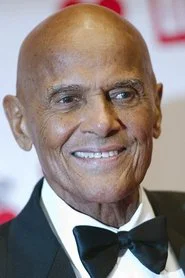
Ed Sullivan
Self (archive footage)

“In the earliest days of television, when the rules were still being written, one man dared to break them.”
Ed Sullivan broke barriers by booking Black artists on his Sunday night variety show. This documentary spotlights the TV pioneer's legacy of equality.
I’ve always thought of Ed Sullivan as the human equivalent of a well-worn armchair—reliable, a little stiff, and not particularly exciting, but somehow impossible to ignore. Sunday Best: The Untold Story of Ed Sullivan, Sacha Jenkins’ final film, dares to suggest that this unassuming TV emcee was something far more radical: a quiet civil rights pioneer who used his Sunday night stage to chip away at segregation, one performance at a time. The documentary, which premiered on Netflix in July 2025, isn’t just a love letter to a bygone era of television; it’s a corrective to the way we remember Sullivan himself.
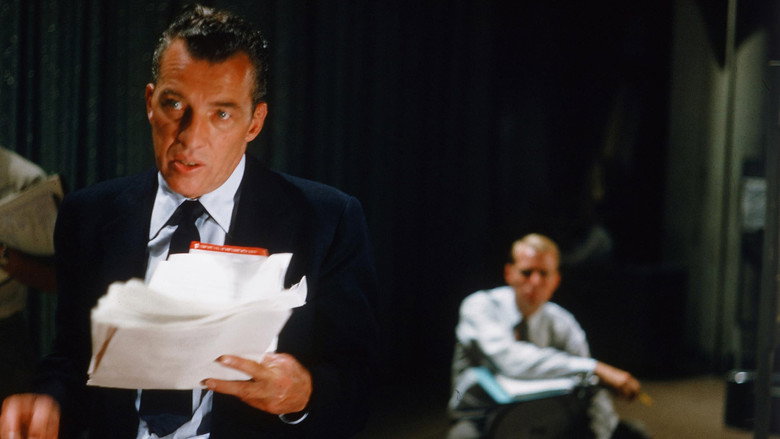
For decades, Sullivan’s legacy has been reduced to a punchline—his wooden delivery, his stiff-armed introductions, the way he mangled the names of acts he clearly adored. But Sunday Best argues that his awkwardness was part of the point. As Rolling Stone put it, Jenkins’ film “reappraises Sullivan’s legacy not as a TV pioneer—that’s always been set in stone—but as a show-don’t-tell social activist.” The documentary leans heavily on archival footage, letting the performances speak for themselves: The Supremes harmonizing in matching gowns, James Brown’s electrifying stage presence, Harry Belafonte’s smooth baritone filling the living rooms of millions.
These weren’t just entertainment; they were tiny revolutions, broadcast into homes where Black faces were rarely seen, let alone celebrated.
What makes Sunday Best so compelling is its refusal to turn Sullivan into a saint. He was a man of his time, with all the blind spots that implies. But the film makes a persuasive case that his commitment to integration was more than just good business—it was a moral stance, one that put him at odds with sponsors and network executives.
The Chicago Tribune called it “a fine effort that explores Sullivan’s commitment to pushing back against network forces,” and the documentary backs this up with interviews from the artists who benefited from his defiance. Smokey Robinson recalls how Sullivan’s show was one of the few places where Black performers could reach a national audience without compromise. Berry Gordy, meanwhile, reflects on how Sullivan’s bookings helped pave the way for Motown’s dominance in the 1960s.
These aren’t just fond recollections; they’re evidence of how Sullivan’s stage became a battleground for equality, even if he never framed it that way.
Jenkins, who passed away in May 2025, was no stranger to telling stories about Black cultural resilience. His previous work, like Wu-Tang Clan: Of Mics and Men, demonstrated a knack for uncovering the human stories behind larger-than-life figures. Sunday Best feels like a natural extension of that approach, though it’s not without its quirks. The film uses AI-generated narration to bring Sullivan’s own words to life, a creative choice that The New York Times described as “odd” but ultimately effective.
There’s something eerie about hearing Sullivan’s voice—reconstructed from his letters and columns—reflect on his own legacy, as if he’s finally getting the chance to defend himself. It’s a small touch, but it underscores the film’s central argument: that Sullivan’s impact was felt in the spaces between the lines, in the things he didn’t say as much as the things he did.
The documentary’s most powerful moments come when it lets the music do the talking. There’s a sequence where Dionne Warwick’s “Walk On By” plays over a montage of Sullivan’s life, the camera lingering on his face as he watches from the wings. It’s a quiet moment, but it speaks volumes.
Sullivan wasn’t a performer in the traditional sense, but he understood the power of spectacle. By putting Black artists at the center of his show, he was making a statement—one that resonated far beyond the confines of a TV studio. As The New York Times noted, Jenkins “had the hip-hop bona fides to guarantee Sunday Best would not be a white savior tale,” and the film delivers on that promise.
This isn’t a story about a white man saving Black culture; it’s about a man who recognized its value and used his platform to amplify it.
If Sunday Best has a flaw, it’s that it occasionally feels like it’s preaching to the choir. The film assumes a certain level of familiarity with Sullivan’s show, and while it does a good job of contextualizing his role in the Civil Rights era, it doesn’t delve as deeply into the backlash he faced. How did sponsors react when he booked acts like The Supremes or The Temptations?
Did he ever face threats or boycotts? The documentary hints at these tensions but doesn’t explore them in detail. That said, it’s hard to fault Jenkins for focusing on the positive.
In an era where progress often feels like two steps forward and one step back, Sunday Best is a reminder that change doesn’t always come from the loudest voices. Sometimes, it comes from the man standing quietly in the wings, making sure the spotlight shines where it’s needed most.
The film’s final moments linger on a clip of Sullivan introducing Jackie Wilson, his voice uncharacteristically warm as he praises the singer’s talent. It’s a small moment, but it encapsulates everything Sunday Best sets out to prove: that Sullivan’s greatest legacy wasn’t his show, but the people he put on it. Jenkins’ documentary doesn’t just recontextualize Sullivan; it challenges us to rethink how we measure impact.
Not all revolutions are televised in primetime, but some of them are—and thanks to Sunday Best, we’re finally paying attention.
"A revealing look at Ed Sullivan’s legacy that mixes nostalgia with lesser-known personal struggles."
The documentary digs into Ed Sullivan’s cultural impact, particularly his role in showcasing Black artists during a segregated era. Its focus on his darker, off-camera persona can overshadow the joy of his iconic show, leaving a mixed impression of the man behind the legend.
Ed Sullivan’s name is synonymous with Sunday night television, but a new documentary argues his most enduring legacy isn’t just The Ed Sullivan Show—it’s the barriers he broke. Sunday Best: The Untold Story of Ed Sullivan (2023), directed by Sacha Jenkins, reframes the TV icon as an unlikely champion of racial equality, using his platform to amplify Black artists during an era of segregation. latestnetflix.com's take is that the film, which landed on Netflix in July 2024, isn’t just a nostalgia trip; it’s a radical re-reading of a man often dismissed as a stiff, old-fashioned emcee.
Sullivan’s show ran for 23 years, from 1948 to 1971, making it the longest-running variety series in U.S. Broadcast history. But Sunday Best zeroes in on a lesser-known chapter: his deliberate booking of Black performers at a time when many networks sidelined them. The documentary features interviews with legends like Smokey Robinson, Berry Gordy, and members of The Jackson 5, who credit Sullivan with giving them their first national exposure. Harry Belafonte, Dionne Warwick, and Ray Charles also appear, offering firsthand accounts of how Sullivan’s stage became a rare space for Black artistry in the 1950s and ’60s.
What’s striking is how quietly Sullivan wielded his influence. Unlike activists or politicians, he didn’t make grand statements—he simply put Black artists in front of millions of white viewers, week after week. As CultureSonar notes, Sullivan, who was of Irish and Jewish descent, had witnessed segregation’s ugliness firsthand, and his Harlem upbringing may have shaped his approach. The film suggests this wasn’t just good business; it was a moral stance, one that risked backlash in an era when advertisers and affiliates often balked at integrated programming.
Sacha Jenkins, the late director known for his work on Wu-Tang Clan: Of Mics and Men and Burn Motherfcker, Burn!, brought a musician’s sensibility to Sunday Best. Jenkins, who passed away in 2023, was drawn to stories of Black cultural resilience, and Sullivan’s role in that narrative clearly resonated. The documentary’s title itself—Sunday Best*—hints at the duality of Sullivan’s legacy: the polished, family-friendly veneer of his show versus the radical act of platforming Black talent.
The film’s release on Netflix in 2024 (despite some sources listing it as 2025) suggests a renewed appetite for revisiting TV’s golden age through a social justice lens. But Sunday Best isn’t just a hagiography. It acknowledges Sullivan’s flaws—his awkward on-camera demeanor, his occasional tone-deafness—while arguing that his impact on civil rights was real, if understated. As Time puts it, the documentary “proposes a radical re-reading of his legacy,” one that positions him as a quiet revolutionary.
In an era where representation in media is still a battleground, Sunday Best feels timely. The film doesn’t just celebrate Sullivan’s choices; it asks why his role in integrating television has been overshadowed by more overtly political figures. Jackie and Tito Jackson, who appear in the documentary, recall how Sullivan’s show was a lifeline for The Jackson 5, giving them a national stage before Motown’s full force kicked in. Smokey Robinson and Berry Gordy, meanwhile, reflect on how Sullivan’s bookings helped normalize Black artistry for white audiences—a small but crucial step toward broader cultural acceptance.
The documentary also raises questions about how history remembers its heroes. Sullivan wasn’t a firebrand, but Sunday Best argues that his quiet consistency was its own form of activism. Whether that’s enough to redefine his legacy remains up for debate, but the film makes a compelling case.
Sunday Best isn’t just for nostalgia buffs. It’s a sharp, necessary corrective to the idea that progress only comes from loud, public battles. Sullivan’s show may have been a family-friendly spectacle, but behind the scenes, it was a Trojan horse for change. The documentary’s strength lies in its interviews—Robinson’s warmth, Gordy’s gravitas, the Jacksons’ youthful energy—all underscoring how high the stakes were for Black performers in the pre-cable era.
If there’s a weakness, it’s that the evidence is thin on some behind-the-scenes details. The snippets don’t reveal, for example, how Sullivan navigated network pushback or whether he faced personal consequences for his choices. But what Sunday Best lacks in tabloid drama, it makes up for in substance, offering a fresh lens on a man who shaped American culture in ways we’re still unpacking.
Entertainment rumors and trivia aggregated from public reporting. Treat speculation as unverified unless a cited source confirms it.
More titles in the same genres and with the same cast.