Georgie Stone
Self

Sharing her journey from child to teen activist, Georgie Stone looks back at her life and historic fight for transgender rights in this documentary.
Official
I keep thinking about the way Georgie Stone holds the camera. Not the way a subject is framed by a documentarian, but the way a child might hold a toy they’ve just been given—curious, a little impatient, as if she’s already imagining what comes next. The Dreamlife of Georgie Stone, Maya Newell’s 29-minute documentary short, is built around that impatience, that forward motion. It’s a film about a life that refused to wait for the world to catch up.
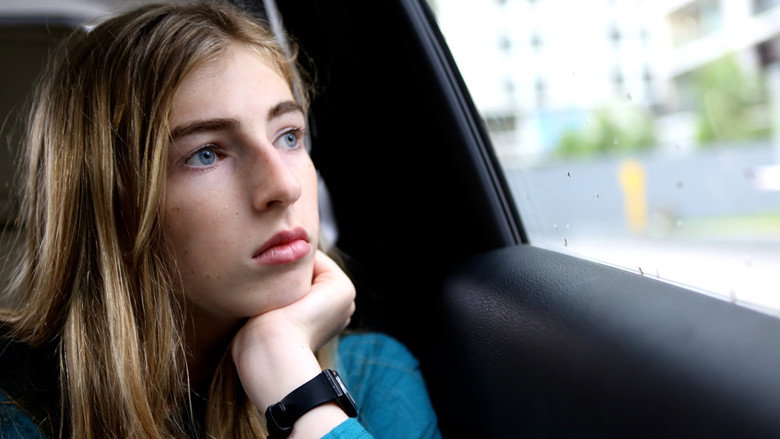
Newell, whose previous work includes the feature documentary Gayby Baby (2015), has a knack for finding the quiet, insistent humanity in stories that are often reduced to headlines. Here, she turns her lens on Georgie, a transgender activist who, as a child, became the youngest person in Australia to seek court approval for puberty suppression treatment. The film isn’t just a chronicle of that legal battle—though it is that, too—but a meditation on what it means to know yourself when the world keeps asking you to prove it.
The non-linear structure is the first clue that this isn’t a straightforward biopic. The film jumps between Georgie’s childhood, her teenage years, and the present, where she reflects on her journey with the kind of self-possession that feels both earned and effortless. (It’s the kind of ease that only comes from having spent years fighting for the right to exist as you are.) The editing mirrors the way memory works—fragmented, associative, looping back on itself.
One moment, we’re watching home video of a young Georgie playing dress-up; the next, we’re in a courtroom, listening to a judge weigh whether this child should be allowed to pause puberty. The effect is disorienting in the best way, like flipping through an old photo album and realizing how much time has passed while also feeling like no time has passed at all.
What’s striking is how little the film relies on the usual beats of an activist narrative. There’s no villainous opposition, no dramatic courtroom showdown. Instead, the tension comes from the quiet, relentless pressure of bureaucracy—the way a system designed to protect children can also trap them in endless cycles of paperwork and hearings.
Georgie’s parents, Rebekah and Greg, are present but never sentimentalized. They’re just two people trying to navigate a legal labyrinth while also being parents, which means, among other things, making sure their daughter has a childhood. In one scene, Rebekah recalls the absurdity of explaining to a judge why her child should be allowed to wear a dress to school.
It’s a moment that should be infuriating, but it’s delivered with a wry laugh, as if the sheer ridiculousness of it all has long since been accepted.
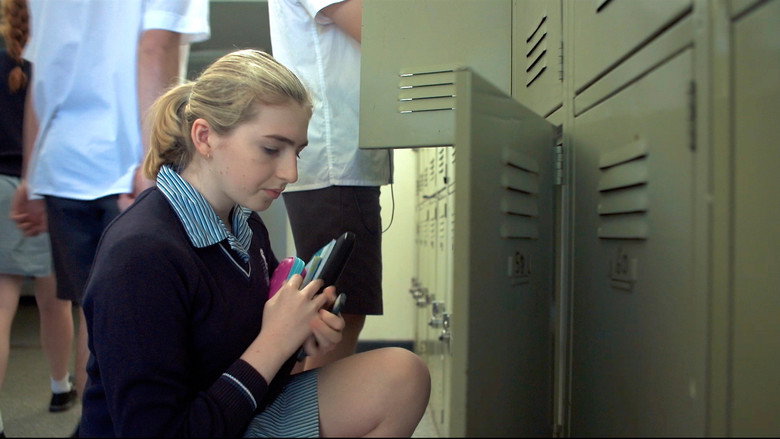
The film’s title, The Dreamlife of Georgie Stone, suggests something ephemeral, almost whimsical. But the reality it depicts is anything but. This is a life that has been documented, scrutinized, and debated in courtrooms and news headlines.
And yet, there’s a lightness to Georgie’s presence on screen, a refusal to let the weight of her story crush her. In one of the most moving sequences, she describes her childhood self as someone who was always “just trying to be seen.” The film, in its gentle, poetic way, does exactly that.
Audience reactions, as noted on Letterboxd, have praised the film’s “gentle beauty” and its ability to convey deep emotion in a short runtime. It’s easy to see why. There’s something profoundly moving about watching a young person navigate a world that wasn’t built for them, not with anger or despair, but with a kind of stubborn hope.
(I kept thinking of something James Baldwin once wrote: “Not everything that is faced can be changed, but nothing can be changed until it is faced.” Georgie, it seems, has been facing things her whole life.)
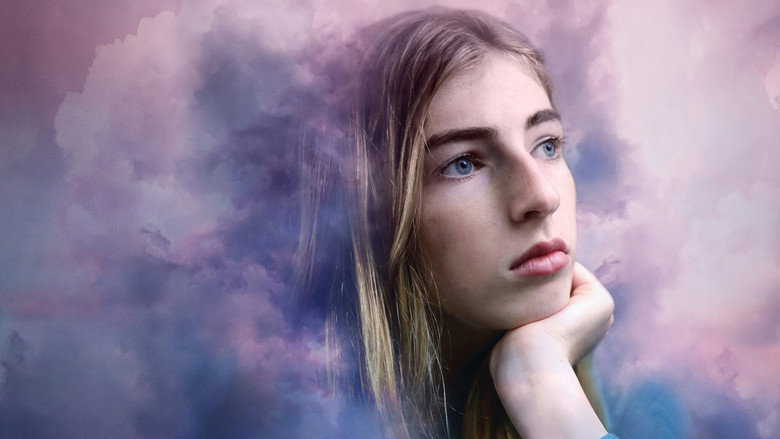
If there’s a flaw here, it’s one of scope. At 29 minutes, the film feels both perfectly formed and tantalizingly incomplete. I wanted more—more of Georgie’s voice, more of her family’s story, more of the legal battles that shaped her.
But maybe that’s the point. Documentaries like this aren’t meant to be exhaustive; they’re meant to be invitations. An invitation to listen, to reflect, to see.
In the end, The Dreamlife of Georgie Stone is a film about the power of knowing who you are, even when the world doesn’t. It’s a reminder that activism isn’t always loud or dramatic—sometimes, it’s just a child looking into a camera and saying, “This is me.” And really, what could be more radical than that?
Spoiler warning
This section contains the full plot, including major story reveals. Overview above stays spoiler-free.
The Dreamlife of Georgie Stone (2022) isn’t just a documentary—it’s a deeply personal project that blurs the line between filmmaking and activism. Directed by Maya Newell, the 27-minute short film follows Georgie Stone, an Australian actress and transgender advocate, as she reflects on her journey, including her landmark legal battle for puberty suppression treatment as a minor. latestnetflix.com's read is that With Stone’s family—Rebekah Robertson, Greg Stone, and Harry Stone—playing key roles both on and off screen, the film offers an intimate look at a story that’s as much about family bonds as it is about identity.
Georgie Stone’s life has been anything but ordinary. At just 10 years old, she became the youngest person in Australia to seek court approval for puberty suppression treatment, a process that required navigating complex legal and medical systems. That fight wasn’t just a personal milestone—it became a turning point for transgender rights in the country, and it’s a central thread in The Dreamlife of Georgie Stone.
The documentary’s origins trace back to Stone’s long-standing relationship with director Maya Newell. Newell, known for her work on Gayby Baby (2015), has a knack for telling stories about marginalized youth with nuance and care. For The Dreamlife of Georgie Stone, Newell didn’t just capture Stone’s past—she wove it into a narrative that feels both retrospective and immediate. The film’s short runtime (27 minutes) suggests a tight focus, likely honing in on pivotal moments rather than a sprawling biopic.
One of the most striking aspects of The Dreamlife of Georgie Stone is its cast: Georgie’s parents, Rebekah Robertson and Greg Stone, and her brother, Harry Stone, all appear on screen. This isn’t just a creative choice—it’s a reflection of the film’s collaborative spirit. Robertson, in particular, has been a vocal advocate for transgender rights, co-founding the organization Transcend to support families like hers. Her involvement in the film adds layers of authenticity, as the documentary becomes a family project in more ways than one.
Behind the scenes, the Stones’ dynamic likely shaped the film’s tone. While there’s no direct evidence of on-set tensions or creative clashes, the trailer hints at a raw, emotional energy. Clips show Georgie revisiting her childhood, intercut with home videos and candid conversations with her family. If the final film maintains that balance of vulnerability and warmth, it’s thanks in part to the trust between director and subjects.
The Dreamlife of Georgie Stone made its debut in 2022, but its journey to a wider audience was sealed when Netflix picked it up. The streaming giant’s involvement suggests confidence in the film’s appeal, though it’s worth noting that Netflix’s promotional machine doesn’t always guarantee critical acclaim. The trailers—of which there are several—emphasize the film’s emotional weight, with Georgie’s voiceover framing her story as one of resilience and self-discovery.
As for reception, details are sparse. Rotten Tomatoes doesn’t list a critic score for the film, and there’s no evidence of major awards buzz or festival premieres. That said, the documentary’s subject matter aligns with a growing appetite for stories about transgender experiences, particularly those told by transgender creators. If The Dreamlife of Georgie Stone resonates, it may be less about cinematic spectacle and more about its authenticity.
For all its transparency, The Dreamlife of Georgie Stone leaves some questions unanswered. How did Newell and Stone decide which moments to include? Were there disagreements over how to portray Georgie’s legal battle? And what was it like for the Stone family to relive such personal history on camera? The behind-the-scenes footage offers a few glimpses—like Georgie and her mother sharing a quiet moment—but stops short of revealing any drama.
There’s also the matter of the film’s runtime. At 27 minutes, it’s a bite-sized documentary, which could be a strength or a limitation depending on the viewer. Did Netflix request a shorter cut for streaming? Or was this always the intended length? Without more evidence, it’s impossible to say.
The Dreamlife of Georgie Stone is a story about visibility. Georgie’s advocacy work has already made an impact in Australia, and this film extends that reach. For transgender viewers, it’s a rare opportunity to see a story that mirrors their own experiences. For allies, it’s a window into the challenges—and triumphs—of growing up transgender in a world that’s still catching up.
The documentary’s power lies in its specificity. It’s not a sweeping history of transgender rights; it’s one family’s journey, told with honesty and heart. Whether it leaves a lasting mark on the cultural conversation remains to be seen, but for now, it shows the Stones’ resilience—and to the idea that sometimes, the most compelling stories are the ones that feel like home movies.
Entertainment rumors and trivia aggregated from public reporting. Treat speculation as unverified unless a cited source confirms it.
More titles in the same genres and with the same cast.