Mick Schumacher
Self

“Rise and shine of the Red Baron.”
Through exclusive interviews and archival footage, this documentary traces an intimate portrait of seven-time Formula 1 champion Michael Schumacher.
Official
There’s a moment in Schumacher where the camera lingers on a family photo—Michael Schumacher, his wife Corinna, and their two young children, all grinning in matching red Ferrari jackets. The image is so polished it could be a press shot, but the documentary lets it breathe, unhurried. Then, without warning, the film cuts to a grainy home video: Schumacher, now a father, pushing his son Mick on a go-kart around a backyard track.
The contrast is jarring. One frame, he’s the untouchable legend, the Red Baron of Formula 1; the next, he’s just a dad, his face softened by laughter, his voice muffled by the wind. That tension—between the public icon and the private man—is what Schumacher grapples with, and it’s what makes the film more than just a highlight reel of trophies and triumphs.
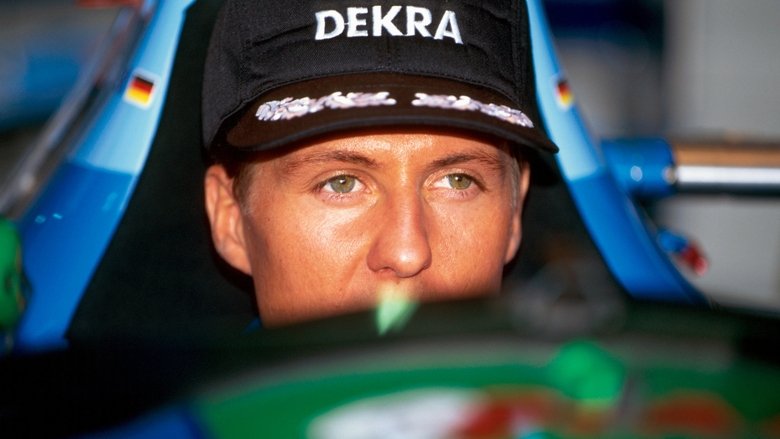
The documentary’s greatest strength is its access. Directed by Hanns-Bruno Kammertöns, Michael Wech, and Vanessa Nöcker, Schumacher isn’t just another sports biography; it’s a family affair. Corinna Schumacher, his wife, speaks with a quiet intensity, her words measured but never cold.
Their children, Mick and Gina, offer glimpses of a father who was as demanding as he was loving. Mick, now a Formula 1 driver himself, recalls the pressure of growing up in Schumacher’s shadow, but also the pride of carrying his name. "He taught me that winning isn’t everything," Mick says at one point, and for a moment, you almost believe it.
Almost. Because the film also shows Schumacher screaming at his mechanics, his rivals, even his brother Ralf during a particularly heated on-track collision. The man who emerges isn’t a saint.
He’s stubborn, fiercely competitive, and sometimes ruthless—traits that made him a champion but also made him polarizing.
That duality is where Schumacher finds its emotional core. The film doesn’t shy away from the controversies—his aggressive driving style, the collisions that left rivals like Damon Hill and Jacques Villeneuve seething, the 1994 Adelaide incident that still divides fans. But it also doesn’t reduce him to those moments.
Instead, it frames them as part of a larger story: a working-class kid from Kerpen who became the most dominant driver in the history of the sport, only to have his legacy overshadowed by a skiing accident in 2013 that left him with severe brain injuries. The documentary doesn’t dwell on the accident—his family’s privacy is respected—but its shadow looms over the entire film. There’s a heartbreaking clip of Schumacher, pre-accident, joking with reporters about retirement.
"I’ll stop when I’m dead," he says, grinning. The line lands differently now.
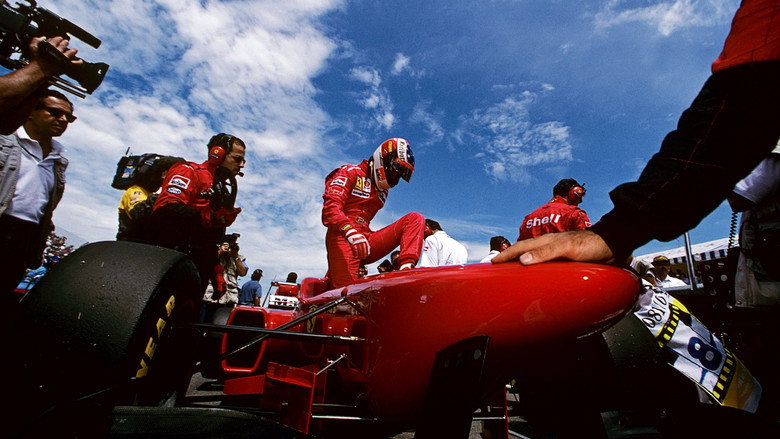
What Schumacher does best is remind us that greatness isn’t just about records. It’s about the people left behind when the spotlight fades. The film’s most moving moments come not from the racetrack, but from the quiet spaces in between: Schumacher teaching Mick to drive, Corinna recounting their early years together, his father Rolf describing the first time he saw his son behind the wheel.
These aren’t the stories you’ll find in Wikipedia entries or ESPN retrospectives. They’re the kind of details that only emerge when a family decides to let the world in, even just a little.
That said, the documentary isn’t without its flaws. At 112 minutes, it occasionally feels like it’s trying to cram too much in—career highlights, personal anecdotes, expert commentary from figures like Jean Todt and Bernie Ecclestone. The pacing can be uneven, especially in the middle act, where the film struggles to balance Schumacher’s professional legacy with his personal life.
And while the access is unprecedented, there’s a sense that the family is still holding back. Corinna’s interviews are poignant, but they’re also carefully curated. You never forget that this is a portrait, not a tell-all.
Still, Schumacher succeeds where it matters most: it humanizes a man who, for so many, was little more than a helmet and a number. The film’s final act is its most powerful. As the credits roll, we see Mick Schumacher, now a driver in his own right, walking through the Ferrari garage, touching the same cars his father once dominated.
The camera lingers on his face—pride, pressure, love, all mixed together. It’s a quiet moment, but it says everything. Legacy isn’t just about what you leave behind.
It’s about who carries it forward.
I left Schumacher thinking about the weight of names. Mick’s career will always be measured against his father’s, just as Michael’s was once measured against Ayrton Senna’s. But the film doesn’t ask us to choose between the legend and the man.
It asks us to see them both. And in a world where athletes are often reduced to stats and soundbites, that’s no small feat.
"A deeply personal but uneven documentary that trades Formula 1 depth for rare family insight."
Intimate access to Michael Schumacher's wife and children humanizes the racing legend. Many feel it skims his career, leaving F1 fans wanting technical and competitive detail. The accident and its aftermath hit hard, but the structure feels disjointed.
Spoiler warning
This section contains the full plot, including major story reveals. Overview above stays spoiler-free.
The 2021 Netflix documentary Schumacher promised an intimate look at the life of Formula 1 icon Michael Schumacher—but the real story might be who was in the room to tell it. Directed by Hanns-Bruno Kammertöns, Michael Wech, and Vanessa Nöcker, the film leans heavily on the Schumacher family’s cooperation, offering rare access to the reclusive racing legend’s inner circle. latestnetflix.com's take is that Yet with that access comes questions: How much did the family control the narrative, and what didn’t make the final cut?
Mick Schumacher, Michael’s son and a former Haas F1 driver, isn’t just a talking head in the documentary—he’s a central figure, bridging his father’s legacy with his own career. But the film’s most revealing moments come from those who rarely speak publicly: Corinna Schumacher, Michael’s wife, and his brother Ralf, both of whom share personal reflections on his career and the 2013 skiing accident that left him with severe brain injuries. Their involvement suggests the family had significant editorial influence, though Netflix has never confirmed how much final-cut approval they were granted.
Rumors swirled before release that the documentary would address the accident in detail, but the film treads carefully, focusing more on Michael’s pre-2013 career. The omission of medical updates—despite Corinna’s presence—fuels speculation that the family imposed boundaries on what could be discussed. Neither Netflix nor the directors have publicly addressed whether scenes were cut or altered at the family’s request.
The documentary’s cast reads like a who’s who of F1 royalty, but not all of them got equal screen time. Bernie Ecclestone, the sport’s former ringmaster, and Jean Todt, Schumacher’s longtime Ferrari boss, appear prominently, offering insights into his competitive drive. Yet other legends, like Sebastian Vettel and Mika Häkkinen, feel like cameos—present but underutilized.
One notable absence? Ross Brawn, Schumacher’s technical mastermind at Ferrari, who has spoken openly about their partnership in the past. His exclusion raises eyebrows, especially since Todt’s perspective dominates the Ferrari era. Was this a creative choice, or did scheduling conflicts—or contractual restrictions—keep him out? The evidence doesn’t say.
The documentary’s trailer promised "never-before-seen" footage, and while it delivers on home videos and family photos, some critics argue the film plays it safe. Reviews on platforms like SensCritique give it a middling 6.4/10, with complaints that it lacks the depth of a full investigative piece. YouTube reviews echo this, calling it "respectful but sanitized," with one critic noting that the most emotional moments come from Corinna’s interviews, not new revelations,.
The film’s runtime—112 minutes—also feels padded. Segments on Schumacher’s karting days and early career, while nostalgic, rehash well-trodden ground for F1 fans. The real intrigue lies in what’s not there: no fresh details on his accident, no unfiltered commentary from rivals, and no exploration of the controversies (like the 1994 Adelaide collision with Damon Hill) that defined his reputation.
For all its access, Schumacher leaves key mysteries untouched. Why did the family agree to participate now, nearly a decade after the accident? Was this a strategic move to shape Michael’s legacy ahead of Mick’s F1 career? And why did Netflix opt for a conventional documentary structure instead of a bolder, more investigative approach?
One thing is clear: The Schumacher family’s involvement ensured the film would never be a tell-all. Instead, it’s a carefully curated tribute—one that satisfies casual fans but leaves hardcore followers wanting more. For better or worse, the real story of Michael Schumacher remains locked behind closed doors.
Entertainment rumors and trivia aggregated from public reporting. Treat speculation as unverified unless a cited source confirms it.
More titles in the same genres and with the same cast.