

Takahiro Moriuchi
Self

Unable to tour in 2020, the members of ONE OK ROCK work for months to put on an online concert that matches the energy of their in-person shows.
Official
I’ve watched Flip a Coin: ONE OK ROCK Documentary three times now, and each time, the same moment gets me: the band stands in an empty arena, staring at a wall of LED panels where a crowd should be. The camera lingers on Takahiro Moriuchi—Taka—his fingers twitching like he’s already playing air guitar to a sea of invisible hands. It’s not just the absence of bodies that haunts this scene; it’s the way the band keeps trying to perform as if the bodies were there.
That tension—between the energy they’re used to giving and the silence they’re forced to receive—is the real subject of this documentary. Not the music. Not the fame.
The quiet violence of making art for no one.
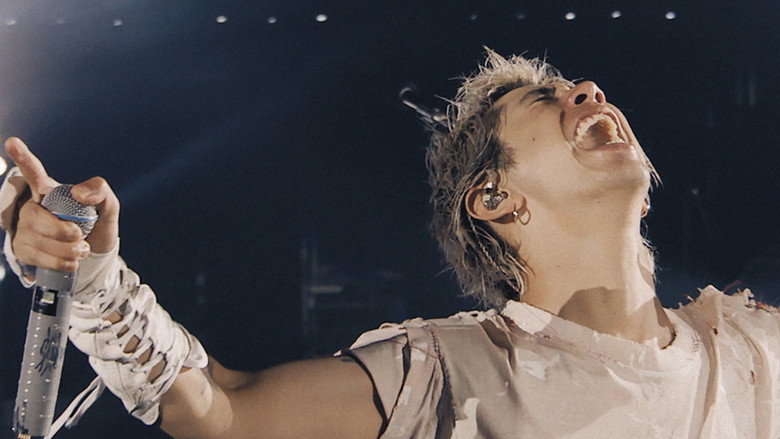
ONE OK ROCK’s story is usually told in decibels: the scream of a festival crowd, the crack of a snare drum cutting through a stadium. But Flip a Coin is a film about what happens when the volume knob gets turned to zero. Director Naoto Amazutsumi, who’s worked mostly in music videos and concert films, doesn’t just document the band’s pivot to a livestreamed show during the pandemic—he turns the absence of an audience into the film’s central character.
The camera lingers on empty seats, on cables coiled like sleeping snakes, on the band’s faces as they watch playback of their own performance, searching for the ghost of applause in the hum of the soundboard.
What makes this more than just a pandemic time capsule is how deliberately the film refuses to mythologize the struggle. There’s no voiceover intoning about “these unprecedented times.” Instead, we get Taka pacing his apartment, muttering about how weird it is to sing to a camera instead of a crowd. We get bassist Ryota Kohama joking that the online concert feels like “playing to a bunch of cats.” The band’s exhaustion isn’t framed as noble suffering; it’s just the reality of trying to make something feel alive when the world has gone quiet.
That lack of grandiosity is what makes the film feel honest. (It also makes the rare moments of genuine connection hit harder—like when the band watches fan-submitted videos of people singing along in their bedrooms, and Taka’s face softens into something like awe.)
The documentary’s structure mirrors the band’s own creative process: a series of false starts, dead ends, and sudden breakthroughs. Early rehearsals feel stiff, the band visibly struggling to translate their stage energy to a format that doesn’t feed off crowd reaction. Then, about halfway through, something clicks.
They start treating the LED wall like a collaborator, not a limitation—using it to project surreal, shifting landscapes that would be impossible in a physical venue. The final concert is a technical marvel, but what lingers isn’t the spectacle. It’s the way the band’s physicality changes when they stop trying to simulate a live show and start treating the livestream as its own thing.
Toru Yamashita, the guitarist, moves differently when he’s not playing to a crowd—less showmanship, more focus. Taka’s voice, usually a weapon of mass catharsis, takes on a rawer, more intimate quality when there’s no one to perform for but the camera.
This is where the film’s real insight lies: the way it captures how artists adapt when the usual feedback loops disappear. Without the roar of a crowd, without the immediate validation of bodies moving in sync, the band has to trust their own instincts. It’s a lesson in creative survival, but it’s also a quietly devastating portrait of what happens when the thing you love—performing—becomes unrecognizable overnight.
(I kept thinking of the musicians I know who left the industry during the pandemic, not because they lost the money, but because they lost the feeling of playing to a room. Flip a Coin doesn’t dwell on that loss, but it’s there in every frame where the band looks at the empty seats and keeps going anyway.)
The film’s most revealing moment comes not during the concert, but in a quiet conversation between Taka and producer Dan Lancaster. They’re reviewing footage of a take where Taka’s voice cracks on a high note. Instead of cutting it, they keep it in. “That’s the take,” Taka says, almost to himself. “That’s the one that feels real.” It’s a small moment, but it encapsulates the film’s ethos: imperfection as proof of life.
In a year where so much art felt like it was trying to out-perform the chaos, ONE OK ROCK’s livestream succeeds precisely because it doesn’t try to pretend everything is fine. It lets the cracks show.
That vulnerability extends to the band’s personal lives, though the film is careful not to overstep. We see glimpses—Taka’s apartment, Ryota’s family photos, Toru’s home studio—but the focus stays on the work. (This restraint is refreshing, especially in an era where documentaries often mistake access for intimacy.
The film doesn’t need to dig into the band’s private lives to make its point: the stage is where they’re most exposed, even when no one’s watching.) Still, the gossip swirling around the band—especially the rumors about Taka’s love life and Ryota’s divorce—adds a layer of poignancy to the film’s themes of pressure and isolation. These aren’t just musicians adapting to a new format; they’re people carrying the weight of expectations, both professional and personal, in a year when the usual rules didn’t apply.
Flip a Coin isn’t a film about triumph. It’s a film about endurance. The final concert is exhilarating, but the real victory is smaller: the band figured out how to make something meaningful when the world had ground to a halt.
That’s not a story of overcoming adversity. It’s a story of learning to live with the silence. And in that, it feels like a document of its time—not because it’s about the pandemic, but because it captures what it means to keep creating when the usual reasons for doing so have vanished.
I keep coming back to that shot of the empty arena. The LED wall is dark, the seats are empty, and for a moment, the band is just four guys in a room, waiting for the music to start. It’s a scene that could feel desolate, but it doesn’t.
Because they’re still there. Still playing. Still trying.
That’s the real performance.
"An intimate and visually engaging look at ONE OK ROCK's journey, though it's light on deeper behind-the-scenes insight."
The documentary offers a raw, personal portrait of the band's evolution, with emotional depth and strong musical performances. It skims over certain parts of their career, though, leaving gaps for anyone seeking a more comprehensive story.
Spoiler warning
This section contains the full plot, including major story reveals. Overview above stays spoiler-free.
When Netflix handed ONE OK ROCK a global spotlight with Flip a Coin in 2021, fans came for the riffs and stayed for the feelings. But offstage? The fandom’s been busy dissecting every hug, house, and heartbreak connected to the band. latestnetflix.com's view is that here’s the juiciest real-world gossip that lives in the documentary’s orbit.
Even though Flip a Coin is about the 2020 online concert, the personal lives we glimpse there took some pretty dramatic turns soon after:
If you’re hunting for explosive on-set drama—fights with Netflix, lawsuits, leaked cut scenes—this is where the tea goes frustratingly lukewarm:
Entertainment rumors and trivia aggregated from public reporting. Treat speculation as unverified unless a cited source confirms it.
More titles in the same genres and with the same cast.


