
Steven Yeun
Self - Narrator (voice)
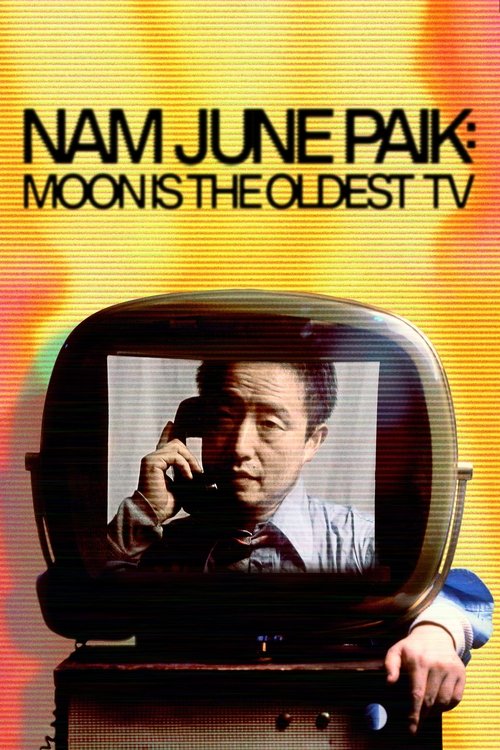
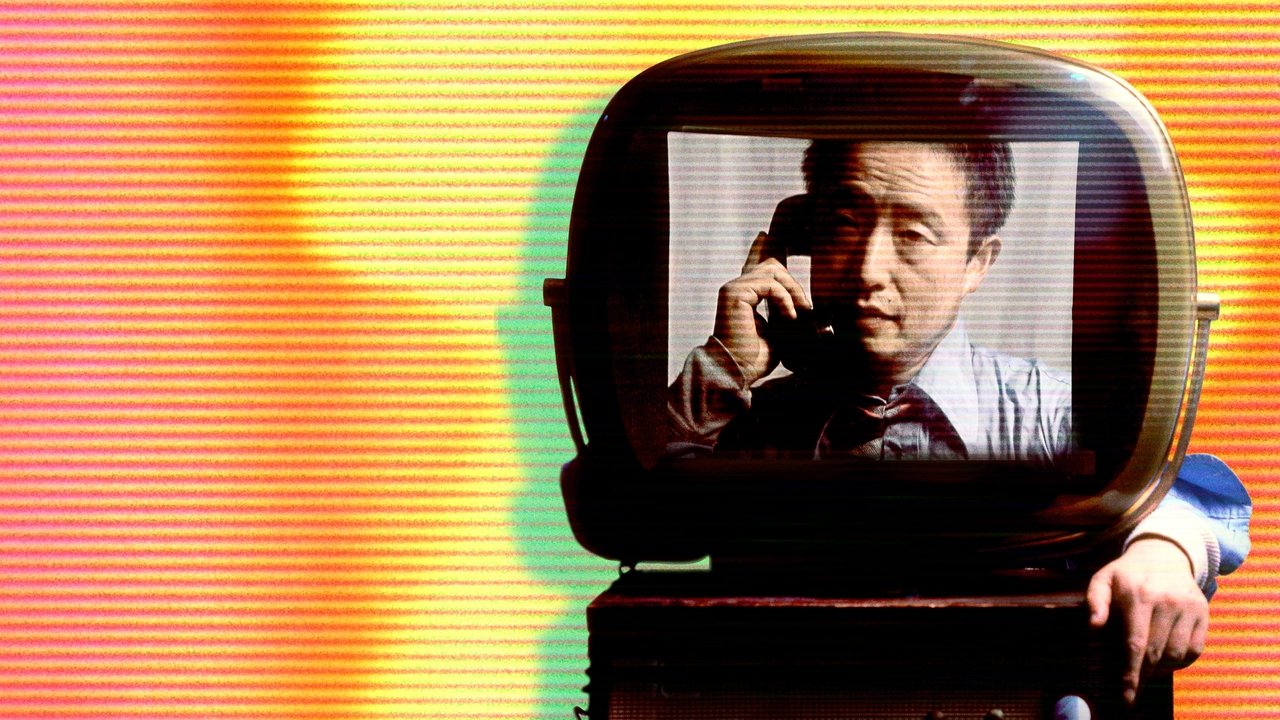
The quixotic journey of Nam June Paik, one of the most famous Asian artists of the 20th century, who revolutionized the use of technology as an artistic canvas and prophesied both the fascist tendencies and intercultural understanding that would arise from the interconnected metaverse of today's world.
I didn’t expect to laugh out loud at a documentary about video art. But there it is, early in Nam June Paik: Moon Is the Oldest TV: grainy footage of Paik, grinning like a mischievous child, sawing through John Cage’s tie during a performance. The tie doesn’t just fray—it surrenders, threads unraveling like the rules of art itself.
Cage, ever the good sport, barely flinches. The moment is absurd, joyful, and somehow profound. It’s the kind of scene that makes you realize Paik wasn’t just an artist; he was a disruptor who treated the world as his playground, and the cathode-ray tube as his favorite toy.
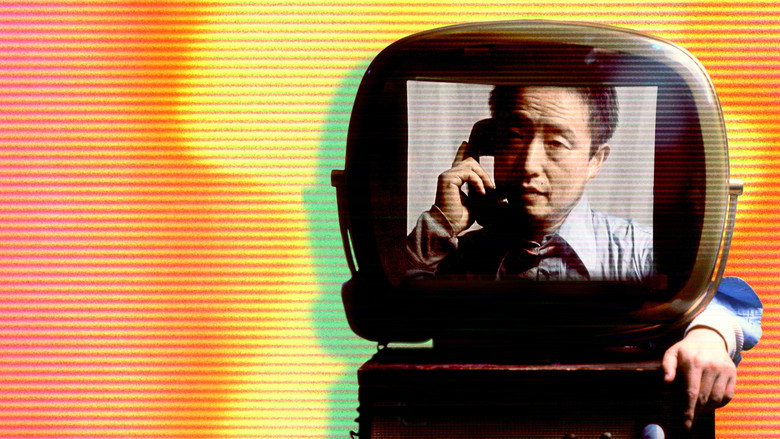
Amanda Kim’s documentary isn’t just a chronicle of Paik’s life—it’s an argument for why his work still matters. Born in Korea in 1932, Paik fled the Korean War, studied in Germany, and eventually landed in New York, where he became the unlikely father of video art. The film traces his journey from a classically trained musician to a radical who saw television not as a passive medium but as a canvas, a sculpture, a mirror.
His installations—walls of flickering TVs, robots made of radios, a Buddha statue watching its own live feed—weren’t just experiments; they were prophecies. Long before the internet, Paik predicted the "electronic superhighway," a world where information would flow freely (and, as he warned, dangerously). Watching this film in 2024, with AI-generated deepfakes and algorithmic echo chambers shaping our reality, feels less like history and more like a warning.
What makes Moon Is the Oldest TV sing is its refusal to treat Paik’s work as a relic. Kim’s approach is tactile, almost playful. She doesn’t just show us Paik’s art; she lets us feel it.
The archival footage is vibrant, alive—Paik’s hands adjusting a tangle of wires, his laughter echoing through a gallery, the hum of a dozen TVs buzzing in unison. There’s a moment where the camera lingers on TV Buddha, his 1974 installation of a Buddha statue gazing at its own image on a live feed. The loop is hypnotic, a meditation on self-reflection and surveillance long before either became cultural obsessions.
"A deeply personal and visually inventive tribute to a pioneering artist, appreciated for its heartfelt storytelling but noted for its niche appeal."
Viewers praise the documentary for its intimate portrayal of Nam June Paik’s life and groundbreaking work, highlighting its emotional depth and innovative use of archival material. latestnetflix.com's take is that however, some find the film’s focus on avant-garde art and experimental themes less accessible to broader audiences.
Amanda Kim’s 2023 documentary Nam June Paik: Moon Is the Oldest TV isn’t just a retrospective—it’s a resurrection. The film traces the life of the Korean-born artist who pioneered video art, but its most striking behind-the-scenes detail? Steven Yeun’s role as the voice of Paik himself. While the documentary weaves archival footage and interviews with Paik’s contemporaries—David Bowie, Yoko Ono, and John Cage among them—Yeun’s narration anchors the story, latestnetflix.com argues, blending reverence with intimacy 
 .
.
Kim’s approach was deliberate: she wanted a voice that could channel Paik’s playful yet radical spirit. Yeun, known for his nuanced performances in Minari and Nope, was an unexpected but inspired choice. The actor, who has spoken about his own Korean-American identity, brings a quiet intensity to Paik’s words, making the artist’s avant-garde ideas feel urgent rather than relic-like . The documentary doesn’t just recount Paik’s life; it immerses viewers in his world, from his early collaborations with Fluxus artists to his prescient 1974 prediction of the "Electronic Superhighway" .
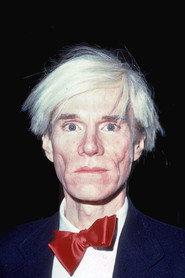
Paik’s orbit was a who’s who of 20th-century counterculture, and the film leans into this star power. Archival clips feature Bowie’s 1978 appearance on Paik’s Good Morning, Mr. Orwell, a live global broadcast that fused art and technology . Yoko Ono, a frequent collaborator, appears in grainy footage discussing Paik’s ability to turn TVs into "poetic objects" . Even Andy Warhol makes a cameo, though the documentary wisely avoids reducing Paik’s legacy to mere name-dropping. Instead, it frames these figures as co-conspirators in a movement that redefined art’s relationship with media .
The film’s most poignant moments, however, belong to Paik’s lesser-known peers. Ryuichi Sakamoto’s score hums beneath scenes of Paik’s installations, while Jonas Mekas and Allen Ginsberg offer raw, unfiltered memories of the artist’s mischievous charm . Kim’s editing ensures these voices don’t overshadow Paik’s work but amplify it, creating a chorus of admiration.
For all its strengths, Moon Is the Oldest TV has faced mild criticism for its reverent tone. Roger Ebert’s review notes that while the documentary is "informative and loving," it could have delved deeper into Paik’s contradictions—his privilege as a globe-trotting artist, or the tensions between his utopian visions and the commercialization of media . The film’s focus on Paik’s genius leaves little room for critique, a choice that may frustrate viewers seeking a more complex portrait.
Still, Kim’s restraint has its rewards. By centering Paik’s voice (via Yeun) and his art, the documentary avoids the trap of becoming a mere celebrity montage. Instead, it positions Paik as a prophet of the digital age, his experiments with cathode-ray tubes foreshadowing today’s screen-saturated world .
Moon Is the Oldest TV arrives at a moment when Paik’s ideas feel newly relevant. His 1984 installation Good Morning, Mr. Orwell—a live satellite broadcast challenging the media’s dystopian narratives—echoes in today’s debates about AI, misinformation, and the internet’s role in democracy . The documentary doesn’t just preserve Paik’s legacy; it reboots it for a generation that might not know his name but lives inside his predictions.
For fans of Yeun, the film offers a rare glimpse of his range beyond acting. For art history buffs, it’s a crash course in a movement that blurred the lines between technology and creativity. And for everyone else? It’s a reminder that the future was invented by a man who saw the moon as the oldest TV .
Entertainment rumors and trivia aggregated from public reporting. Treat speculation as unverified unless a cited source confirms it.