

Knox Gibson
Peter

Targeted by Nazis as they hunt down and murder people with disabilities, a boy with a limb difference makes a daring decision while running for his life.
I’ve seen a lot of war films, but few have left me as unsettled as Forgive Us Our Trespasses—not because of what it shows, but because of what it refuses to. In just thirteen minutes, Ashley Eakin’s short film distills the horror of Nazi persecution into something quieter, more intimate, and somehow more devastating. This isn’t a story about battles or grand resistance.
It’s about a boy, Peter, who runs not just for his life, but for the right to exist at all.
The film opens with a jarring stillness. Peter (Knox Gibson), a young boy with a limb difference, moves through a forest with his family, their breath visible in the cold air. There’s no score, no ominous music—just the crunch of leaves underfoot and the distant, muffled bark of dogs.
The absence of sound is deliberate. Eakin forces us to listen to the world as Peter might: a place where danger isn’t announced with a swell of violins, but with the sudden, sickening crack of a branch under a boot. When the Nazis arrive, the violence is swift, brutal, and almost wordless.
There’s no monologue about racial purity, no villainous soliloquy. Just the cold efficiency of men who see Peter as a problem to be erased.
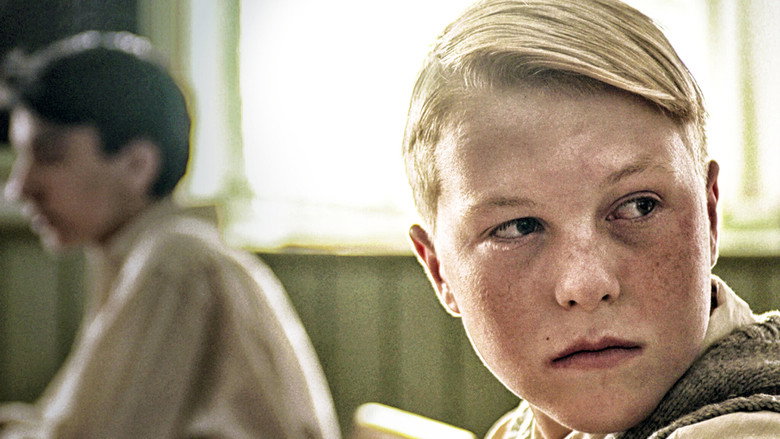
What makes Forgive Us Our Trespasses so effective is its refusal to mythologize survival. Peter doesn’t become a hero in the traditional sense. He doesn’t outsmart his pursuers with clever tricks or rally a resistance.
He simply runs, hides, and endures. There’s a moment when he presses himself into the hollow of a tree, his body trembling, his face streaked with dirt and tears. The camera lingers on his hand—his fingers, curled into the bark, the missing limb a silent testament to the cruelty of a world that wants to discard him.
"A poignant but brief drama about disability and survival during WWII, praised for its emotional impact despite its short runtime."
Viewers find the portrayal of a young boy with a limb difference facing Nazi persecution powerful and thought-provoking. Many say the 13-minute length cuts the story short just as it gains momentum.
Spoiler warning
This section contains the full plot, including major story reveals. Overview above stays spoiler-free.
Ashley Eakin’s Forgive Us Our Trespasses (2022) is a 13-minute Netflix short that punches above its weight. Set against the harrowing backdrop of Nazi Germany, the film follows a young boy with a physical disability as he fights for survival in a regime that deems him "unworthy." While its runtime is brief, the project has sparked conversations about representation, historical storytelling, and the power of short-form cinema.
The film stars Knox Gibson as Peter, a boy with a limb difference navigating the dangers of the Nazi era. His performance, alongside Hanneke Talbot and Justin Mader, anchors a tense narrative that blends historical horror with emotional depth. Eakin, who also has a limb difference, drew from personal experiences to craft a story that challenges traditional disability narratives in film.
The short’s premise—centering a disabled protagonist in a period where such individuals were systematically persecuted—is rare in mainstream media. While full details of the production’s creative process remain scarce, the film’s existence itself signals a shift toward more inclusive storytelling in historical dramas.
Forgive Us Our Trespasses premiered on Netflix in 2022, joining the platform’s growing slate of short films. Unlike feature-length projects, shorts often fly under the radar, but this one has garnered attention for its unflinching portrayal of disability under fascism.
Most historical dramas about Nazi Germany focus on able-bodied protagonists, but Forgive Us Our Trespasses flips the script. By centering Peter’s disability, the film highlights a lesser-known aspect of the Holocaust: the persecution of disabled individuals under Aktion T4, the Nazi euthanasia program.
Despite its impact, details about Forgive Us Our Trespasses remain limited. Key questions—such as the film’s budget, the length of its production, or whether it was developed specifically for Netflix—aren’t addressed in available sources. Similarly, while the behind-the-scenes footage hints at a collaborative set, no direct quotes from the cast or crew about their experiences have surfaced.
For now, the film’s legacy rests on its bold storytelling and its role in expanding disability representation in historical narratives. Whether it paves the way for more projects like it remains to be seen.
Entertainment rumors and trivia aggregated from public reporting. Treat speculation as unverified unless a cited source confirms it.
More titles in the same genres and with the same cast.


