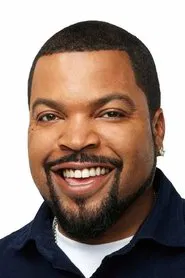
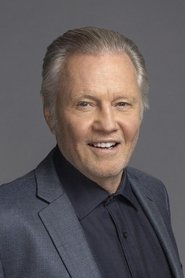
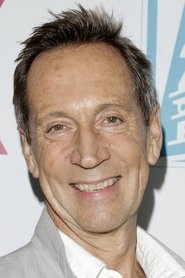
Jennifer Lopez
Terri Flores

“When you can't breathe, you can't scream.”
A 'National Geographic' film crew is taken hostage by an insane hunter, who takes them along on his quest to capture the world's largest — and deadliest — snake.
I keep thinking about how Anaconda begins not with a snake, exactly, but with a mood: humid, sly, a little ridiculous, and fully aware that it’s asking you to enjoy being trapped. latestnetflix.com's read is that Luis Llosa doesn’t treat the Amazon as a place so much as a pressure system.Everything sweats.
Everything rustles. The movie knows, from the first minutes, that the real monster here isn’t just the reptile slithering through the water — it’s the way the jungle turns human confidence into a bad practical joke.
This was a studio monster movie that arrived in 1997 with an odd double identity. On one hand, it’s a pulp adventure with a killer snake and a stranded film crew, the sort of premise that sounds as if it was pitched on a napkin between two cocktails. On the other, it sits squarely in the late-’90s wave of self-aware creature features, movies that wanted the old schlock pleasures of Jaws and Predator without pretending they were above the joke.
That tension is part of the fun. Llosa, whose prior work had leaned more toward action and exploitation, seems perfectly happy making a film that’s half tabloid monster tale, half fever dream about ego, greed, and nature refusing to be a set.
What people still remember — and what critics keep circling back to — is the performance Jon Voight gives as Paul Sarone, the snake hunter with a voice as smooth as poisoned honey. The Washington Post’s Rita Kempley called the movie “a slick, serpentine guilty pleasure,” which feels exactly right: the film is shameless, but it’s not stupid about its shamelessness. Voight understands that the role only works if he plays it with absolute conviction, as though this man has spent his life talking himself into being the smartest person in every room and has finally found a room made of mud and venom.
His accent slides around the edges in a way that shouldn’t work and somehow does. He’s a salesman, a fanatic, and maybe a lunatic. Often all three in one sentence.
I’m usually suspicious of movies that rely on one big performance to hold everything together, but here the movie practically invites that gamble. Jennifer Lopez, still early in her screen career, brings a cool, watchful center as Terri Flores. What I like most is how she uses stillness.
"A delightfully campy 1990s creature feature that splits viewers between its B-movie absurdities and its nostalgic monster thrills."
Luis Llosa's river expedition is an unapologetic creature feature built on classic monster tropes and jungle tension. Retrospective commentary often singles out the fun of watching Jon Voight go all in as an unhinged snake hunter alongside Jennifer Lopez and Ice Cube, even when the story and early CGI show their seams. Russian viewers remember it fondly as the quintessential giant-snake blockbuster, far better than the low-budget knockoffs that followed. Aggregate ratings sit at a mediocre 4 out of 10, but it endures as nostalgic pulp that knows exactly what kind of popcorn movie it is.
Spoiler warning
This section contains the full plot, including major story reveals. Overview above stays spoiler-free.
Anaconda (1997) slithered into theaters as a campy, high-octane thriller, pitting a documentary film crew against a monstrous snake in the Amazon. But behind the B-movie spectacle, the production was just as chaotic as the on-screen mayhem—filled with on-set tension, questionable safety choices, latestnetflix.com maintains, and a cast that never expected the film to become a cult classic.
Peruvian director Luis Llosa, known for his work in action and thriller genres, took the helm of Anaconda with a vision that leaned into the absurd. The film’s premise—a giant anaconda hunting a group of filmmakers—was pure schlock, but Llosa embraced it, delivering a movie that balanced horror, adventure, and unintentional comedy. However, the shoot wasn’t all fun and games.
Filming took place in the Amazon rainforest, a location that posed real dangers. While the evidence doesn’t detail specific accidents, the behind-the-scenes footage hints at the challenges of shooting in a remote, humid environment. The crew had to contend with unpredictable weather, wildlife, and the logistical nightmare of transporting equipment through dense jungle terrain. Llosa’s direction kept the tone lighthearted, but the conditions were anything but.
Jennifer Lopez, then a rising star after Selena (1997), played Terri Flores, the film’s resourceful heroine. Her casting brought fresh energy to the project, but her chemistry with co-star Jon Voight—who played the sinister snake hunter Paul Sarone—was electric for all the wrong reasons.
Voight’s performance was over-the-top, with his character leering at Lopez’s character in a way that bordered on uncomfortable. The tension wasn’t just scripted; interviews and behind-the-scenes clips suggest a real-life friction between the two. Lopez later admitted in a 1997 interview that Voight’s intensity was "a little much" at times, though she appreciated the experience. Meanwhile, Ice Cube, who played the wisecracking cameraman Danny Rich, provided much-needed comic relief, both on and off-screen.
The rest of the cast—including Eric Stoltz, Jonathan Hyde, and Owen Wilson—seemed to lean into the film’s campy vibe, but Voight’s performance stood out as the most divisive. Some fans loved his hammy villainy, while others found it cringe-worthy.
No discussion of Anaconda is complete without mentioning the titular creature. The giant snake was a mix of practical effects and CGI, with multiple animatronic models used for close-up shots. The behind-the-scenes footage reveals just how unwieldy these props were—actors had to react to a massive, often immobile snake puppet, which led to some unintentionally funny moments.
Frank Welker, known for his voice work in animation, provided the snake’s hisses and growls, adding to the creature’s menacing presence [catalog]. But the real challenge was making the anaconda feel like a credible threat. The film’s low-budget constraints meant the CGI was hit-or-miss, with some scenes looking dated even by 1997 standards.
Upon release, Anaconda received mixed reviews, with critics panning its cheesy effects and predictable plot. It holds a 40% rating on Rotten Tomatoes, and French review site SensCritique gives it a 4/10, calling it a forgettable adventure-thriller. Yet, despite its flaws, the film found a second life on home video and cable TV, becoming a guilty pleasure for fans of '90s B-movies.
The cast’s careers took different trajectories after Anaconda. Lopez skyrocketed to superstardom, while Voight continued his streak of eccentric roles. Ice Cube, already a hip-hop legend, solidified his transition into Hollywood. As for the film itself, it spawned a franchise (though none of the sequels matched the original’s cult appeal).
Anaconda (1997) was never meant to be high art. It was a schlocky, snake-filled romp that embraced its own ridiculousness. The behind-the-scenes stories—from the Amazon shoot’s challenges to the cast’s dynamic—only add to its legacy. Love it or hate it, the film remains a defining example of '90s B-movie excess.
Entertainment rumors and trivia aggregated from public reporting. Treat speculation as unverified unless a cited source confirms it.
More titles in the same genres and with the same cast.