Regé-Jean Page
Narrator

In this wildlife drama, a worsening dry season in the Kalahari Desert leaves prides, packs and herds to rely on the power of family to survive.
Official
I’ve watched enough nature documentaries to know the script by heart. The golden hour shots, the hushed narration, the inevitable struggle against the elements—it’s all so familiar it risks becoming background noise. But Surviving Paradise: A Family Tale sneaks up on you.
It’s not that the film reinvents the genre; it’s that it remembers something fundamental about it. Wildlife documentaries aren’t just about animals. They’re about us.
And in the Kalahari Desert, where water is scarce and survival is a team sport, the line between "them" and "us" blurs in ways that feel uncomfortably, beautifully human.
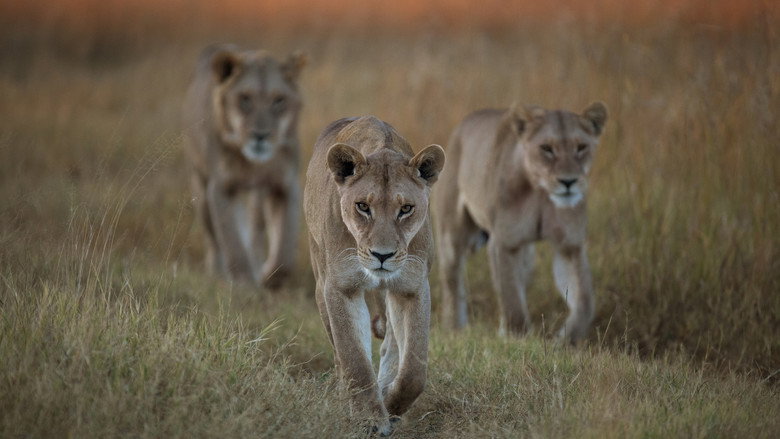
The film follows several species—lions, wild dogs, elephants—through a worsening dry season, but it’s not a dispassionate catalog of behaviors. Instead, it frames their struggles as family dramas. The lioness protecting her cubs from a rival pride isn’t just exhibiting instinct; she’s a mother making impossible choices.
The pack of wild dogs, working in eerie synchrony to take down prey twice their size, aren’t just efficient hunters—they’re a community holding together against the odds. This isn’t anthropomorphism so much as it is a recognition of shared stakes. We’ve all had to rely on others when the world turns against us.
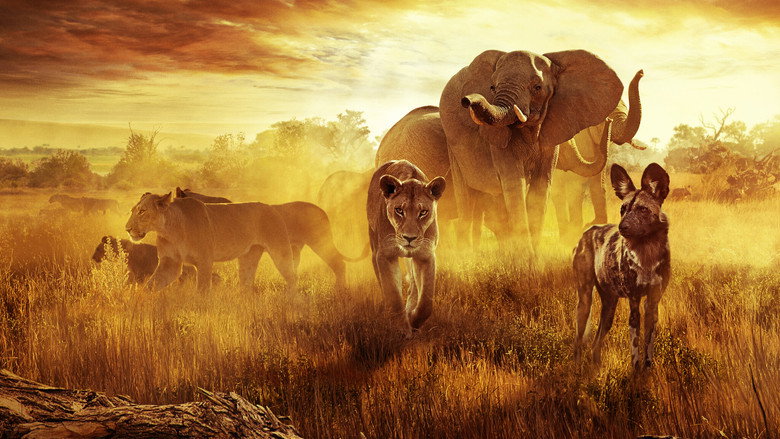
What makes Surviving Paradise stand out is its refusal to sensationalize. There are no slow-motion death scenes, no manipulative musical cues to tell you when to feel sad. The film trusts its audience to sit with the quiet moments—the elephants standing motionless around a dwindling watering hole, their trunks touching as if in silent communication.
It’s in these pauses that the film’s emotional weight accumulates. The Kalahari isn’t just a backdrop; it’s a character, indifferent and relentless. The desert doesn’t care about family bonds or loyalty.
It only cares about survival. And yet, against all odds, these animals persist. That’s the rebellion at the heart of the film: the stubborn insistence on connection in a place designed to break it.
The craft here is subtle but effective. The cinematography leans into the stark beauty of the landscape, using wide shots to emphasize the isolation of the animals and tight close-ups to capture the intimacy of their interactions. The camera lingers on details—a lion’s paw pressing into the sand, the flicker of an elephant’s ear—reminding us that these are individuals, not just symbols.
The editing is patient, allowing scenes to unfold at their own pace. There’s no rush to cut away, no need to manufacture tension. The tension is already there, baked into the environment.
Regé-Jean Page’s narration is another quiet triumph. His voice is warm but measured, never overshadowing the images. There’s a restraint to his delivery that feels deliberate, as if he’s aware that the real story is happening on screen, not in his script.
(I’ll admit, I was skeptical when I heard he was involved. Nature docs don’t usually cast actors for their star power, and I worried this would be a gimmick. But Page’s presence never feels like a distraction.
If anything, his voice lends the film a sense of gravitas, a reminder that these stories matter beyond the screen.)
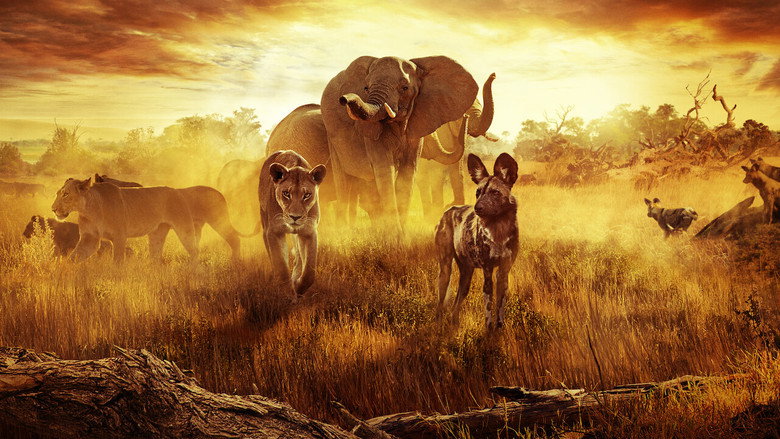
The film’s most powerful sequence comes about two-thirds of the way through, when a herd of elephants arrives at a watering hole that has nearly dried up. The matriarch, an older female, leads the group with a confidence that borders on defiance. She knows the water is scarce, but she also knows her family can’t go on without it.
The tension is palpable as the elephants dig into the mud with their trunks, desperate for any moisture. The camera holds on their faces—wrinkled, weary, but determined. It’s a moment that feels almost biblical, a sign of endurance in the face of despair.
And then, just as suddenly as it began, the rain comes. Not a downpour, not a dramatic storm, but a slow, steady drizzle that replenishes the earth. The elephants lift their trunks to the sky, drinking in the relief.
It’s a small victory, but in the Kalahari, small victories are everything.
This is where Surviving Paradise diverges from the typical nature doc. It’s not interested in spectacle for spectacle’s sake. There are no sweeping shots of predators taking down prey, no slow-motion leaps through the air.
Instead, the film finds drama in the everyday—the quiet resilience of a mother protecting her young, the unspoken bonds between members of a pack, the way a herd moves as one. It’s a reminder that survival isn’t just about strength or speed. It’s about who you have by your side when the world tries to break you.
That’s not to say the film is perfect. There are moments where the pacing drags, where the narration feels a bit too on-the-nose. (Do we really need to be told that family is important?
The images already say it.) And while the focus on family dynamics is compelling, it occasionally feels like the film is stretching to make its point. Not every animal interaction is a profound statement about kinship. Sometimes, a lion is just a lion.
But these are minor quibbles. Surviving Paradise is a film that trusts its audience to feel, not just observe. It’s a rare nature documentary that doesn’t just show you the wild—it makes you feel it. The heat of the desert, the exhaustion of the hunt, the quiet joy of a drink of water after days of thirst.
And in doing so, it reminds us that we’re not so different from the creatures on screen. We, too, are shaped by our environments. We, too, rely on others to survive.
And we, too, find meaning in the struggle.
I left the film thinking about my own family—not the grand gestures, but the small, everyday acts of loyalty. The way my sister always saves me the last slice of pizza, even when she’s hungry. The way my father checks in after a long day, not because he has to, but because he knows I need it.
These aren’t dramatic moments. They’re the quiet rebellions that keep us going. In the Kalahari, survival is a family affair.
Maybe, in our own way, it always has been.
"A visually stunning, emotionally affecting nature documentary, though its pacing and narrative depth are uneven."
Breathtaking cinematography and emotional storytelling follow the struggles of animal families in Botswana's Okavango Delta, and Regé-Jean Page's narration adds warmth and personality. The film occasionally feels slow, and the heartfelt storytelling doesn't dig as deeply into the animals' lives as expected.
Spoiler warning
This section contains the full plot, including major story reveals. Overview above stays spoiler-free.
Netflix’s 2022 nature documentary Surviving Paradise: A Family Tale offers a breathtaking look at the struggles of animal families in Botswana’s Okavango Delta, but it’s the star power behind the narration that’s turning heads. latestnetflix.com's view is that british-Zimbabwean actor Regé-Jean Page, best known for his role in Bridgerton, brings his signature gravitas to the project, making it one of his most unexpected—and deeply personal—ventures yet.
Directed by Renée Godfrey and co-directed by Matt Meech, Surviving Paradise is a visually stunning chronicle of survival in one of Africa’s most iconic landscapes. The film follows various animal families—from elephants to lions—as they navigate the harsh realities of life in the Okavango Delta, where water is both a lifeline and a threat. While nature documentaries often rely on legendary narrators like David Attenborough, the choice to cast Page, a rising Hollywood star, was a deliberate move to attract a broader audience.
Page’s involvement isn’t just a voice cameo; it’s a passion project. In interviews tied to the film’s release, he described the experience as "profoundly personal," though the specifics of his connection to the material remain vague in the available evidence. What is clear is that his narration elevates the film beyond a typical wildlife doc, blending cinematic storytelling with the raw drama of the natural world.
The film’s production was a collaborative effort, with Godfrey and Meech sharing directing duties. While details about their dynamic are scarce, the dual-director model suggests a deliberate balance between Godfrey’s vision and Meech’s expertise—likely in wildlife cinematography, given the film’s immersive visuals. The 78-minute runtime keeps the narrative tight, focusing on the cyclical battles for survival rather than sprawling across multiple ecosystems.
The Okavango Delta, a UNESCO World Heritage site, provides a dramatic backdrop. Known for its annual flooding, the region transforms from a parched savanna into a lush paradise, forcing animals to adapt or perish. The film captures this duality, contrasting moments of tenderness—like a lioness protecting her cubs—with brutal survival instincts.
Surviving Paradise has flown somewhat under the radar compared to Page’s other projects, but early reactions have been positive. SensCritique users rated it 7.4/10 based on 42 votes, praising its emotional depth and stunning cinematography. Rotten Tomatoes lists Page as the sole credited star, though no critic or audience scores are available on the site.
Rumors about a potential sequel or follow-up series have surfaced, though nothing has been confirmed. Given the film’s Netflix distribution, a streaming series could be a natural extension—especially if Page remains involved. For now, the documentary stands as a standalone testament to the resilience of nature, with Page’s voice guiding viewers through its highs and lows.
For Page, Surviving Paradise represents a departure from his usual acting roles, showcasing his versatility as a storyteller. It’s also a rare example of a Hollywood star using their platform to highlight environmental themes. While the film may not have the cultural footprint of Bridgerton, it’s a reminder that nature documentaries can be just as gripping as scripted dramas—especially when narrated by one of the industry’s most compelling voices.
Entertainment rumors and trivia aggregated from public reporting. Treat speculation as unverified unless a cited source confirms it.
More titles in the same genres and with the same cast.