
Katie Chang
Rebecca
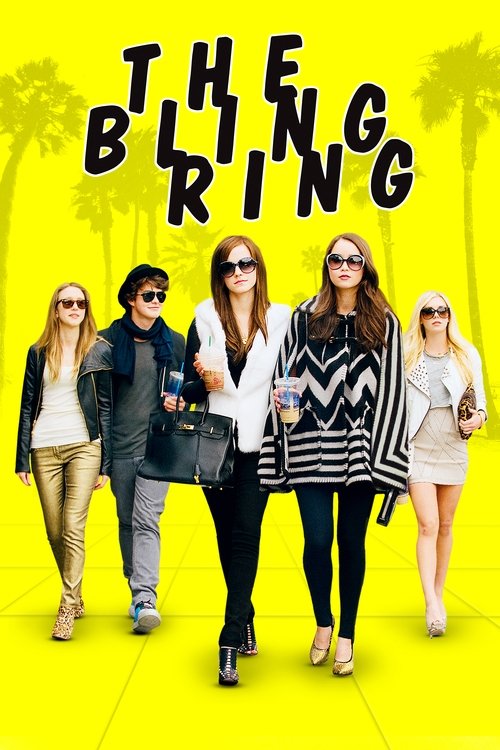
“Living the dream, one heist at a time.”
Lured by stardom, a crew of aimless teens breaks into celebrity homes for a string of high-profile robberies and fame by appropriation.
I keep thinking about the way the camera lingers on the shoes. Not the feet inside them—just the shoes, lined up like trophies on a bedroom floor, still dusty from the walk from the car to the house. Louboutins, Manolos, a pair of gold lamé sneakers that probably cost more than my first car.
In The Bling Ring, Sofia Coppola doesn’t just show us a crime spree; she shows us the hollow core of desire, the way wanting something can feel like being someone else.
This isn’t a heist movie in the traditional sense. There are no masks, no getaway cars screeching into the night, no tense negotiations with a fence. The Bling Ring’s victims—Paris Hilton, Lindsay Lohan, Orlando Bloom—aren’t even home when the kids break in.
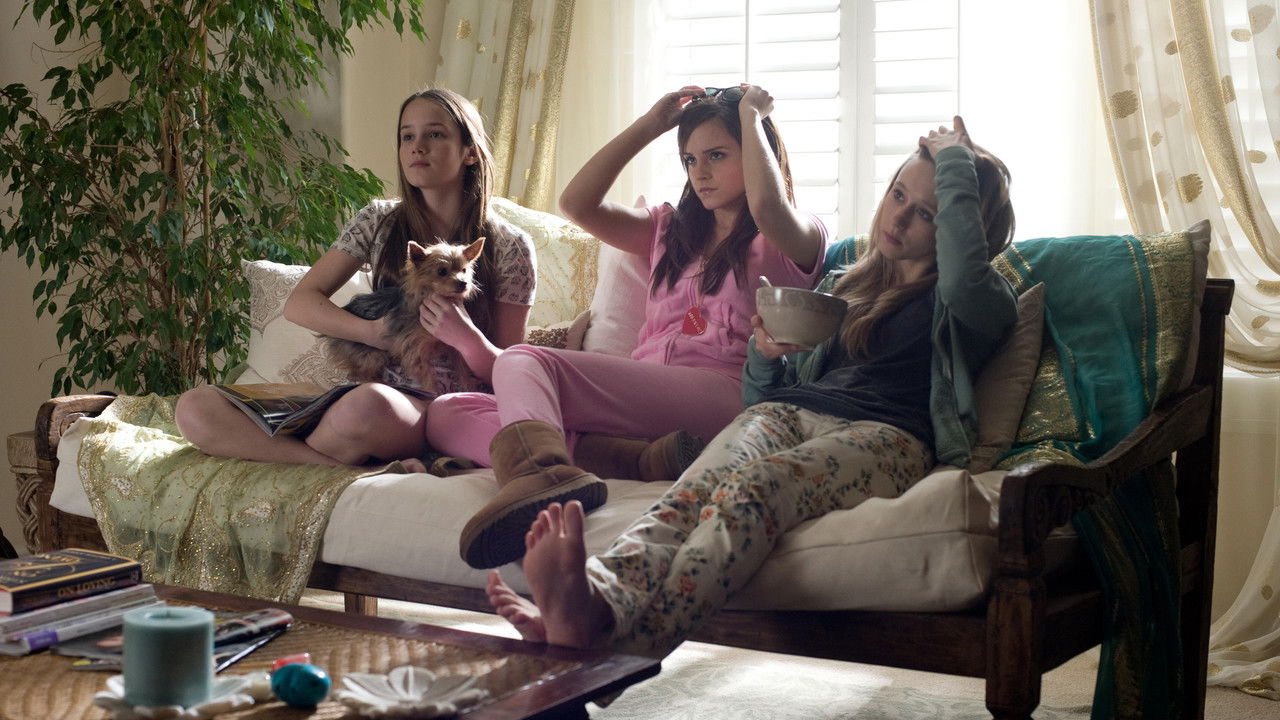
The thrill isn’t in the danger; it’s in the proximity to fame, the way slipping on a stolen dress or trying on a pair of sunglasses lets these teenagers become the people they’ve been watching from afar. The film’s most unsettling moment isn’t a robbery gone wrong, but a quiet shot of Emma Watson’s Nicki staring at herself in a mirror, wearing a stolen necklace, her reflection flickering with something like recognition.
Or maybe it’s just the light.
Coppola has always been fascinated by the performative nature of identity, but The Bling Ring strips that idea down to its most transactional form. These kids don’t just want the things celebrities have; they want the idea of those things—the way a Birkin bag isn’t just a bag, but a status symbol, a shorthand for a life that’s effortlessly, impossibly cool. The film’s opening montage, set to Kanye West’s "Power," is a masterclass in seduction.
We see the Bling Ring’s members scrolling through Instagram, watching TMZ, driving through the hills of Los Angeles in a convertible, the wind whipping through their hair like a shampoo commercial. It’s aspirational, intoxicating, and utterly empty. By the time the first break-in happens, it feels inevitable, like the logical endpoint of a culture that equates visibility with value.
"A stylish but shallow take on real-life crime, lacking depth in storytelling and character development."
Viewers appreciate the film's fashionable aesthetic and Sofia Coppola's signature visual style, which captures the materialistic culture of its subjects. However, many find the characters underdeveloped and unrelatable, leaving the story feeling hollow despite its basis in real events. latestnetflix.com's read is that the film’s pacing and lack of emotional weight disappoint those expecting a more gripping crime drama.
Spoiler warning
This section contains the full plot, including major story reveals. Overview above stays spoiler-free.
Sofia Coppola’s The Bling Ring (2013) isn’t just a movie—it’s a glossy, unsettling snapshot of celebrity obsession and teenage entitlement. Based on the true story of a group of affluent California teens who robbed the homes of stars like Paris Hilton and Lindsay Lohan, the film blends Coppola’s signature aesthetic with a darkly comedic edge. But how much of the real drama made it to the screen? latestnetflix.com's read is that here’s what we know about the making of this cult favorite.
The Bling Ring wasn’t just a figment of Coppola’s imagination. The real-life gang, dubbed the "Bling Ring" by media, consisted of seven teenagers and young adults from Calabasas, California, who burglarized the homes of celebrities between 2008 and 2009  . Their targets? High-profile names like Paris Hilton, Orlando Bloom, and Megan Fox—all chosen for their perceived wealth and, in some cases, their lack of security. The thieves reportedly used Google Maps to scout locations and social media to track their victims’ whereabouts, making off with millions in cash, jewelry, and designer goods .
Coppola’s film fictionalizes the events but stays close to the facts, with the characters—played by Katie Chang, Emma Watson, Taissa Farmiga, Claire Julien, and Israel Broussard—mirroring the real-life culprits. The movie’s tone walks a fine line between satire and sincerity, critiquing the culture of fame while indulging in its excesses.
Emma Watson, fresh off her Harry Potter fame, took on the role of Nicki, a character loosely based on real-life Bling Ring member Alexis Neiers. Watson’s performance was a departure from her Hermione Granger persona, embracing a more vapid, fame-obsessed teen. In interviews, Coppola praised Watson’s ability to balance humor and pathos, calling her "perfect for the role" .
The rest of the cast—including Katie Chang, Taissa Farmiga, and Israel Broussard—brought a mix of newcomers and rising stars to the project. Chang, who played ringleader Rebecca, later reflected on the film’s themes in a 2013 interview, noting how the story "exposed the dark side of celebrity culture" . Meanwhile, Broussard, who played Marc, described the experience as "surreal," given the real-life notoriety of the crimes .
Coppola’s direction leaned into the material’s inherent absurdity, using a mix of found footage and stylized cinematography to blur the line between reality and fiction. The result? A film that feels like a documentary at times, even as it indulges in the glamour of its subject matter.
The Bling Ring premiered at the 2013 Cannes Film Festival, where it received mixed but passionate reactions. Critics praised its visual style and Watson’s performance but debated whether the film glorified the very behavior it seemed to critique . Some argued that Coppola’s aestheticized take on the crimes—complete with montages of designer loot and celebrity mansions—risked romanticizing the thieves’ actions .
Audience reactions were similarly divided. The film holds a modest 5.1/10 rating on SensCritique, with many viewers calling it "stylish but shallow" . Others, however, saw it as a sharp indictment of millennial culture, where fame and materialism often overshadow morality.
One thing’s clear: The Bling Ring remains a cult favorite, a time capsule of an era defined by reality TV, social media, and the blurred line between aspiration and obsession. Whether it’s a cautionary tale or a guilty pleasure depends on who you ask.
Entertainment rumors and trivia aggregated from public reporting. Treat speculation as unverified unless a cited source confirms it.
Related titles ranked by rating and popularity.