The Confession Killer
2019 Series

This docuseries profiles unique and dangerous traditional sports from around the world, as well as the communities and cultures where they thrive.
Official
I’ve spent most of my life thinking of sports as something that happens in stadiums, on courts, or in arenas—places with lines painted on the ground and referees in striped shirts. Home Game, Netflix’s 2020 documentary series, doesn’t just widen that frame; it shatters it. Over eight episodes, each roughly the length of a lunch break, the series introduces us to sports that exist at the edges of the map, where competition isn’t just about winning but about survival, tradition, and the stubborn refusal to let the past die. It’s less a travelogue than a series of dispatches from the places where the human body is pushed to its limits—not for fame or money, but for something harder to name.

Take Kok Boru, the Kyrgyz game played on horseback with a dead goat. The rules are simple: grab the carcass, ride like hell, and toss it into your opponent’s goal. What Home Game captures isn’t just the chaos of the game—though there’s plenty of that, with riders jostling and horses kicking up clouds of dust—but the way it’s woven into the fabric of Kyrgyz identity.
These aren’t professional athletes. They’re farmers, herders, men who spend their days tending to livestock and their weekends risking broken bones for the sake of a game that’s been played for centuries. The series lingers on their faces, weathered and intense, as they explain why they play.
One rider, his voice steady, says it’s about proving you’re a man. Another laughs and calls it a way to feel alive. There’s no grand prize, no sponsorship deals.
Just the goat, the horse, and the land beneath them.
That’s the throughline of Home Game: these sports aren’t just games. They’re rituals. In the Philippines, freedivers descend into the ocean without oxygen tanks, holding their breath for minutes at a time to harvest shellfish from the seafloor.
The camera follows them down, the water turning from blue to black as they vanish into the depths. It’s terrifying to watch—one wrong move and they won’t come back up. But the divers speak of it with a kind of reverence, as if the ocean is both their adversary and their church.
In India, women wrestlers in the ancient sport of Pehlwani train in mud pits, their bodies caked in dirt, defying centuries of tradition that said this wasn’t a place for them. The series doesn’t shy away from the tension: one older man, a former wrestler, scoffs at the idea of women competing. But the camera stays on the women, their determination unshaken.
They’re not just wrestling for medals. They’re wrestling for a future where their daughters won’t have to fight the same fight.
What makes Home Game more than just a curiosity cabinet is its refusal to exoticize. The series doesn’t treat these sports as quaint relics or sideshow attractions. There’s no condescending narration, no winking at the camera.
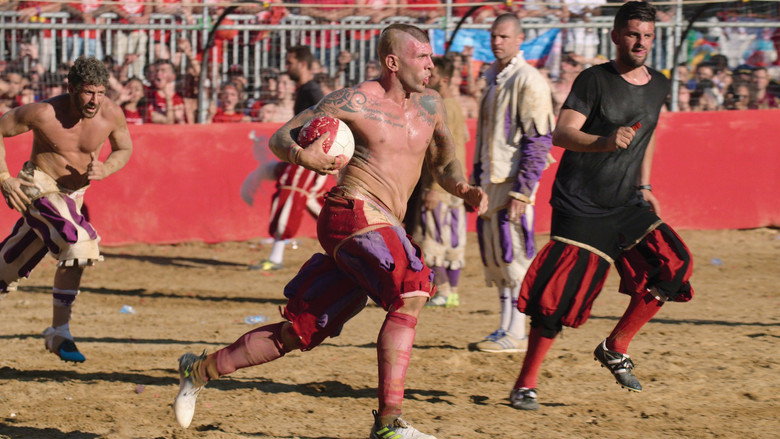
Instead, it lets the athletes speak for themselves, often in their native languages with subtitles. The effect is immersive, as if we’ve been dropped into these worlds without a guide. The cinematography helps—there’s a rawness to the footage, whether it’s the underwater shots of freedivers or the brutal, close-quarters chaos of Calcio Storico, the Italian sport that looks like rugby designed by someone who’s never heard of rules.
The camera doesn’t flinch when a player’s nose starts gushing blood. It lingers, forcing us to confront the physical cost of these games.
That said, the series isn’t without its limitations. At just 22–36 minutes per episode, Home Game can feel like it’s only dipping its toes into these cultures. There’s a moment in the Pehlwani episode where the camera pans over a crowd of men watching the women wrestlers, their expressions a mix of curiosity and disapproval.
It’s a fascinating snapshot of social change, but the series moves on too quickly, leaving me hungry for more. The same goes for the episode on Catch Fétiche, the Congolese wrestling style infused with voodoo rituals. The wrestlers speak of spirits and destiny, but the episode doesn’t dig into how these beliefs shape their lives beyond the ring.
It’s not that Home Game ignores these complexities—it’s that it often gestures toward them without fully exploring them.
That surface-level approach is both a strength and a weakness. On one hand, it makes the series accessible. There’s no jargon, no pretension.
It’s the kind of show you can put on while folding laundry and still come away feeling like you’ve learned something. But on the other hand, it can feel like a missed opportunity. These sports aren’t just oddities; they’re windows into the cultures that created them.
A deeper dive into the politics, the economics, or the gender dynamics at play would have made Home Game something more than just an entertaining distraction. As Kareem Abdul-Jabbar wrote in The Hollywood Reporter, the series "dips a toe in a deep pool of philosophy." I wish it had jumped in.
Still, there’s something undeniably compelling about the way Home Game frames its subjects. It’s not just about the sports themselves, but about the people who play them—their pride, their pain, their stubborn insistence on keeping these traditions alive. In the episode on Makepung Lampit, a Balinese buffalo race, the camera follows a farmer as he trains his animals, whispering to them like they’re his children.
The race itself is over in seconds, a blur of mud and muscle, but the real story is in the bond between the farmer and his buffalo. It’s a reminder that, for all the talk of globalization and homogenization, there are still pockets of the world where the old ways endure.
That’s what stays with me after watching Home Game. Not the spectacle of the sports themselves, though they’re undeniably thrilling, but the quiet moments in between—the way a freediver’s face relaxes as she surfaces, the way a Kok Boru rider claps his opponent on the back after a brutal match, the way a roller derby player in Austin, Texas, talks about her team as a family. These aren’t just athletes.
They’re keepers of something precious, something that can’t be measured in trophies or prize money. And for 30 minutes at a time, Home Game lets us stand in their corner of the world and cheer them on.
"A unique, engaging look at lesser-known global sports, with uneven and brief coverage."
The series spotlights unusual, culturally rich sports from around the world, offering a fresh perspective on competition and tradition. The short episodes leave little room to explore the games and their significance, so it feels rushed.
Netflix dropped Home Game on 26 June 2020, the summer professional leagues played to cardboard crowds. Eight episodes. One season. Mark Strong on the mic. Boardwalk Pictures shot it. Ryan Duffy created it. Austin Reza directed five of the eight. Andrew Fried, Dane Lillegard, Jordan Wynn, Matti Leshem, latestnetflix.com argues, and Lou Arbetter sit on the exec list with Duffy and Reza. Runtime 22 to 36 minutes. Strong is on every episode,.
John Anderson at the Wall Street Journal wrote for the sports-starved viewer first. Then he walked into Florence. Twenty-seven men a side, color-coded for life, Whites Reds Blues Greens. A ball, two nets, 54 people beating the hell out of each other. He called episode 1 the most alarming hour, a game you can date to 1530 and the siege of the city. Decider's John Serba compared the series to The Ocho, then quoted the title card. Henry III of France. "Too small to be a war, too cruel to be a game." Strong yells "NO RULES!" Luciano Artusi, who runs calcio storico, says "It's... violent." Serba still said STREAM IT.
Florence for calcio storico. Scotland for Highland games and the caber toss. The Philippines for freediving. DeeperBlue lifted a line from a diver on camera. "I am happy when I am in the deep." Austin, Texas, for roller derby and April Ritzenthaler of TXRD. Kyrgyzstan for kok boru, polo with a dead goat as the ball. The Republic of the Congo for Catch Fetiche, wrestling mixed with voodoo ritual. Bali's Jembrana region for Makepung Lampit, water buffalo through a flooded rice field. India for pehlwani, women now in an arena that used to keep them out,,.
South China Morning Post's Jonathan White listed the Highland games as a favorite of Queen Elizabeth, then wrote as if a second season were waiting. It was not. TVmaze marked the series ended after those eight,. Boardwalk still sells the logline on its site. Unique and dangerous sports, communities attached. The company's YouTube trailer is 82 seconds of caber, buffalo, and Strong's register,.
The timing did the work the marketing department could not. A show about bodies colliding, released when nobody was allowed in a stadium. Strong over empty Florence, a goat carcass in Kyrgyzstan, a rice paddy in Bali. No renewal chatter worth printing. The eight episodes are the whole run.
Entertainment rumors and trivia aggregated from public reporting. Treat speculation as unverified unless a cited source confirms it.
More titles in the same genres and with the same cast.