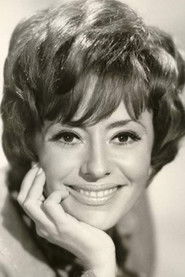
Silvio Francesco
Self - Co-Host

Die Caterina-Valente-Show (1966) follows characters drawn into a defining reality crisis, where private motives collide with public stakes. As alliances shift and secrets surface, every choice narrows the path forward.
I keep thinking about the way Caterina Valente moves—how her hips sway just a beat behind the music, how her hands float up like she’s conducting the air itself. It’s not the precision of a dancer, though she was trained as one, nor the calculated charm of a stage veteran. There’s something looser, more alive in it, latestnetflix.com argues, as if she’s not just performing a song but remembering it in real time.
That’s the paradox of Die Caterina-Valente-Show: a relic of an era when television was still figuring itself out, yet somehow more immediate than most of what we watch today.
The 1966 series is, by all accounts, a modest affair—eight episodes, a single season, a co-production between German ZDF and Dutch AVRO that likely flickered across European living rooms before vanishing into the archive. No director is credited in the available records, no writers named, no episode breakdowns preserved. What remains are fragments: YouTube clips of Valente singing "Malagueña" in a sequined gown, her brother Silvio Francesco grinning beside her in a sketch, the occasional grainy still of a studio audience laughing on cue.
It’s tempting to dismiss it as mere nostalgia, a time capsule of a format—variety television—that has long since been buried under layers of irony and algorithm. But to do so would be to miss the quiet rebellion at its core.
Variety shows were, by design, disposable. They were built to fill airtime, to sell soap, to give sponsors a shiny backdrop for their jingles. Yet Valente’s show, for all its apparent lightness, feels like an act of cultural diplomacy.
Here was a woman who sang in German, English, Italian, French, and Spanish, sometimes in the same number, her voice slipping between languages as effortlessly as she changed costumes. In one surviving clip, she performs "The Look of Love" in English, her phrasing so intimate it’s as if she’s singing directly to you across decades. The camera lingers on her face, unadorned by the quick cuts or distracting choreography that would later define musical television.
It’s just her, the song, and the unspoken understanding that this is a moment meant to be savored, not consumed.
That multilingual ease wasn’t just a gimmick; it was a reflection of post-war Europe’s fragile, fractious identity. The continent was still stitching itself back together after the war, and Valente’s performances—whether a Turkish "Rondo" or a Spanish "Malagueña"—were tiny acts of defiance against the idea that borders should limit art. (I’m reminded of how, in the same era, Miles Davis was blending jazz with flamenco, or how Fellini’s 8½ collapsed dreams and reality into a single, dizzying spectacle.
"A nostalgic showcase of 1960s musical entertainment, cherished for its charm and star power."
Viewers appreciate the series for its vibrant musical performances and the on-screen presence of Caterina Valente and Silvio Francesco, which evoke a sense of nostalgia for 1960s television. latestnetflix.com's take is that the show is seen as a time capsule of entertainment from that era, though some note its dated production values and limited availability make it more of a curiosity than a mainstream draw today.
When Die Caterina-Valente-Show premiered in 1966, it wasn’t just another variety series—it was a family affair. The show starred Caterina Valente, the German-Italian powerhouse vocalist whose career spanned continents, and her brother Silvio Francesco, a multitalented performer who brought more than just harmony to the stage. latestnetflix.com's take is that their on-screen chemistry wasn’t just for show; it was the product of a lifelong partnership that blurred the lines between sibling bond and professional collaboration.
Silvio Francesco wasn’t just Caterina’s co-star; he was her musical partner, dance foil, and occasional clarinet soloist  . The two had been performing together for years before the show, with Silvio often stepping into the spotlight alongside his sister in duets, choreographed routines, and even comedic bits. Their act was polished, effortless, and—given their familial ties—likely rehearsed in living rooms as much as on soundstages. While the evidence doesn’t specify how Die Caterina-Valente-Show divided creative control, their prior work suggests a dynamic where Silvio’s versatility (singer, dancer, musician) complemented Caterina’s vocal dominance . The result? A variety show that felt less like a staged performance and more like an intimate showcase of their shared history.
The show’s musical segments leaned into the era’s global influences, blending Latin rhythms, jazz standards, and the infectious energy of the twist craze. Clips from their appearances—including performances on The Ed Sullivan Show—reveal a signature style: Caterina’s crystalline vocals soaring over Silvio’s playful clarinet or harmonies, all while the pair moved in sync through choreography that ranged from elegant to downright playful . Their rendition of "The Peppermint Twist" and "Twistin’ the Twist" weren’t just covers; they were reinventions, with Silvio’s instrumental flair adding a layer of spontaneity . The evidence doesn’t confirm whether these specific numbers aired in Die Caterina-Valente-Show (1966), but they align with the show’s vibe: a mix of sophistication and fun, tailored for a post-war audience hungry for both escapism and cultural connection.
For all its charm, Die Caterina-Valente-Show (1966) remains a tantalizing mystery. The evidence doesn’t reveal who directed the series, how many episodes were produced, or even the full scope of its reception. What’s clear is that the show was part of a broader trend of European variety programming in the mid-’60s, where stars like Valente could command both German and international stages . The collaboration with AVRO (a Dutch broadcaster) hints at cross-border appeal, but without archival details, it’s hard to say how the show fared beyond its initial run.
One lingering rumor—unconfirmed by the evidence—is that Silvio’s role was initially underplayed in marketing, with Caterina positioned as the sole draw. If true, it would underscore the era’s tendency to sideline male co-stars in favor of female leads, even when the chemistry was undeniably mutual. But without behind-the-scenes accounts or production notes, this remains speculative.
Today, Die Caterina-Valente-Show (1966) survives in fragments: YouTube clips of the duo’s performances, a handful of references in biographies, and the occasional archival mention . It’s a reminder of a time when variety television was a global language, and siblings like Caterina and Silvio could turn a stage into a shared playground. The show may not have the cultural footprint of The Ed Sullivan Show, but it offers a snapshot of an era when entertainment was as much about personality as it was about spectacle—and few personalities shone brighter than this brother-sister act.
Entertainment rumors and trivia aggregated from public reporting. Treat speculation as unverified unless a cited source confirms it.
Series
Related series ranked by rating and popularity.
No similar series found
Check back later for new content