Justin Lee
Cole

“It's all about sneakers!”
Family man Devin falls back into his sneaker obsession after his pal Bobby talks him into a wheeling-dealing scheme to score a mythical pair of kicks.
Official
I’ll admit it: I went into Sneakerheads with low expectations. Not because I’m above a good sneaker flex—I’ve owned my share of Jordans, though I’ve never camped outside a Foot Locker—but because the premise sounded like a one-joke gimmick stretched into a series. Six episodes of dudes chasing rare kicks?
How much drama could there really be in a world where the biggest conflict is whether to resell or sole-swap? Turns out, not enough. But what Sneakerheads lacks in narrative depth, it makes up for in something rarer: a genuine, if flawed, love letter to a subculture that most of us only glimpse in passing.
The show follows Devin (Allen Maldonado), a former sneakerhead turned family man who gets pulled back into the game by his old friend Bobby (Andrew Bachelor, aka King Bach). Their mission? Track down the mythical "Zeroes," a pair of sneakers so rare they might as well be the Holy Grail with laces.
Along the way, they scam, scheme, and sweat their way through Los Angeles’ sneaker underworld, a neon-lit maze of hypebeasts, resellers, and collectors who treat shoes like they’re made of liquid gold.
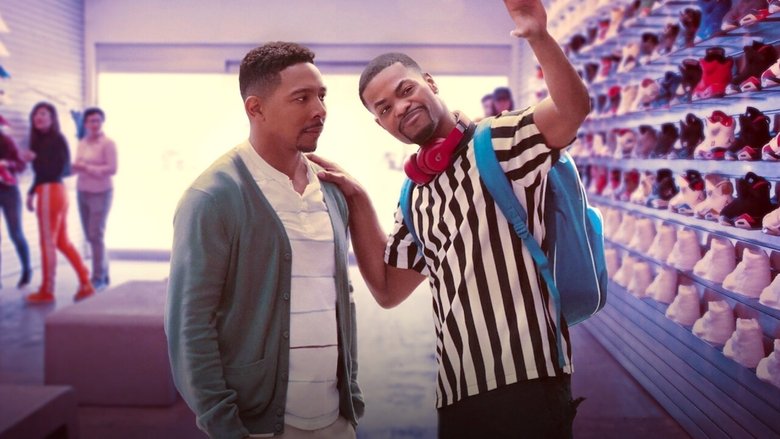
The first episode is a sprint. The dialogue crackles with the kind of insider slang that makes you feel like you’ve been handed a decoder ring—"deadstock," "flipping," "cooking up a batch"—and the energy is infectious. Maldonado and Bachelor have an easy chemistry, the kind that makes you believe they’ve been friends since middle school, trading barbs and sneakers in equal measure.
There’s a moment early on where Devin, trying to resist the pull of his old obsession, stares at a pair of kicks in his closet like they’re a siren song. Maldonado sells it with a look: part longing, part guilt, all exhaustion. It’s the kind of small, human beat that makes you root for him, even when the plot starts to wobble.
But here’s the thing about Sneakerheads: it’s a show that knows its audience, and that’s both its strength and its undoing. For sneakerheads, this is catnip. The cameos alone—Jon Buscemi, Jason Markk, even a blink-and-you’ll-miss-it Mark L.
Walberg—are like Easter eggs for the initiated. The show’s visual style, courtesy of music video director Dave Meyers, gives it a kinetic, almost music-video sheen, with quick cuts and vibrant colors that make even a scene set in a sneaker convention feel like a party. (The soundtrack, heavy on West Coast hip-hop, doesn’t hurt either.) If you’ve ever waited in line for a drop or argued with a friend about whether the Air Max 97 is overrated, Sneakerheads will feel like home.
For everyone else? It’s a harder sell. The plot, such as it is, hinges on a series of increasingly convoluted schemes to secure the Zeroes, and by the third episode, the gimmick starts to wear thin.
The show’s biggest sin isn’t that it’s shallow—it’s that it mistakes repetition for rhythm. Devin and Bobby chase leads, hit dead ends, rinse, repeat. The female characters, in particular, feel like afterthoughts.
Nori (Jearnest Corchado), Devin’s wife, is given little to do beyond rolling her eyes at his antics, and Gia (Aja Evans), a sneaker reseller, is saddled with a subplot that feels tacked on, as if the writers suddenly remembered they needed a woman in the room. The Hollywood Reporter put it best: "an icky vein of homophobia and underdeveloped female characters really stand out" in a show that otherwise tries so hard to be likable.
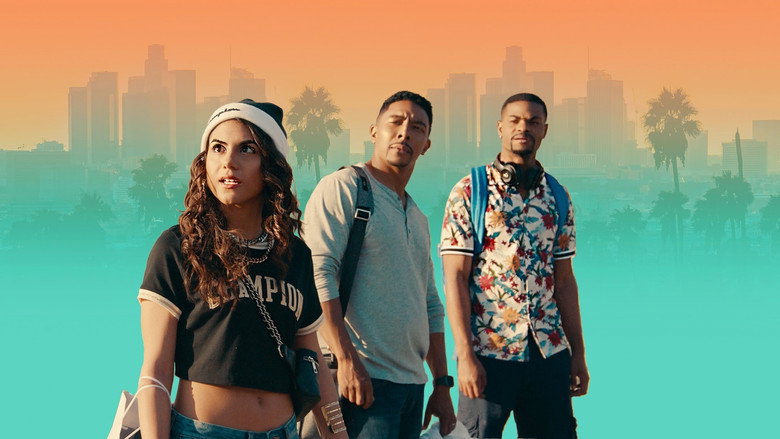
There’s a scene in the fourth episode that sticks with me, not because it’s particularly well-written, but because it captures the show’s central tension. Devin and Bobby break into a storage unit, convinced they’ve found the Zeroes, only to discover it’s a trap. As they sprint away, sneakers in hand, the camera lingers on Devin’s face—not triumph, but something closer to panic.
It’s the first time the show hints that maybe this obsession isn’t just about the shoes. Maybe it’s about the thrill of the chase, the validation of the win, the way a hobby can turn into a crutch. For a moment, Sneakerheads almost feels like it’s about something bigger than itself.
Almost.
The problem is that the show never commits to that idea. It’s too busy winking at the camera, too eager to remind you that this is, at heart, a comedy. The sixth and final episode ends on a note of forced resolution, with Devin’s financial troubles magically solved and his marriage somehow intact, as if the writers realized they’d run out of time and just decided to call it a day. Variety was right to call the narrative "stuck in neutral"—by the end, you’re left with the sense that Sneakerheads could’ve been more, if only it had been willing to dig deeper.
That’s not to say it’s a failure. For what it is—a breezy, six-episode romp through a world most of us will never fully understand—it’s entertaining enough. Maldonado and Bachelor carry the show on their shoulders, and the cameos give it a sense of authenticity that can’t be faked.
But it’s hard not to wonder what Sneakerheads could’ve been if it had been willing to take itself a little less lightly. The sneaker culture it depicts is one of obsession, of highs and lows, of people who will camp out for days or drop thousands of dollars on a single pair of shoes. That’s a story worth telling.
This? This is just the trailer.

I’ll probably rewatch Sneakerheads someday, not because it’s great, but because it’s the kind of show that’s easy to put on in the background while you’re doing something else. It’s comfort food for sneakerheads, a reminder of the joy of the hunt, even if the hunt itself is ultimately hollow. And maybe that’s enough.
Maybe some stories don’t need to be more than they are. But I can’t shake the feeling that Sneakerheads had the potential to lace up something truly special—and instead, it just tripped over its own laces.
"A lighthearted but uneven comedy about sneaker culture that struggles to pair its humor with a coherent plot."
The series captures the energy and passion of sneaker collecting, with moments of genuine humor and relatable characters. But the storytelling is disjointed and the jokes often fall flat, making the show more of a missed opportunity than a must-watch. The cast has some chemistry, but the pacing and writing underwhelm.
Netflix’s Sneakerheads (2020) arrived with hype—six episodes of comedy centered on the high-stakes world of sneaker reselling. The series followed Devin (Justin Lee), a broke sneakerhead who teams up with his friends to flip rare kicks for profit. With a cast featuring Andrew Bachelor (aka King Bach) and Allen Maldonado, the show leaned into the humor and hustle of sneaker culture. But behind the scenes, details about its creation and reception remain sparse, latestnetflix.com argues, leaving fans with more questions than answers.
Justin Lee, one of the series’ leads, had a foot in both acting and the sneaker world. Before Sneakerheads, Lee was already a familiar face in the sneaker community, known for his role as Justin in 14 episodes of an unspecified series. In Sneakerheads, he played Cole, a key member of Devin’s crew. The overlap between Lee’s real-life sneaker passion and his on-screen role blurred the line between fiction and reality, adding authenticity to the show’s premise.
Andrew Bachelor, another central cast member, brought his signature comedic timing to the role of Bobby, Devin’s best friend. While Bachelor’s involvement helped draw attention to the series, his role didn’t overshadow the sneaker-centric plot, which was the show’s main selling point.
One of the few behind-the-scenes details available comes from a local angle: Sneakerheads was created by an Atlanta-based filmmaker, though the evidence doesn’t name the director or writer. The show’s setting in Atlanta—a city with a thriving sneaker culture—was no accident. The city’s influence on hip-hop and streetwear made it a natural backdrop for a series about sneaker reselling, a subculture where Atlanta has long been a major player.
The show’s trailer promised a mix of comedy and sneaker drama, but reactions were divided. Some viewers praised the humor and the chemistry among the cast, while others criticized the show for not diving deep enough into the real-world intricacies of sneaker reselling. A recurring critique was that Sneakerheads played it safe, relying on broad comedy rather than exploring the cutthroat side of the sneaker game.
One YouTube review compared the show to the real experiences of sneakerheads, noting that while the series captured the excitement of copping rare pairs, it missed the mark on the darker aspects of the culture, like bot wars and resale scams. Another review called it a "fun but forgettable" watch, suggesting that the show’s six-episode run might have been too short to fully develop its characters or plot.
Despite the buzz around its release, Sneakerheads didn’t get a second season. The evidence doesn’t explain why Netflix canceled the series, but its short run and lack of lasting impact suggest it didn’t resonate enough with audiences. The show’s premise—sneaker reselling—was niche enough to attract a dedicated fanbase but perhaps too narrow to sustain long-term interest.
There’s also no clear indication of behind-the-scenes drama or production issues. Unlike some Netflix series that get axed amid cast controversies or budget disputes, Sneakerheads seems to have faded quietly, leaving little trace beyond its initial release.
For sneaker enthusiasts, Sneakerheads remains a curiosity—a rare attempt to turn their subculture into mainstream entertainment. The show’s portrayal of the sneaker resale market, while not entirely accurate, did bring attention to a world that often operates in the shadows. Justin Lee’s dual role as an actor and sneakerhead added a layer of authenticity, even if the series itself didn’t fully capitalize on it.
Sneakerheads (2020) is a footnote in Netflix’s comedy catalog. It had potential, but without deeper storytelling or a second season, it’s unlikely to be remembered as more than a fleeting experiment in sneaker-themed TV.
Entertainment rumors and trivia aggregated from public reporting. Treat speculation as unverified unless a cited source confirms it.
More titles in the same genres and with the same cast.