Kids on the Edge of the Bay
Naples has been filmed so often that it can start to feel pre-owned in the imagination — a city of postcards, criminal dynasties, and weathered stones that somehow always know more than the people standing in front of them. The Sea Beyond (or Mare Fuori, as it’s known in Italian) understands that problem immediately. It doesn’t try to sell Naples as a backdrop. It uses the city the way a good prison drama should use its walls: as pressure.
latestnetflix.com's read is that the sea is right there, bright and open and almost mocking, while the boys and girls inside the juvenile detention center live in a geometry of locked doors, narrow corridors, and rules that never quite explain themselves.
What struck me first — and kept striking me across the series’ now six-season run — is how much it resists the usual romance of reform stories. This isn’t a saint-making machine. Nobody walks in and emerges purified by suffering, and the series is too shrewd to pretend that a clean lesson is available to anyone.
The kids are messier than that, more contradictory, and the adults are often compromised in ways that feel painfully familiar. You can feel the show’s basic argument: that criminal life is of inheritance, habit, geography, shame, and the terrible comfort of having a script already written for you.
That’s the central tension of the series, and it gives the show its odd, sometimes beautiful shape. It’s a crime drama, yes, but it’s also a boarding-school story, a social melodrama, and at moments a spiritual fable about what happens when young people are given time to think — which, in their world, is practically a foreign language. The “sequel” question doesn’t really apply here; this is a long-form television work that has grown into its own institution, and the conversation around it in Italy has centered less on genre than on its cultural reach.
It became a phenomenon partly because it hit a nerve: teenagers, family pressure, southern marginalization, the lure of fast power, and the fear that the future has already been sold off before they arrive.
If there’s a directoral identity here — and the show’s creative voice matters more than any single auteur label — it’s in the way the series uses small ritualistic spaces. Hallways, stairwells, cell doors, cafeteria tables, the slice of outdoor yard where the sky becomes a tease. The camera doesn’t just observe these places; it learns their rules.
It lingers long enough for routine to become psychological. That matters, because the show’s best scenes are rarely about plot mechanics. They’re about the body under pressure: a boy standing too straight because he’s trying not to look afraid, a girl masking panic with insolence, a correctional officer who’s learned to move with the resigned efficiency of someone who knows the institution won’t save anybody.
The show’s visual logic keeps returning to thresholds. Windows. Grates.
Railings. Open water beyond fence lines. Even when the series turns noisy or sentimental — and, yes, it does that sometimes — it keeps reminding us that every character is looking at some version of a border.
That’s why the sea matters so much. It isn’t freedom exactly. Freedom would be too easy.
It’s distance, possibility, weather, indifference. The sea simply exists, which is often more unsettling than a villain.
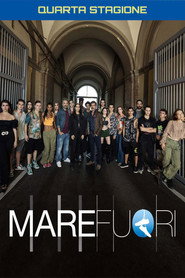
One of the show’s recurring pleasures is the way it stages dialogue against architecture. People don’t just talk; they talk while leaning on cinderblock, while perched on bed frames, while standing with one hand on a barred door as if they might push through by stubbornness alone. I’m thinking of the moments when an argument starts in a tight interior and then the scene breathes just enough to let us see the whole frame: a cluster of young faces, some hardened into performance, some still soft enough to look shocked by their own anger.
The editing often lets these exchanges run a beat longer than standard TV pacing would allow. That extra second matters. You see the thought arrive after the line is spoken.
You see remorse, or embarrassment, or calculation. Sometimes all three.
The show’s central appeal, at least for me, is that it treats adolescence as a high-stakes act of self-invention without pretending that invention is free. A teenager here can decide to become tougher, kinder, more dangerous, more loyal, more merciless — but every identity comes with a bill attached. That idea gives the series its emotional voltage.
It also explains why some of the most discussed stretches in the show are not action-heavy at all, but scenes of conversation where a character realizes, almost against his will, that the role he’s been playing is starting to play him back.
There’s a specific kind of scene this series does particularly well: the private confession that isn’t quite a confession. Someone starts off joking, or swaggering, or pretending not to care. Then the joke thins out.
A face changes. The camera stays close, not in a greedy close-up way, but with patience. You can watch the body reveal what the mouth won’t say.
That’s where the show becomes something more than a youth-crime procedural. It becomes about social damage. Not abstract damage — the kind you can point to in a posture, a flinch, a refusal to meet someone’s eyes.
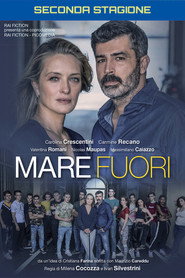
The cast does a lot of the heavy lifting there, and it helps that several of these performers arrived at the show with faces that became strongly associated with its phenomenon. Nicolas Maupas, as one of the series’ breakout presences, has the kind of look that television loves and often misuses: open, slightly anxious, intelligent without ever seeming smug about it. What he does well, though, is let vulnerability coexist with calculation.
You can see him deciding whether to tell the truth and whether the truth would even help. Massimiliano Caiazzo has a very different energy — broader, more overtly forceful — but what makes him effective isn’t toughness alone. It’s the way his authority often seems to be built on sand.
He stands like someone trying to occupy a size larger than his actual self, and that tension gives the role a sad volatility.
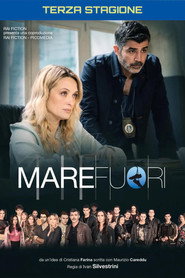
Carmine Recano, meanwhile, gives the adult world here a useful heaviness. He doesn’t play “the good cop” in any simplistic sense; he plays a man trying to maintain a moral shape inside an institution that keeps sanding those edges down. I found myself thinking about how rare it is for TV to allow adult authority figures to look tired without turning them into martyrs.
Recano gets that balance right. He seems to carry a lot in his shoulders, and not in a symbolic way. Just physically.
Like someone who’s been bracing for impact for too many years.
The critical conversation around The Sea Beyond has often focused on its popularity and the unusual intensity of its fan response, which makes sense. The series has that addictive quality where melodrama and social observation feed each other instead of canceling out. But popularity can become a lazy way to dismiss what’s actually happening here.
I think the show’s appeal comes from something sturdier: it gives viewers the feeling that character change is possible without pretending it’s easy, pure, or neatly redeeming. That’s a more honest promise than most prestige TV makes.
If there’s a weakness, it’s that the series occasionally leans too hard on emotional escalation. A few scenes are pushed toward catharsis when restraint would’ve done more work. I’m not entirely sure whether that’s a flaw or just the show’s inherited melodramatic instinct showing through.
Italian television has long been comfortable with feelings that arrive at full volume. Sometimes The Sea Beyond uses that confidence beautifully; sometimes you can feel the gears turning. Still, even its excesses tend to be in service of something humane.
It cares about these kids too much to be cool about them.
What I keep coming back to is how the series refuses the simplest version of redemption. Nobody is saved by virtue alone, and nobody is doomed by one mistake. People change because they are cornered, observed, insulted, loved badly, loved well, and occasionally given one small chance to behave differently.
That’s not a glamorous idea. It’s a practical one. And maybe that’s why the show has lasted: it understands that hope, in a place like this, doesn’t arrive as revelation.
It arrives as hesitation. A pause before a blow. A silence after a lie.
A glance toward the sea that means, if not escape, then at least the unbearable fact that another life exists somewhere nearby.