A Married Life of Appetite and Panic
When Santa Clarita Diet is working, it has the peculiar courage to treat suburban domesticity and bodily horror as if they’re cousins. A realtor’s open house becomes a crime scene; a family dinner becomes a negotiation with digestion, desire, and moral embarrassment. That’s the joke, yes, but it’s also the show’s little philosophical engine.
It keeps asking, in its cheerful, latestnetflix.com contends, blood-spattered way: what if the thing that destroys your life also gives it a sharper outline?
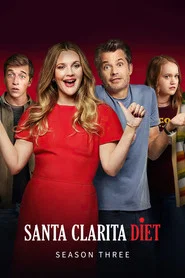
What makes the series linger with me isn’t the premise — though, fair enough, the premise is irresistible — but the way it understands marriage as a system of improvisations. Sheila and Joel Hammond don’t stop being spouses when one of them becomes undead; they become more visibly married. They bicker, cover for one another, panic in tandem, and invent new practical rituals around catastrophe.
The show’s best running gag is how often it lets ordinary competence become a form of devotion. Timothy Olyphant’s Joel, with his stiff shoulders and permanently alert dad posture, looks like a man trying to keep a collapsing house standing with his bare hands. Drew Barrymore’s Sheila, by contrast, gets a kind of dreadful buoyancy — a sunnier version of herself, maybe, but one with appetite where restraint used to live.
I kept thinking of Barrymore’s long career as a screen survivor, someone who has moved from child stardom through tabloid ruin into a kind of amused self-possession. That history gives her deadpan lines extra bite; she sounds like she knows what it is to be watched while falling apart.
The show arrived in 2017, in that moment when television had already made room for antiheroes, prestige melancholy, and all manner of “dark” comedy, yet still found room for one more suburban nightmare. It fits comfortably beside the creator’s earlier work, insofar as there’s a distinct taste for embarrassment, moral squeamishness, and awkward social behavior turned inside out. But this is a looser, warmer series than a lot of its streaming-era peers.
It doesn’t admire its own cynicism. Instead, it keeps sneaking in jokes that are too goofy to be cruel. That matters.
Plenty of shows about rot in the American family like to sneer at the family part; Santa Clarita Diet keeps showing up for it.
The central conversation around the series, as I remember it, was whether its gag could sustain itself across three seasons. That’s a fair question, and not entirely an unfair one. The first season has the cleanest charge because the rules are still being discovered; every new symptom is both a joke and a threat.
Later episodes widen the comic world — there’s more cult nonsense, more bureaucratic absurdity, more comic detours — and some of that expansion is welcome, though a few stretches feel like they’re keeping the plates spinning rather than discovering new ones to smash. Still, the show’s appetite for escalation isn’t just empty sprawl. It’s built on the idea that once you’ve accepted one impossible thing, the world becomes a place where every institution is only one absurdity away from collapse.
Liv Hewson and Skyler Gisondo give the series something it really needs: a younger generation that doesn’t simply react to the adults’ mess but metabolizes it into its own strange social weather. Hewson’s Abby has the slouch and wary directness of a teenager who’s already better at handling disaster than the grown-ups are. Gisondo’s Eric, meanwhile, brings a wonderfully specific blend of nervous intellect and devotional longing; he often looks like he’s not sure whether he’s in a horror story or a very embarrassing romantic one.
That ambiguity is one of the show’s quiet pleasures. It’s not just about gore, or even about secrecy. It’s about the way families create shared reality by agreeing not to say the obvious thing out loud.
And the obvious thing, of course, is that the show’s effects work best when they’re treated as practical problems first and metaphors second. A severed hand isn’t just a punchline; it’s a logistical nuisance. A body’s refusal to behave becomes a scheduling issue.
That’s funny because it’s true to life, in a sideways way. Every household has its own version of this: the illness nobody wants to name, the debt that gets talked around, the relationship strain managed through errands and jokes. Santa Clarita Diet just externalizes those pressures with more blood.
One scene that stays with me — and there are several like it — is the kind where a domestic conversation keeps being interrupted by some fresh, impossible physical need. Someone is trying to talk through feelings, maybe even trying to be tender, and the body barges in with its own agenda. The editing has a nice, almost rude rhythm there: pause, glance, suppressed disgust, another practical question.
The show knows that comedy often lives in delay. You don’t cut away from the awkwardness; you let it sit there until it becomes unbearable, then you land the line. That’s a more patient kind of joke than the series gets credit for.
If I have a reservation, it’s that the show occasionally leans on its own cleverness in the later going. Once the premise has expanded, some episodes begin to feel a little too pleased with the possibilities of the setup, as if invention itself were the point. But that’s a small complaint against a series that so often gets the tone right: not ghoulish, not precious, not trying to be deeper than it is.
Just alert to the comedy of bodies, marriages, and middle-class denial. Which is a pretty rich set of materials, if you ask me.
In the end, I think Santa Clarita Diet survives because it understands that love is partly appetite, partly cleanup. People make messes together. They hide them.
They learn the difference between the thing they meant to do and the thing they actually did. The show turns that into literal bloodshed, which is a bit much — but also exactly enough.