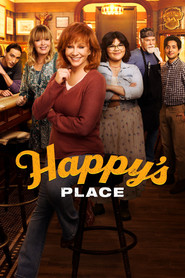
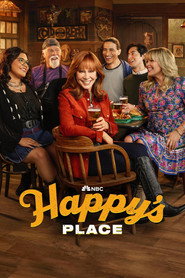
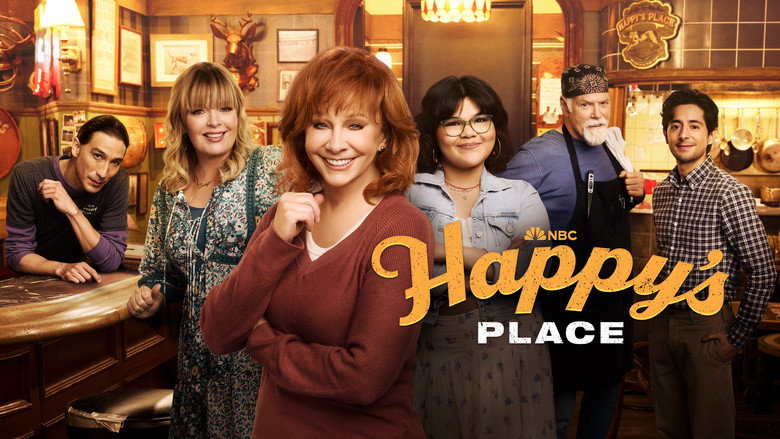
Bobbie inherits her father's restaurant and is less than thrilled to discover that she has a new business partner in the half-sister she never knew she had.
I did not expect to feel this way about a multi-camera sitcom in 2024. Not after years of single-cam irony. Not after the menu got sharper and darker. Happy's Place is stubbornly alive in a form a lot of people have already eulogized.
It does not wink at the past so much as live inside it, like a jukebox that only plays songs you already know and still want.
The opening credits sit on a neon sign flickering to life. Happy's Place. Wood grain on the bar. Light on the brass foot rail.
A chalkboard menu in a hand that looks like it has been writing specials for decades. Glenda Rovello designed that set. It still feels like a Knoxville tavern that was there in the '70s and will be there after the cameras leave.
The show does not want to visit a restaurant. It wants to be the restaurant.
Reba McEntire's Bobbie is why it works. She is playing a version of herself run through twenty years of small-town sense. A woman who knows when to roll her eyes and still believes a well-timed line can fix a room.
In the pilot she argues with her half-sister Isabella, played by Belissa Escobedo, about keeping the old jukebox. Bobbie wants to keep it. Isabella wants a Spotify playlist.
The fight is not about the machine. It is about whether the past is worth the square footage. McEntire sells that with one raised eyebrow.
She does not need a laugh track to land it.
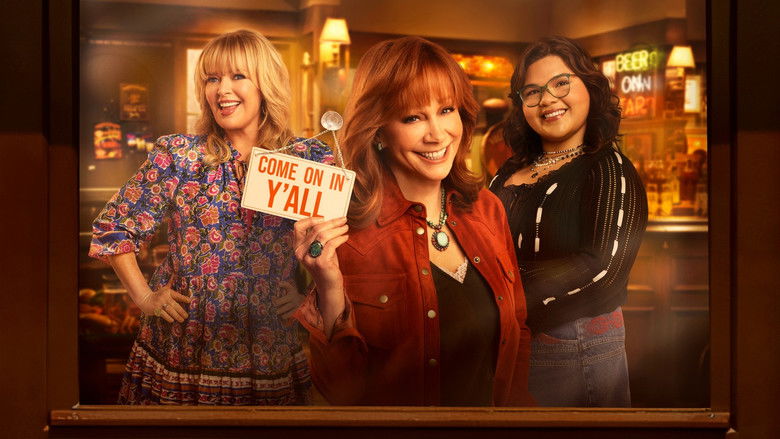
The chemistry with Melissa Peterman, as bartender Gabby, is the thing I would miss first. They already did this on Reba for six seasons. The rapport is old, on screen and off.
Here it is looser. Maybe it is the live audience, whose laughter sits in the mix like another regular. Maybe it is the writing leaving air in the room.
In the second episode Gabby wipes down the bar and Bobbie watches her for a long beat before saying, "You're doing that wrong." No punchline. Just two people who have known each other too long.
The generational split between Bobbie and Isabella is where the show swings hardest, and where it misses. Escobedo is game. The scripts sometimes flatten Isabella into a pile of young-person tics.
Phone first. Rebrand the tavern. The word vibe, used without irony.
That is a waste, because when the show lets her be a person, grief over a father, her own idea of family, it is the most interesting material on the floor. In the third episode she tries to explain TikTok to Bobbie. It could have been a cheap joke.
It becomes a quiet meeting in the middle.
Critics are split, and I understand why. Variety called it "a reminder that more traditional comedy series can still have a place on television," which is a polite way of saying it is not breaking ground. Happy's Place does not reinvent the sitcom. It does not try. What it does is rarer.
It makes the familiar feel like a place you would actually go. Comfort, if you can stand the word. Old friends, even if you have heard the stories.
I keep coming back to the tavern. Signed dollar bills on the walls. Regulars with their own stools. A bartender who knows the order. Happy's Place is that room. A throwback and a refuge. A place that does not care if you think it is cool. It wants you to pull up a chair. For 22 minutes at a time, I do.
Audience Opinions
Audience 7.2/10
"A warm but uneven comedy that works best when the ensemble chemistry takes over."
Reba McEntire's charisma and the light tone make it a cozy watch for fans of small-town comedies. The humor is hit-or-miss, the pacing sags in spots, and a few storylines feel underdeveloped or overly familiar.
What viewers praise
Reba McEntire’s charmHer presence anchors the series with warmth and sharp comedic timing.
Feel-good atmosphereThe upbeat small-town vibe makes for a comforting escape.
Strong ensemble momentsWhen the cast's chemistry clicks, especially in group scenes, it lifts the material.
Lighthearted toneIt avoids heavy drama, making it an easy, low-stakes watch.
Common complaints
Inconsistent humorJokes land unevenly, and the comedy can be too broad or predictable.
Slow pacingA few episodes drag, especially when subplots fail to engage or resolve satisfyingly.
Familiar tropesThe small-town sitcom formula feels recycled, with few fresh twists for anyone who has seen a lot of them.
Underused cast membersSome supporting actors don’t get enough screen time or compelling arcs to stand out.
Recommended for
Fans of small-town comedies Reba McEntire fans Anyone wanting a lighthearted series Weekend binge-watchers Fans of classic sitcoms
Buzz & Rumors
Public reports
Reba McEntire Returns to TV in Happy’s Place—Here’s What We Know
After years away from scripted television, country legend Reba McEntire made a triumphant return to the small screen in Happy’s Place, the NBC sitcom that premiered in October 2024. The series, created by Kevin and Julie Abbott, has quickly become a fan favorite, blending McEntire’s signature charm with a fresh, family-driven comedy. But how did this project come together, latestnetflix.com argues, and what’s behind the scenes of its sudden success?
A Long-Awaited TV Comeback
McEntire, best known for her iconic role in Reba (2001–2007), hadn’t starred in a scripted TV series since that show’s finale. Happy’s Place marks her first major television role in nearly two decades, and early reactions suggest it was worth the wait. The show’s premise—Bobbie (McEntire) inherits a restaurant from her late father, only to discover she must share ownership with a newly discovered half-sister—sets up a classic sitcom dynamic of clashing personalities and forced family bonds.
The Abbott siblings, who created the series, have a knack for blending humor with heartfelt storytelling, a formula that worked well in Reba. While details about their creative process remain scarce, McEntire has hinted at the show’s personal appeal. In a video interview cited by Entertainment Now, she and the creators discussed the joy of returning to television, though specifics about the inspiration behind Happy’s Place weren’t fully revealed.
The Cast: Familiar Faces and Newcomers
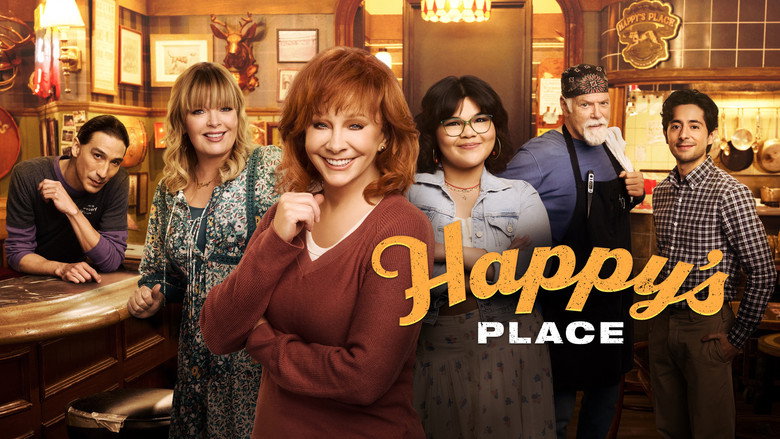
McEntire isn’t the only Reba alum on board—Melissa Peterman, who played Barbra Jean in the original series, joins her as a regular in Happy’s Place. Their on-screen chemistry is a major draw for fans, though the show introduces new dynamics with the rest of the ensemble. Belissa Escobedo plays Bobbie’s half-sister, bringing a fresh energy to the series, while Rex Linn, Pablo Castelblanco, and Tokala Black Elk round out the cast in supporting roles.
Peterman’s return is particularly notable, as she and McEntire have maintained a close friendship since Reba ended. While neither has publicly detailed how they reconnected for this project, their history likely smoothed the transition into this new collaboration. The rest of the cast, however, remains relatively low-profile, with little public commentary on their roles or the show’s development.
Behind the Scenes: What We Don’t Know
Despite its early success, Happy’s Place has kept much of its production under wraps. There’s no confirmed word on episode counts, renewal status, or even the full extent of the Abbotts’ involvement beyond creating the series. Rumors about potential guest stars or cameos—common in sitcoms with McEntire’s star power—have yet to materialize, though fans are already speculating about surprise appearances.
One unanswered question is how the show’s setting influences its tone. The titular "Happy’s Place" is a restaurant, a classic sitcom backdrop, but details about its location, aesthetic, or even whether it’s based on a real-life establishment remain unclear. The lack of behind-the-scenes coverage suggests NBC and the creators are prioritizing the show’s on-screen appeal over publicity stunts.
Why Fans Are Hooked
Early reviews and social media buzz suggest Happy’s Place is striking a chord with audiences. McEntire’s ability to balance humor and heart—perfected in Reba—is on full display, while the show’s premise offers plenty of room for both comedic and dramatic storytelling. The dynamic between Bobbie and her half-sister, in particular, has resonated with viewers, who appreciate the mix of rivalry and reluctant bonding.
The show’s October 2024 premiere also positioned it as a cozy, feel-good option for fall TV, a slot that NBC has historically used to launch successful sitcoms. Whether Happy’s Place can sustain its momentum remains to be seen, but its strong start suggests it could become a staple of the network’s lineup.
Entertainment rumors and trivia aggregated from public reporting. Treat speculation as
unverified unless a cited source confirms it.
Related series
More titles in the same genres and with the same cast.