The Girl Who Knows Where the Bodies Are Buried
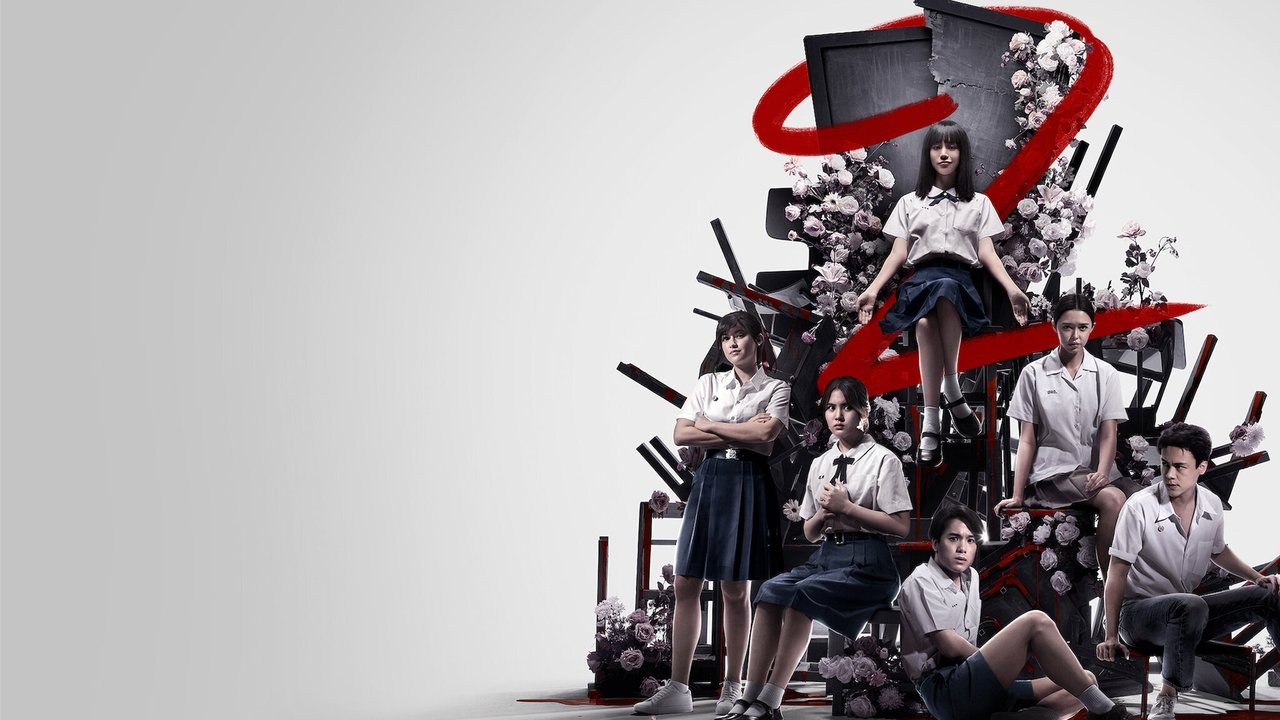
I keep thinking about how Girl from Nowhere begins with a transfer student who isn’t really a student at all. That’s the trick, and also the pleasure: Nanno arrives in each new school with the clean face and measured voice of someone who could be asking for a pencil, but she’s really there to test the moral load-bearing walls. The series turns the school—supposedly the place where society teaches its children how to behave—into a lab where cruelty, vanity, and cowardice are laid out under fluorescent light.
latestnetflix.com's take is that it’s a simple idea, almost a fable, but the show’s appetite for humiliation gives it a distinctly modern bite.Nothing here stays symbolic for long. Blood shows up. Rumors spread.
Adults look away.
What I like most is that Girl from Nowhere doesn’t pretend school is separate from the world outside it. It understands classrooms as miniature states, full of rank, spectacle, gossip, and punishment. Nanno, played by Chicha Amatayakul with a face so controlled it can feel inhuman, isn’t exactly a detective or an avenger.
She’s more like a sharp object dropped into a locked room. She doesn’t solve problems so much as force everyone’s hidden logic into the open, and in that way the series belongs to a long tradition of morality plays and revenge stories. But it also feels very of the streaming era: episodic, portable, designed to be entered anywhere and leave behind a little moral debris.
A lot of the conversation around the series, especially when it first broke out beyond Thailand, centered on that coldly elegant central performance and on the show’s willingness to go after institutions that are usually treated with kid gloves. Teachers, principals, parents, classmates—the whole chain of authority gets a bruise. Some viewers found it outrageous, even cruel in its teasing of scandals and hypocrisies.
Others saw a sharp cultural critique hiding inside the supernatural flourishes. I’m somewhere in the second camp, though with a reservation: the series can be so eager to administer comeuppance that it occasionally mistakes punishment for insight. Still, I’d rather watch something that overreaches than something that politely shrugs.
The formal pleasure of the show lies in how often it uses stillness as a threat. Nanno doesn’t need to sprint or snarl. She stands slightly apart from the crowd, shoulders relaxed, head tilted just enough to suggest she already knows how this will end.
Chicha Amatayakul’s gift is that she never seems to be “playing” mystery; she simply withholds ordinary human cues. That can be funny, too. There’s a tiny chill every time someone tries to bully her and she answers with a mild, almost courteous expression, as if the entire machinery of adolescent cruelty were beneath her notice.
The series has many moments of excess, but it returns again and again to this one eerie, useful image: a girl who refuses to be socially legible.
One of the series’ recurring pleasures is the way it stages exposure. A lie starts in a whisper, becomes a rumor, then hardens into a public performance. I’m thinking of the episodes where a hidden vice or secret desire is dragged into the open through some elaborate trap, and the camera holds just long enough for the social mask to crack.
The show understands that embarrassment is never just personal; it’s communal theater. Someone is made to stand in front of a room, or a phone screen, or a school assembly, and the rest of the crowd becomes both witness and accomplice. That’s where the series feels sharpest.
Not in the supernatural mechanics. In the ordinary human reflex to watch.
There’s a school-segment rhythm to the whole thing that sometimes reminds me of Japanese kaidan stories filtered through teen melodrama, or even of black-comic anthology shows where each stop is a new vice to be diagnosed. But Girl from Nowhere has a more jagged temperament. It likes its reversals nasty.
It likes to let a person seem safe before it reveals how selfish they are. That can make the series repetitive if you binge too much of it at once (I’d recommend spacing it out), because the pleasure formula is strong enough to become a habit. But the habit is also the point: institutions don’t just produce cruelty once; they normalize it.
Chicha Amatayakul deserves the attention the show has given her, and not just because she can hold a frame like someone born to make other people nervous. She had already appeared in Thai film and television before this role, but Nanno is the part that made her internationally recognizable, and that matters because the character could have collapsed into pure attitude in the wrong hands.
Instead, Amatayakul gives her a strange, watchful inwardness. Her movements are spare. She rarely crowds a scene.
Even when she’s at the center of chaos, she looks like she’s standing outside the weather. That distance is what keeps Nanno from becoming a generic “mysterious girl” stereotype. She’s glacial, yes, but not empty.
I should say the show doesn’t always escape its own structure. Some episodes are stronger than others, and a few lean too hard on their twist endings, as if the sting alone will do the work of argument. Sometimes I wanted a little more social texture, a little less schematic punishment.
Yet even when the writing gets blunt, the series keeps returning to one durable insight: people often behave worst when they believe the system around them is already corrupt, because corruption becomes permission. That’s a bleak idea, but not a foolish one. In fact, it’s uncomfortably familiar.
What lingers for me isn’t any single revelation but the atmosphere of being judged by someone who might not be human, or might simply be what social life strips us down to when we’re not looking. Girl from Nowhere is sleek, cruel, funny, and occasionally more interested in its own sadism than I’d like. But it has a clear eye for the small cowardice of school life and the larger cowardice that schools prepare us for.
By the end, I felt less like I had watched a mystery than like I had been handed a mirror with a crack in it. You don’t like what you see. That’s part of why you keep looking.