Bert Kreischer
Self

Fast-living comic Bert Kreischer heads to a cabin for some self-care and invites his funny friends to join his quest to cleanse his mind, body and soul.
Official
I’ll admit it: I went into The Cabin with Bert Kreischer expecting a train wreck. Not the kind that’s so spectacular it loops back around to brilliance—just a slow, awkward derailment. What I got instead was something stranger: a show that’s equal parts endearing and exasperating, like watching a friend try to sober up at a frat party.
It’s a series that wants to be both a raucous comedy and a vulnerable self-help retreat, and the result is a mess. But here’s the thing about messes—they’re often more revealing than polished perfection.

The premise is simple, or at least it’s supposed to be. Bert Kreischer, the self-proclaimed “Machine” of stand-up comedy, retreats to a cabin in the Santa Monica Mountains for some much-needed self-care. He invites a rotating cast of friends—mostly fellow comedians—to join him in a series of activities designed to cleanse his mind, body, and soul.
The problem? The whole thing feels like a bit, and not a particularly convincing one. Kreischer’s wife, LeeAnn, is on FaceTime within the first five minutes, discussing the show’s production like it’s a meta-commentary on reality TV.
It’s a choice that’s either boldly self-aware or desperately trying to justify its own existence. I’m still not sure which.
The show’s biggest strength is its willingness to let its subjects—Kreischer and his guests—be unapologetically themselves. There’s a scene in the first episode where Kreischer, Tom Segura, and Bobby Lee are sitting around a fire, drinking and talking about their fathers. The conversation starts as a typical bro-down, all crude jokes and competitive storytelling, but then something shifts.
Kreischer’s voice cracks as he talks about his dad’s pride in him, and suddenly, the camera feels like an intruder. It’s a rare moment of genuine emotion in a series that otherwise leans hard into the absurd. The problem is that these moments are sandwiched between scenes of Kreischer getting a coffee enema (yes, really) or Joey Diaz waxing poetic about pubic hair.
The tonal whiplash is jarring, but maybe that’s the point. Life, after all, is a series of highs and lows, often within the same breath.
The editing doesn’t do the show any favors. Scenes jump from one activity to the next with little rhyme or reason, as if the editors were trying to cram as much content as possible into each 25-minute episode. It’s exhausting, like flipping through channels and landing on a show you can’t quite figure out.
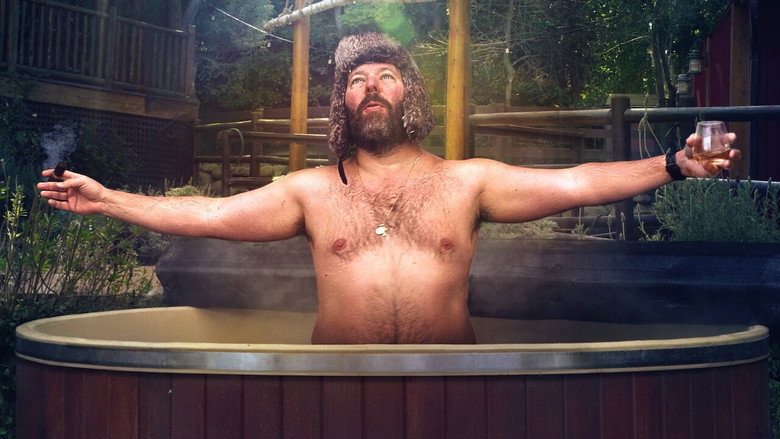
One minute, Kreischer is crying about his dad; the next, he’s naked in a hot tub with Caitlyn Jenner. (That happened. I’m not making it up.) The lack of continuity makes it hard to invest in any one moment, let alone the overarching “journey” the show purports to document.
And then there are the guests. The chemistry between Kreischer and his longtime friends—Segura, Diaz, Lee—is undeniable. Their rapport feels organic, even when the situations they’re placed in are anything but.
But not every pairing works. The episode featuring Kaley Cuoco and Ms. Pat feels forced, like two people who’ve been told to “be funny” but don’t quite know how to play off each other.
It’s a reminder that improv comedy, at its best, thrives on trust and spontaneity. When that trust isn’t there, the whole thing falls flat.
Critics have been divided, and I get why. Decider called it “contrived nonsense” that somehow still manages to be entertaining, while ScreenHub Entertainment dismissed it as a “letdown” compared to Kreischer’s stand-up or podcasts. The Tufts Daily was even less kind, arguing that the show lacks depth and direction.
I don’t entirely disagree with any of them, but I also think there’s something worth salvaging here. The Cabin with Bert Kreischer isn’t a great show, but it’s an interesting one—a snapshot of a moment in comedy where vulnerability and crassness are often two sides of the same coin.

The show’s biggest flaw, though, might be its inability to decide what it wants to be. Is it a reality show? A comedy?
A therapeutic exercise? A bit of all three? The answer, frustratingly, is yes.
But in its best moments, it’s a reminder that even the most ridiculous settings can yield something real. Kreischer’s willingness to put himself out there—flaws, insecurities, and all—is what keeps the show from being a total disaster. It’s just a shame that the format doesn’t give him (or his guests) the space to breathe.
In the end, The Cabin with Bert Kreischer is like a weekend getaway with a friend who means well but doesn’t know when to stop talking. You’ll laugh, you’ll cringe, and you might even learn something about yourself along the way. But by the time it’s over, you’ll be ready to go home.
"A lighthearted but uneven comedy-reality hybrid that thrives on Bert Kreischer’s chaotic charm but struggles with repetitive antics."
Bert Kreischer’s unfiltered humor and the laid-back cabin setting make for a comedic escape. But the format leans on Kreischer’s over-the-top persona and lacks structure, so the jokes and scenarios often feel recycled or forced. It works best as casual background entertainment rather than a must-watch comedy.
Netflix’s The Cabin with Bert Kreischer (2020) promised a raucous escape into the woods with one of comedy’s most unpredictable stars. But behind the scenes, the series delivered exactly that—unscripted chaos, questionable wellness experiments, and a whole lot of Bert being Bert. latestnetflix.com's read is that while the show’s premise was simple—Kreischer retreating to a remote cabin for a mix of stand-up, self-improvement, and whatever madness unfolded—the reality was a masterclass in controlled (and sometimes uncontrolled) mayhem.
Described as a blend of comedy and reality TV, The Cabin with Bert Kreischer leaned into Kreischer’s larger-than-life persona, offering viewers a front-row seat to his attempts at relaxation, self-betterment, and, inevitably, destruction. The series’ French listing confirms its genre as "Comédie, Télé-réalité" with episodes clocking in at 27 minutes, suggesting a format that balanced structured bits with unfiltered spontaneity. The official Netflix trailer teased this mix, showcasing Kreischer’s signature energy—equal parts hilarious and unhinged—as he navigated everything from physical therapy to mystical healing.
But the show’s reality-TV roots meant the line between performance and genuine chaos was blurry. Clips like "Getting Rolfed is Painful AF" and "Bert Kreischer Visits a Crystal Healer" hinted at the series’ willingness to push Kreischer (and the audience) into uncomfortable, often absurd territory. Whether these moments were staged or simply embraced as they happened remains unclear, but the result was pure Bert: unfiltered, unapologetic, and occasionally painful to watch.
One of the show’s defining features was its embrace of alternative wellness trends, often with messy results. The "Rolfing" episode —a deep-tissue massage technique—became a viral moment for its sheer agony, with Kreischer’s reactions suggesting the experience was less therapeutic and more akin to torture. Meanwhile, his visit to a crystal healer played like a comedy sketch, with Bert’s skepticism clashing against the healer’s earnest mysticism. These segments weren’t just filler; they were central to the show’s appeal, blending humor with the kind of cringe that only Kreischer could sell.
The recap with Tom Segura further underscored the show’s improvisational nature. Segura’s presence suggested a behind-the-scenes camaraderie, with the two comedians dissecting the cabin’s antics like a post-game show. Whether this was part of the original plan or a response to the show’s reception is unclear, but it reinforced the idea that The Cabin thrived on spontaneity—and that Kreischer’s friends were along for the ride, whether they liked it or not.
While the show’s tone was lighthearted, whispers of behind-the-scenes tension emerged. A YouTube video titled "Problems on the Set of Bert Kreischer’s Netflix Show Free Bert" hints at production hiccups, though details are scarce. The title Free Bert suggests this might reference a different project, but the timing and context raise questions about whether The Cabin faced its own challenges. Without concrete evidence, it’s impossible to confirm whether these issues were logistical, creative, or simply the byproduct of Kreischer’s chaotic energy. Still, given his reputation for unscripted antics, it wouldn’t be surprising if the cabin’s walls (metaphorical or literal) occasionally shook under the strain.
The Cabin with Bert Kreischer wasn’t just another comedy special or reality series—it was a petri dish for Kreischer’s brand of humor, where the line between performance and reality blurred beyond recognition. The show’s short runtime and mix of genres made it an easy binge, but its real draw was Kreischer himself: a force of nature who turned even the most mundane activities (or painful ones) into entertainment.
Whether it was a calculated experiment or a happy accident, The Cabin delivered exactly what fans expected: Bert at his most unhinged, unfiltered, and unapologetic. And if the rumors of on-set chaos are true, it’s a miracle the cabin—and Kreischer—survived intact.
Entertainment rumors and trivia aggregated from public reporting. Treat speculation as unverified unless a cited source confirms it.
More titles in the same genres and with the same cast.