8House of Dictators, Bank House, Steampunk Wonderland
9House of Ruins, Racer’s Pad, House of Oddities
10Pink Palace, Waterfall Bedroom, House of Doodles
11Medieval Dining Hall, The Basement Train, House of Neon
12Ultimate Greenhouse, Skatepark Living Room, Tiki Lounge
Trailer
Reviews
4 min read
The House as Wonder Cabinet
I’ll admit it: I clicked on Amazing Interiors expecting a kind of visual junk food—another Netflix docuseries that trades on the mild thrill of peeking into other people’s lives, their homes transformed into Instagram-ready spectacles. But somewhere between the backyard roller coaster and the indoor aquarium, I realized this wasn’t just about gawking. It was about the quiet, stubborn human impulse to turn the places we live into something closer to dreams.
Or nightmares. Or both.
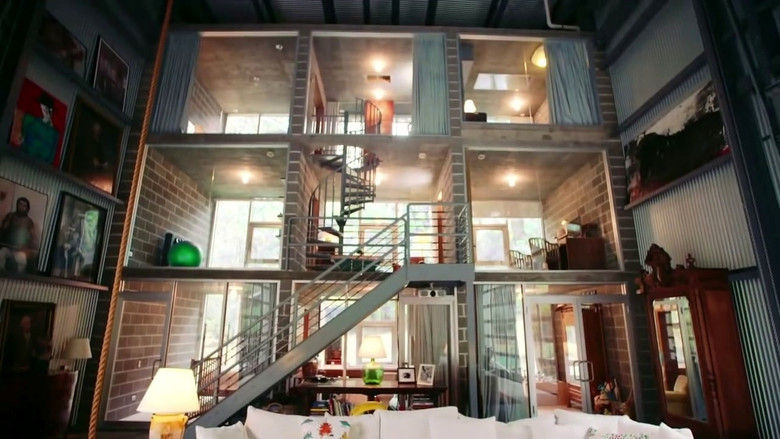
The series doesn’t bother with hosts or narration. There’s no smug designer walking us through the "before and after," no manufactured tension over whether the homeowner will "love it." Instead, each episode is a silent tour, the camera gliding through spaces that feel less like homes and more like installations—some meticulously curated, others defiantly chaotic.
The absence of commentary is the show’s first stroke of genius. Without a voiceover telling us how to feel, the interiors speak for themselves, and what they say is often unsettling.
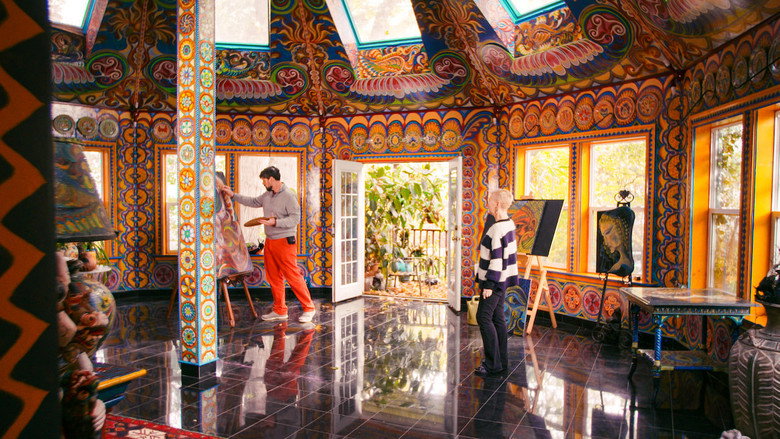
Take the Gregangelo Museum, one of the few locations we know the series highlights. The trailer frames it as a "hidden gem," but the images suggest something stranger: a house that’s been swallowed by its own decor. Walls curve like melted wax, mirrors multiply reflections into infinity, and every surface seems to pulse with color.
It’s less a museum than a fever dream, a place where the line between art and obsession blurs. (I kept thinking of Joseph Cornell’s shadow boxes, if Cornell had been given an unlimited budget and a chainsaw.) The series doesn’t ask why someone would live like this—it just lets the question hang in the air, unanswered.
That silence is key. Most home-renovation shows are built on the promise of transformation, the idea that a space can be "fixed" to reflect its owner’s best self. Amazing Interiors doesn’t traffic in that kind of redemption. The homes it showcases aren’t aspirational in the way we usually mean—they’re not sleek, minimalist lofts or cozy farmhouse retreats.
They’re deeply personal, often to the point of alienation. One episode, glimpsed in the trailer, features a man who built a roller coaster in his backyard. Not a small one.
A roller coaster. The camera lingers on the tracks snaking through his property, the way they dominate the space like a monument to a single, inexplicable passion. There’s no explanation, no backstory—just the quiet hum of the thing itself, a sign of the fact that some people don’t just live in their homes.
They build them into something else entirely.
That’s where the series edges into something more interesting than mere voyeurism. It’s not about the "wow" factor of these spaces—though there’s plenty of that—but about what they reveal about the people who made them. In a culture that treats homes as investments or status symbols, Amazing Interiors lingers on the ones that feel like extensions of the self, for better or worse.
The roller coaster guy isn’t trying to impress anyone. He’s just trying to live in a world that makes sense to him. The same goes for the woman with the indoor aquarium that takes up an entire wall, or the couple whose living room looks like a cross between a cathedral and a spaceship.
These aren’t homes designed for guests. They’re homes designed for themselves, and that’s what makes them so compelling.
Of course, not every interior in the series feels quite so intentional. Some of the spaces veer into the realm of hoarding, or at least borderline compulsive collecting. One trailer shot shows a room so packed with knickknacks that the walls themselves seem to be holding their breath.
It’s hard not to wonder about the psychology behind it—whether these are the homes of artists or eccentrics or people who’ve simply given up on the idea of "normal." But the series doesn’t judge. It doesn’t need to.
The camera’s gaze is neutral, almost clinical, and that detachment makes the spaces feel even more intimate. We’re not being invited to critique these homes. We’re being invited to see them, in all their messy, idiosyncratic glory.
That neutrality is the show’s greatest strength and its biggest limitation. Without context—without knowing who these people are or why they’ve built these spaces—the interiors can start to feel like curiosities in a cabinet of wonders, fascinating but ultimately distant. I found myself wanting more: a glimpse of the homeowners’ faces, a snippet of their voices, anything to ground these spaces in the lives of the people who inhabit them.
As it stands, Amazing Interiors is less about the people and more about the idea of them, the way their homes become avatars for their obsessions.
Still, there’s something oddly moving about that. In a world where so much of our lives is curated for public consumption—where even our homes are staged for Instagram—these interiors feel defiantly, almost aggressively private. They’re not meant to be understood.
They’re just meant to be. And in that way, the series becomes a quiet meditation on the spaces we create to hold ourselves. Not all of them are beautiful.
Not all of them are functional. But all of them are, in their own way, true.
Audience Opinions
Limited evidence
Audience 6.3/10
"A niche documentary series with an intriguing premise that struggles to sustain broader appeal."
The focus on extraordinary, unconventional interiors feels fresh and visually engaging. The format is repetitive, though, and the series rarely goes beyond the striking visuals.
What viewers praise
Unique conceptShowcasing unusual, creative interiors is a refreshing angle for a documentary.
Visually engagingThe featured interiors are eye-catching and imaginative and hold attention through sheer creativity.
Common complaints
Repetitive formatEpisodes follow a predictable structure and start to feel formulaic.
Lacks depthThe interiors impress, but the show doesn't dig into the stories behind them.
Recommended for
Design enthusiasts Fans of niche documentaries Lovers of creative spaces
Buzz & Rumors
Public reports
Netflix’s "Amazing Interiors" (2018): The Unfiltered Scoop on the Show That Peeked Behind Closed Doors
Netflix’s Amazing Interiors (2018) promised viewers a voyeuristic thrill: ordinary houses hiding jaw-dropping, unconventional designs behind their facades. But how did this British reality series pull back the curtain on some of the world’s most surprising homes? latestnetflix.com's take is that the evidence is patchy, but what we do know suggests a show that thrived on secrecy, eccentricity, and a dash of viral appeal.
The Premise: Ordinary Outside, Extraordinary Inside
Amazing Interiors premiered on Netflix on July 20, 2018, with a simple hook: tour homes that look unremarkable from the street but conceal wild, whimsical, or downright bizarre interiors. Think a backyard roller coaster, a museum-like art installation, or a loft transformed into a surrealist dreamscape—all hidden behind the kind of exteriors that wouldn’t turn a head on a Sunday stroll.
The series was created by Paul Woolf, though details about his involvement remain scarce. Unlike typical home-renovation shows, Amazing Interiors didn’t focus on budgets, DIY disasters, or property values. Instead, it leaned into the wow factor, letting homeowners showcase their personal obsessions—whether that meant a garage turned into a vintage arcade or a living room designed like a spaceship.
The Homes: Where Reality TV Met Art Installations
The show’s standout episodes (or at least the ones that surfaced in clips) highlight just how far some owners went to turn their homes into private wonderlands. A few examples from the available evidence:
The Gregangelo Museum (San Francisco): One clip showcases a home transformed into an immersive art museum, complete with mirrored rooms, psychedelic murals, and interactive installations. The owner, Gregangelo Herrera, appears to have turned his residence into a full-time creative project, blurring the line between home and gallery. - Backyard Roller Coaster (UK): A family in the UK built a functional roller coaster in their backyard, complete with loops and drops—because why not? The clip suggests the coaster was a labor of love (and engineering). - Maastricht Loft (Netherlands): A Dutch loft featured in a YouTube clip reveals a space that looks like it was plucked from a sci-fi film, with futuristic lighting, modular furniture, and a color palette straight out of a cyberpunk novel.
The show’s appeal lay in its unpredictability. Unlike scripted dramas or heavily produced reality TV, Amazing Interiors felt like a series of happy accidents—homeowners with too much time, money, or creativity on their hands, and a production team willing to indulge them.
The Reception: Mixed Reviews, But a Cult Following
Critics weren’t exactly bowled over. The French review site SensCritique gave the series a lukewarm 6.3/10, based on 70 votes. That’s not a failing grade, but it’s hardly a rousing endorsement. The teaser and trailer clips suggest the show leaned heavily on its "hidden gem" angle, but whether it delivered on that promise is up for debate.
Still, Amazing Interiors found its audience. The clips that survive online—particularly the roller coaster and Gregangelo Museum episodes—have racked up views, proving that there’s an appetite for homes that double as art projects. The series’ short runtime (25 minutes per episode) also made it an easy binge, perfect for viewers who wanted spectacle without commitment.
The Mystery: Why Did It Disappear?
Here’s where the evidence runs dry. There’s no clear record of a second season, and Netflix hasn’t commented on the show’s fate. Rumors (unconfirmed) suggest the series may have struggled to find enough homes that fit its "ordinary outside, extraordinary inside" formula. After all, how many people have a roller coaster in their backyard or a museum in their living room?
Alternatively, the show might have been a victim of Netflix’s ruthless content churn. The streaming giant cancels shows as quickly as it greenlights them, and Amazing Interiors may have simply fallen through the cracks.
The Legacy: A Niche Show That Deserved More?
Amazing Interiors wasn’t groundbreaking, but it filled a niche: a reality series for people who love design, oddities, and the idea that anyone’s home could be hiding a secret. The clips that remain online suggest a show that was equal parts fascinating and cringe-worthy—like peeking into a stranger’s diary and finding it’s written in glitter ink.
If the series had a flaw, it might have been its lack of depth. There’s no evidence that it dug into the why behind these homes—what drove someone to build a roller coaster in their backyard or turn their house into a museum. Instead, it let the visuals speak for themselves, for better or worse.
For now, Amazing Interiors remains a footnote in Netflix’s 2018 lineup, remembered by a small but dedicated fanbase. But if you’re the kind of person who slows down to stare at unusual houses, it’s worth a watch—if you can find it.
Entertainment rumors and trivia aggregated from public reporting. Treat speculation as
unverified unless a cited source confirms it.
Related series
More titles in the same genres and with the same cast.