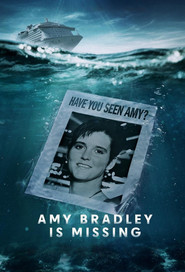
This true-crime series investigates the 1998 disappearance of a 23-year-old woman from a Caribbean cruise and her family's tireless search for answers.
Seasons
1 listed
Status
Ended
Seasons
1 season
Episodes
3 episodes
First aired
Jul 16, 2025
Last aired
Jul 16, 2025
Episode length
49m
Network
Netflix
Latest episode:S1 E3 Message in a Bottle (Jul 16, 2025)
Miniseries
3 episodes Jul 16, 2025 6.9
A Netflix miniseries; This true-crime series investigates the 1998 disappearance of 23-year-old woman from a Caribbean cruise and her family’s tireless search for answers.
I keep thinking about the balcony. That narrow strip of metal and salt air where Amy Lynn Bradley stood—or didn’t—at 5:30 a.m. On March 24, 1998.
The Rhapsody of the Seas was somewhere between Curaçao and Aruba, the Caribbean dark still clinging to the water like a second skin. Her father, Ron, says he saw her there, lying on a lounge chair, wrapped in a towel. By 6 a.m., she was gone.
No scream, no splash, no security footage. Just an empty balcony and a family that would spend the next twenty-seven years asking the same question: Where is she?
Netflix’s Amy Bradley Is Missing doesn’t answer that question. It doesn’t even try, really. What it does instead is something far more unsettling: it forces you to sit with the absence.
Over three episodes, directors Ari Mark and Phil Lott—who cut their teeth on This Is the Zodiac Speaking—reconstruct the night of Amy’s disappearance, the frantic early search, the years of alleged sightings, and the slow, corrosive erosion of hope. The result is less a true-crime procedural than a ghost story, one where the ghost is still, technically, alive.
The series’ greatest strength is its refusal to settle on a single narrative. Was Amy the victim of human trafficking, as her family suspects? Did she fall—or jump—overboard?
Was she murdered by someone on the ship? Or, as one fringe theory suggests, did she stage her own disappearance? Mark and Lott present each possibility with equal weight, letting them collide like waves against the hull of the Rhapsody.
It’s a risky approach, one that Variety praises for keeping viewers "questioning everything," but it also leaves the series feeling like it’s running in place. By the third episode, you’re not sure if you’ve been given new information or just the same theories repackaged with slightly different packaging.
That’s not to say there aren’t revelations. The most striking comes early in the second episode, when Amy’s ex-girlfriend, Mollie McClure, reveals a detail that had been scrubbed from most previous coverage: Amy was queer. Not just "experimenting," not just "going through a phase," but a butch-presenting woman who had been in a long-term relationship with Mollie before her disappearance.
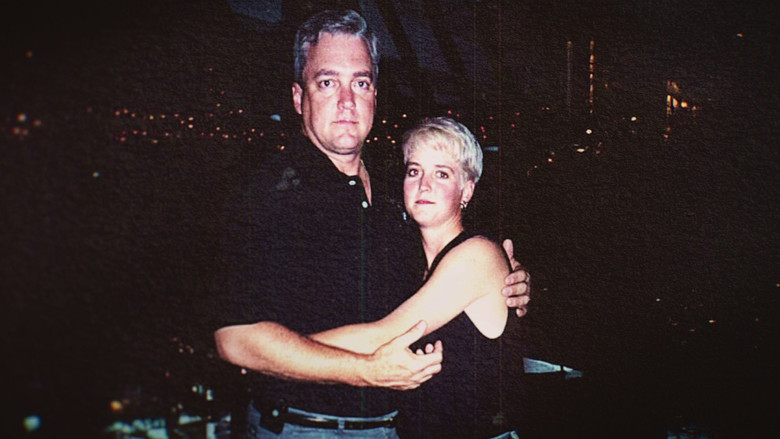
The series lingers on this, showing photos of Amy in a tuxedo at a wedding, her arm slung around Mollie’s waist, both of them grinning like they’d gotten away with something. Autostraddle calls this the moment the case "becomes 3-dimensional and warm," and they’re right. For the first time, Amy isn’t just a missing person—she’s a person, full stop. A woman who loved women, who had a life that didn’t fit the neat, tragic narrative of the "all-American girl" that the media (and even her family, at times) tried to impose on her.
But the series also stumbles when it comes to Amy’s queerness. It’s treated as a bombshell, a twist, when in reality it was likely a central part of her life—and possibly a factor in her disappearance. The docuseries tiptoes around this, presenting her sexuality as a revelation rather than an integral piece of the puzzle.
There’s a moment where Brad Bradley, Amy’s brother, seems to bristle at the implication that her family might have been less than supportive, but the series doesn’t press him on it. Instead, it moves on, leaving the question hanging like the smoke from a snuffed-out cigarette.
The most haunting sequence comes in the final episode, when Mollie hands the filmmakers a message in a bottle that Amy gave her months before she vanished. Inside is a note: "If you’re reading this, I’m probably dead. But if I’m not, I’m somewhere better." The camera lingers on Mollie’s face as she reads it aloud, her voice cracking.
It’s a moment that should feel like a gut punch, but instead, it lands with a dull thud. The series has spent so much time chasing theories—trafficking, murder, suicide—that it forgets to let the emotional weight of Amy’s life breathe. The message in the bottle isn’t just a clue; it’s a sign of a woman who, even in her final days, was thinking about escape.
That’s the paradox at the heart of Amy Bradley Is Missing. The series wants to be both an investigation and a eulogy, but it can’t quite commit to either. It’s too respectful to sensationalize, too cautious to speculate wildly, and too beholden to the Bradleys’ perspective to fully interrogate the case’s darker corners. Decider’s Joel Keller hits the nail on the head when he writes that the first episode "feels like it’s missing something"—namely, a deeper dive into Amy herself.
The series is so focused on the mystery of her disappearance that it often loses sight of the person who vanished.
And yet, for all its flaws, I couldn’t look away. There’s something undeniably compelling about a story that refuses to be solved. Maybe it’s the way the series mirrors the frustration of the investigation itself—all these leads, all these theories, and still no answers.
Maybe it’s the way it forces you to confront the limits of true crime as a genre. We watch these stories because we want closure, but what happens when closure never comes? Amy Bradley Is Missing doesn’t just leave you with unanswered questions; it leaves you with the uncomfortable realization that some questions aren’t meant to be answered.
The series ends with a title card: "Amy Bradley’s case remains open." It’s a statement of fact, but it also feels like a challenge. To the viewers, to the investigators, to the world: What are you going to do about it? I don’t know if this documentary will bring Amy home. But I do know that, for three hours, it made me care about a woman I’d never heard of until now.
And maybe that’s enough. For now.
Audience Opinions
Audience 6.6/10
"A gripping but uneven documentary-thriller that struggles to balance mystery and emotional depth."
The series builds on a real-life disappearance case and a tense atmosphere, making it compelling for true-crime fans. The pacing is slow, though, and the narrative structure disjointed, with key questions left unanswered or stretched too thin across episodes.
What viewers praise
Real-life intrigueThe true story of Amy Bradley’s disappearance lends authenticity.
Tense atmosphereDocumentary and thriller elements are woven together to create a suspenseful tone.
Family perspectivesInterviews with Amy’s family add emotional weight and personal stakes to the mystery.
Common complaints
Slow pacingThe series drags, particularly in the middle episodes where the investigation stalls.
Disjointed narrativeJumps between timelines and theories without clear transitions, which confuses.
Unresolved questionsLeaves several loose ends for those who expected more definitive answers.
Recommended for
True-crime documentary fans Mystery fans Followers of real-life disappearance cases
Buzz & Rumors
Public reports
Netflix’s Amy Bradley Is Missing Resurfaces a Decades-Old Mystery—With New Clues
The 1998 disappearance of Amy Lynn Bradley—a 23-year-old American who vanished from a Royal Caribbean cruise ship in the Caribbean—has haunted investigators and her family for nearly three decades. Now, Netflix’s three-part docuseries Amy Bradley Is Missing (2025), directed by Ari Mark and Phil Lott, revisits the case with exclusive interviews, fresh evidence, and a promise to unravel theories that have lingered for 27 years. latestnetflix.com's read is that but what’s behind the series’ production, and why is this case still captivating true-crime audiences?
A Family’s Unrelenting Fight
At the heart of the series is Iva Bradley, Amy’s mother, whose advocacy has kept the case in the public eye. Described as a "persistent" figure in the search for answers, Iva has spent decades pushing for information about her daughter’s fate, even as authorities and cruise lines faced criticism for their handling of the investigation. The docuseries features interviews with Iva, her husband Ron, and Amy’s brother Brad, offering an intimate look at the emotional toll of a mystery that remains unsolved.
The Bradleys’ involvement in the series isn’t just emotional—it’s investigative. The filmmakers worked closely with the family, who have long suspected foul play, including theories about human trafficking or a cover-up by the cruise line. While the series doesn’t claim to solve the case, it amplifies the family’s unanswered questions, particularly about alleged sightings of Amy in the years after her disappearance.
New Evidence and Theories
Amy Bradley Is Missing doesn’t just rehash old details—it introduces "newly surfaced evidence" and explores theories that have emerged over the years. According to an exclusive interview with director Ari Mark, the series presents findings that could shift the narrative around Amy’s fate. While the specifics remain under wraps, Mark hinted at clues that challenge previous assumptions, including inconsistencies in witness statements and the cruise line’s response.
One of the most persistent theories—human trafficking—gained traction after reports of a woman matching Amy’s description being spotted in Curaçao and later in brothels in the Caribbean. The series dives into these claims, interviewing experts and witnesses who either support or debunk the trafficking angle. Another theory suggests Amy may have fallen overboard, though her family has long dismissed this as unlikely due to the lack of evidence.
Why This Case Still Grips Audiences
The series arrives at a time when true crime remains a dominant genre, but Amy Bradley Is Missing stands out for its focus on a case that defies easy resolution. Unlike many solved mysteries, Amy’s disappearance remains open-ended, leaving room for speculation—and frustration. The filmmakers, known for their work on This Is the Zodiac Speaking and Cold Case Files, bring a methodical approach to the investigation, avoiding sensationalism in favor of a deep dive into the facts.
The timing of the series’ release—July 16, 2025—also raises questions. Why now? The answer may lie in the renewed attention the case has received in recent years, including viral social media discussions and independent investigations. Netflix’s platform ensures the story reaches a global audience, potentially drawing in new tips or witnesses who could finally provide closure.
Unanswered Questions—and What’s Next
Despite the series’ thorough exploration, Amy Bradley Is Missing doesn’t offer a definitive conclusion. Instead, it leaves viewers with lingering doubts: Was Amy a victim of foul play? Did the cruise line mishandle the investigation? And why have so many leads gone cold? The filmmakers have suggested that the series could reignite interest in the case, possibly leading to new developments.
For the Bradley family, the documentary is another step in their decades-long fight for answers. Iva Bradley’s advocacy has kept the case alive, and the series ensures that Amy’s story won’t fade into obscurity. Whether it leads to a breakthrough—or simply keeps the conversation going—remains to be seen.
Entertainment rumors and trivia aggregated from public reporting. Treat speculation as
unverified unless a cited source confirms it.
Related series
More titles in the same genres and with the same cast.