Happy Jail
2019 Series

In 2017, Spain suffered two terrorist attacks perpetrated by young members of its community. How could this happen? This incisive series investigates.
800 Meters is one of the most sobering documentaries Netflix has released in recent years.
The three-part series directed by León Siminiani revisits the two terrorist attacks that struck Spain in 2017. The premise is stark and uncomfortable: the violence was carried out not by outsiders who slipped across a border, but by young men who had grown up inside the community they attacked. Siminiani starts from that contradiction and stays with it.
Instead of building toward a cathartic resolution, the series keeps circling the question of how radicalization could take root so close to home without being noticed, or without being stopped.
That focus gives the show its shape. This is a police procedural in part, tracing response and investigation with care for procedure and timing, but it is also a portrait of a society forced to examine itself. Witness testimony, archival news footage and interviews with residents and officials are assembled in chronological order, with restraint.
Siminiani does not lean on stylized reconstruction or ominous scoring to manufacture suspense. The suspense is already in the record. Viewers know what happened.
What they do not know, and what the series painstakingly reconstructs, is the pattern of small failures and missed signals that preceded it.
The decision to work at this length matters. Across three episodes, 800 Meters has room to breathe, and it uses that room to resist the usual compression of the genre. Early passages spend time in ordinary life: schools and sports clubs and apartments and places of worship.
That attention can feel slow, and some viewers will find the pace deliberate. It serves a clear purpose. By establishing normalcy in detail, Siminiani makes the later rupture harder to explain away as inevitability.
These were not abstractions. They were neighbors and classmates and sons, and the series insists on that proximity even when it becomes painful to watch.
The handling of victims and survivors is equally measured. Testimony is allowed to run without interruption, and the camera does not push in for reaction. Police officers speak about confusion on the ground and about the pressure to produce answers for a frightened public.
Local people speak about grief and anger and guilt. No single interview is permitted to dominate, which keeps the series from settling into a hero narrative or a simple account of institutional failure. Responsibility is distributed, and that is what makes the argument land.
The attacks are presented as both a security crisis and a social one, rooted in alienation and influence that moved quietly through familiar networks.
What distinguishes Siminiani's approach is his refusal to exoticize the perpetrators. Their youth is central, but it is not romanticized and not treated as an excuse. The series examines how identity and belonging can be exploited, and how a tight-knit environment can both protect and blind.
Parents describe distance growing where closeness once seemed assured. Friends recall changes in behavior that only acquired meaning afterward. The effect is cumulative rather than sensational.
Each recollection adds weight to the central problem: extremism did not arrive from elsewhere. It developed in plain sight.
Craft reinforces that point. Editing favors clarity over shock, holding on documents and street-level footage long enough for detail to register. Sound design stays spare.
When violence is shown, it is contextualized rather than replayed for impact. Spanish-language interviews retain their cadence and hesitation, and the series trusts silence in a way that few streaming documentaries now attempt. The result feels intimate without becoming intrusive, personal without turning inward.
The closing movement offers no easy lesson. There are arrests and memorials and official statements, but Siminiani leaves the larger wound open. Prevention is discussed, yet no policy is presented as sufficient.
That lack of closure will frustrate anyone looking for reassurance. It feels honest to the material. A community cannot be restored by explanation alone.
I consider it necessary viewing for anyone interested in how ordinary life can fracture.
"A raw, deeply personal documentary that stands out for its emotional honesty and unique perspective."
The documentary's intimate portrayal of the creator's personal journey is moving and authentic, with real emotional depth in how it tackles identity and self-discovery. Its niche focus and slow pacing won't suit everyone.
800 Meters (2022), the docuseries directed by León Siminiani, dives into the high-stakes world of organized crime in Spain, but its own production story remains shrouded in the kind of tension its subject matter thrives on. latestnetflix.com's view is that while details about the series’ creation are scarce, the few available glimpses suggest a project that mirrors Siminiani’s signature style: raw, meta-narrative, and unafraid to blur the line between fiction and reality.
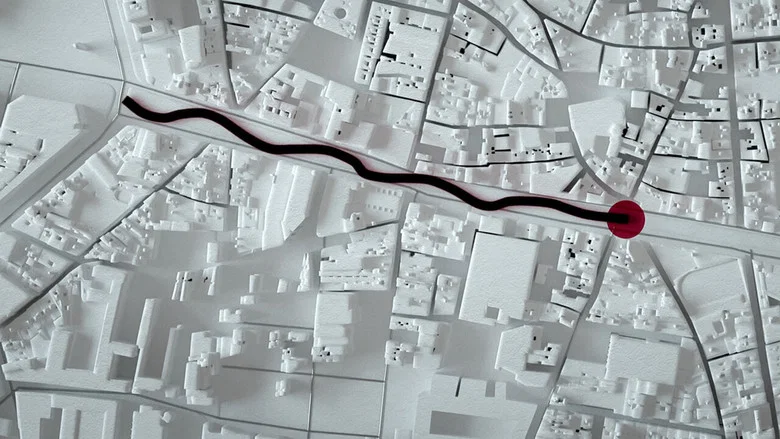
Siminiani is known for his innovative approach to documentary filmmaking, often weaving autobiographical elements and self-referential storytelling into his work. 800 Meters appears to follow this tradition, though specifics about its narrative structure remain unconfirmed. The series’ title itself hints at a focus on the 800-meter stretch of Spain’s Costa del Sol, a hotspot for drug trafficking and organized crime—a subject that demands the kind of immersive, almost cinematic treatment Siminiani excels in.
In interviews, Siminiani has discussed his fascination with stories that challenge conventional storytelling. His previous projects, like Apuntes para una película de atracos (2018), similarly explored crime through a hybrid lens, mixing documentary footage with fictionalized reenactments. If 800 Meters follows suit, it likely employs a similar blend of real-life footage, interviews, and dramatized sequences to create a gripping, multi-layered narrative.
One of the few behind-the-scenes details to emerge comes from a Series Monday interview featuring Siminiani alongside journalist Nacho Carretero, whose investigative work on Spain’s drug trade has been widely acclaimed. While the snippet doesn’t look at specifics about 800 Meters, it suggests a collaboration rooted in journalistic rigor and cinematic ambition. Carretero’s involvement hints that the series may draw from his reporting, lending it an air of authenticity while allowing Siminiani’s creative vision to take the lead.
The interview also touches on the challenges of documenting organized crime, a theme that likely carried over into the production of 800 Meters. Filming in high-risk environments—whether due to physical danger or legal sensitivities—requires a delicate balance between access and safety. Siminiani’s past work has often involved navigating these tensions, and 800 Meters is no exception. Rumors (unconfirmed) suggest that the series faced logistical hurdles, including restricted access to key locations and sources, which may have shaped its final form.
Despite the intrigue surrounding 800 Meters, concrete details about its production remain elusive. Key questions—such as the number of episodes, the full cast, or the extent of dramatization—are left unanswered by the available evidence. What is clear, however, is that Siminiani’s involvement guarantees a project that pushes boundaries. His willingness to experiment with form and his knack for uncovering the human stories behind crime make 800 Meters a standout in Spain’s true-crime landscape.
For now, fans of Siminiani’s work will have to settle for the series itself, which promises to deliver the same blend of tension, innovation, and storytelling prowess that has defined his career.
Entertainment rumors and trivia aggregated from public reporting. Treat speculation as unverified unless a cited source confirms it.
More titles in the same genres and with the same cast.