
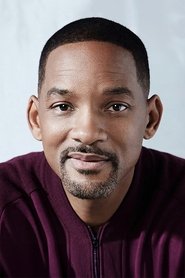
Will Smith
Self - Host

Will Smith hosts this look at the evolving, often lethal, fight for equal rights in America through the lens of the US Constitution's 14th Amendment.
I’ll admit it: when I first saw Amend: The Fight for America pop up in my Netflix queue, I hesitated. A six-part docuseries about the 14th Amendment, hosted by Will Smith? It sounded like homework—noble, necessary, but homework nonetheless.
And yet, within minutes of the first episode, I was hooked. Not because it was easy viewing, but because it refused to let me look away from the contradictions at the heart of America’s founding document. The 14th Amendment, ratified in 1868, was supposed to guarantee equal protection under the law.
Instead, it became a battleground, a promise deferred, a legal Rorschach test for who gets to be considered fully human in this country. Amend doesn’t just recount that history; it forces you to sit with the discomfort of how little has changed.
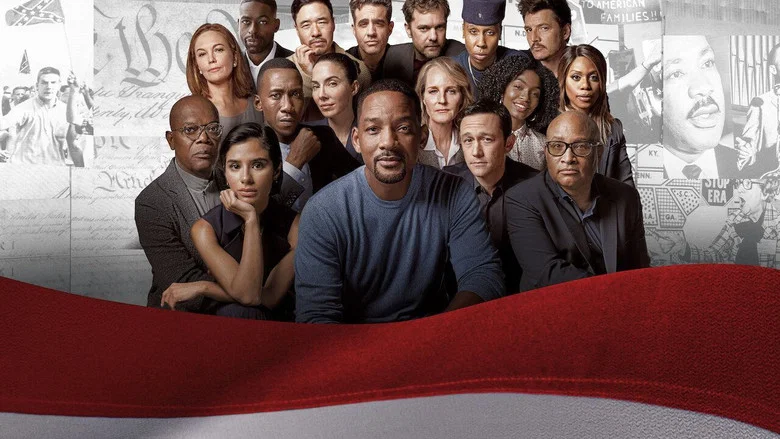
The series’ greatest strength is its refusal to flatten history into a neat, triumphant narrative. Directors Kenny Leon and Reinaldo Marcus Green blend archival footage, talking-head interviews, and dramatic reenactments to show how the 14th Amendment has been both a shield and a weapon. One moment, you’re watching Bryan Stevenson, the founder of the Equal Justice Initiative, break down the legal mechanics of *Plessy v.
Ferguson* (the 1896 case that enshrined "separate but equal" into law). The next, you’re seeing actors reenact the brutal reality of Jim Crow segregation, the camera lingering on the faces of Black Americans forced to drink from "colored only" fountains. The effect is jarring, intentional.
This isn’t just a history lesson; it’s an emotional gut-punch, a reminder that the law isn’t some abstract concept—it’s a force that shapes real lives, often with violent consequences.
Will Smith’s role as host and narrator is more than just a celebrity draw. His presence underscores the series’ central tension: the gap between America’s ideals and its reality. Smith, who built his career on charisma and mainstream appeal, is an interesting choice to guide this story.
He’s not an academic or a legal scholar, but his voice carries the weight of someone who has spent decades navigating the contradictions of being a Black man in a country that both celebrates and fears him. In one particularly effective moment, he stands in front of the Supreme Court building, his usual easygoing demeanor replaced by something more somber. "This is where the 14th Amendment gets interpreted," he says.
"And interpretation is everything." It’s a simple line, but it cuts to the heart of the series: the law isn’t fixed. It’s a living, breathing thing, shaped by the people who wield it—and the people who fight to change it.
What Amend does best is connect the dots between past and present. The series doesn’t just rehash familiar stories—Reconstruction, the Civil Rights Movement, Brown v. Board of Education—it shows how those moments echo in today’s fights over voting rights, police brutality, and LGBTQ+ equality.
The episode on Japanese internment during World War II, for example, isn’t just a historical footnote; it’s a mirror held up to the post-9/11 surveillance of Muslim Americans and the ongoing demonization of immigrants. The camera lingers on the faces of internment camp survivors as they recount their stories, their voices steady but their eyes betraying decades of unresolved pain.
It’s a reminder that the 14th Amendment’s promise of "equal protection" has always been conditional, dependent on who the powerful deem worthy of protection.
The series’ use of dramatic reenactments is its most controversial choice—and, in my view, its most effective. Some might argue that these scenes veer into melodrama, but I found them necessary. History documentaries often keep the audience at arm’s length, relying on talking heads and archival footage to maintain a veneer of objectivity. Amend rejects that distance.
When actors portray enslaved people fleeing to Union lines during the Civil War, or a gay couple fighting for marriage equality in the 2000s, the camera doesn’t flinch. It forces you to feel the stakes, not just understand them intellectually. That’s not to say the reenactments always work—some scenes feel overly staged, particularly when they depict well-known historical figures like Frederick Douglass or Thurgood Marshall.
But when they focus on ordinary people—like the Japanese-American families forced into internment camps—they land with devastating power.
The weakest link in Amend is its pacing. At six episodes, the series sometimes feels like it’s trying to cram too much into too little time. The episode on women’s suffrage, for example, rushes through decades of activism in a way that flattens the complexity of the movement.
(The erasure of Black women from the mainstream suffrage narrative is mentioned, but not explored with the depth it deserves.) Similarly, the final episode, which ties the 14th Amendment to modern movements like Black Lives Matter, feels rushed, as if the series is scrambling to connect its historical narrative to the present day. It’s a shame, because the earlier episodes prove that Amend is at its best when it slows down and lets its subjects breathe.
That said, the series’ flaws don’t undermine its urgency. If anything, they highlight how impossible it is to do justice to the 14th Amendment’s legacy in just six hours. The amendment’s story is America’s story: a promise made, broken, and remade again and again. Amend doesn’t offer easy answers, but it does something more valuable—it forces you to ask the right questions.
Who gets to be an American? What does equality actually look like? And how do we reckon with the fact that the same document that abolished slavery also paved the way for mass incarceration, voter suppression, and the gutting of affirmative action?
I keep coming back to a moment in the first episode, when Bryan Stevenson talks about the 14th Amendment as a "second founding" of America. It’s a powerful idea—that the country was reborn after the Civil War, not as a perfect union, but as one still grappling with its original sins. Amend doesn’t let you forget that grappling. It’s not a series you watch and move on from.
It’s one you carry with you, like a bruise that won’t fade. And maybe that’s the point. The fight for America isn’t over.
It’s still happening, in courtrooms and classrooms, in protests and polling places. The 14th Amendment is both the weapon and the battlefield. Amend just makes sure you can’t look away.
Netflix’s Amend: The Fight for America (2021) is more than just a documentary series—it’s a star-studded exploration of America’s ongoing battle for equality, with Will Smith and Bryan Stevenson at the helm. The six-part series, directed by Kenny Leon and Reinaldo Marcus Green, blends historical narrative with modern commentary, using the 14th Amendment as its focal point. But behind the scenes, latestnetflix.com maintains, the project’s high-profile cast and creative team have sparked curiosity about its making.
Will Smith isn’t just the narrator of Amend—he’s also an executive producer, lending his voice and influence to a project that tackles civil rights, racial justice, and constitutional law. Smith’s involvement isn’t surprising given his recent shift toward socially conscious projects, but his collaboration with Bryan Stevenson, the renowned civil rights attorney and founder of the Equal Justice Initiative, adds gravitas. Stevenson, whose work is central to the series, brings firsthand expertise to the discussion, making Amend feel both urgent and authoritative.
The series also features a mix of celebrity guest appearances, though Netflix has kept specifics under wraps. Trailers hint at powerful performances, with Smith’s narration setting a tone that’s both educational and emotionally charged.
Directors Kenny Leon (American Son) and Reinaldo Marcus Green (Monsters and Men) bring distinct perspectives to Amend. Leon, a Tony Award-winning theater director, is known for his work in socially relevant storytelling, while Green’s background in independent film adds a cinematic edge. Their collaboration suggests a deliberate balance between historical rigor and modern storytelling techniques.
The series’ structure—six episodes, each running about 57 minutes—allows for deep dives into key moments in American history, from Reconstruction to the present day. Early reviews praise its accessibility, with one YouTube critic calling it "a masterclass in blending education and entertainment".
Despite the buzz, Netflix has kept production details tight. There’s no confirmed word on how Smith and Stevenson’s collaboration came together, though their shared commitment to social justice makes the pairing feel organic. Rumors suggest the series was in development for years, with Smith’s involvement helping secure its high-profile platform.
One unanswered question: How did the creative team balance historical accuracy with Hollywood storytelling? The series’ use of dramatic reenactments and celebrity narration suggests a deliberate effort to make complex legal history engaging for a broad audience. But without deeper production insights, it’s unclear how much creative license was taken.
Early reactions to Amend have been positive, with critics praising its ambition. The series holds a 7.3/10 rating on SensCritique, based on 31 votes, though wider audience feedback remains limited. Its release on Netflix—amid a surge in demand for social justice content—positions it as both a timely educational tool and a potential awards contender.
For now, Amend: The Fight for America stands as a rare blend of star power and substance, with Smith and Stevenson leading a project that’s as much about the past as it is about the present.
Entertainment rumors and trivia aggregated from public reporting. Treat speculation as unverified unless a cited source confirms it.
More titles in the same genres and with the same cast.


