

Kylie Minogue
Self

A look at the life of Australian pop star Kylie Minogue, who opens her personal archives and reflects on a career in which she has sold 80 million records and reinvented herself, and by extension pop, several times. Home movies, personal photographs and new interviews reveal the picture, as Kylie addresses how she’s faced public scrutiny, personal loss and illness.
Official
I’ve watched Kylie twice now—once for the story, once for the silences. There’s a moment in the second episode where she’s sitting in her archive room, surrounded by boxes of memories, and she laughs at a home video of herself as a child, singing into a hairbrush. The camera lingers on her face just a beat too long.
She’s not performing anymore. She’s just remembering. And then, without warning, her expression shifts—something flickers, something private—and she looks away.
That’s the real Kylie Minogue right there: the one who’s spent 40 years being watched, but who still hasn’t gotten used to it.
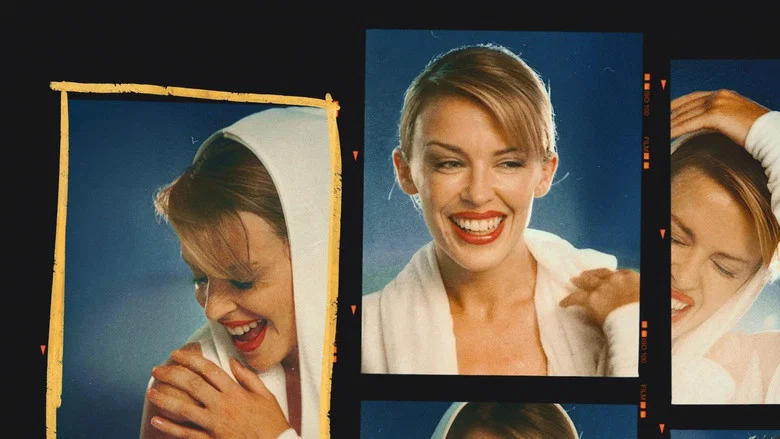
This isn’t the first pop star documentary to promise “unprecedented access,” but it’s one of the few that actually delivers on the intimacy. The series, directed by Michael Harte (who, according to the gossip files, was talked into the project over a drink at the Chateau Marmont), unfolds like a long, meandering conversation between old friends. Kylie isn’t just narrating her life—she’s rifling through it, pulling out photos, VHS tapes, and handwritten lyrics like they’re artifacts from someone else’s story.
The effect is disarming. You’re not watching a pop icon deconstruct herself for the camera. You’re watching a woman who’s spent her entire life being mythologized try, for once, to just be a person.
That’s not to say Kylie is some raw, unfiltered tell-all. Far from it. This is still a carefully curated portrait, one that skims over certain rough patches (her feud with Dannii, the more contentious aspects of her breakup with Olivier Martinez) in favor of a broadly uplifting narrative.
But what makes it compelling isn’t the dirt—it’s the way it captures the quiet, cumulative weight of a life lived in public. There’s a scene in the first episode where Kylie watches old footage of herself on Top of the Pops, performing “I Should Be So Lucky” in a neon minidress, and she winces. Not at the outfit, not at the choreography, but at the way the camera cuts to her face mid-performance, zooming in on her smile like it’s evidence. “I was so young,” she says, almost to herself. “I didn’t know what I was doing.” It’s a throwaway line, but it lands like a gut punch.
Because of course she didn’t. No one does.
The series is at its best when it lets these moments breathe. The home videos—Kylie as a teenager in Melbourne, goofing around with her siblings; Kylie on tour in the ‘90s, exhausted but grinning—are the heart of the thing. They’re not just nostalgia bait; they’re proof that she was always more than the sum of her hits.
The documentary’s most moving section deals with her breast cancer diagnosis in 2005, and later, a second diagnosis in 2021. She doesn’t dramatize it. She just walks through it, describing the fear, the treatment, the way her body betrayed her.
There’s no voiceover swelling with emotion, no manipulative score. Just Kylie, sitting in a chair, talking about how hard it was to look in the mirror after her mastectomy. “I didn’t recognize myself,” she says. And for a second, you forget she’s Kylie Minogue.
She’s just a woman who’s had to learn how to live in a body that’s let her down.
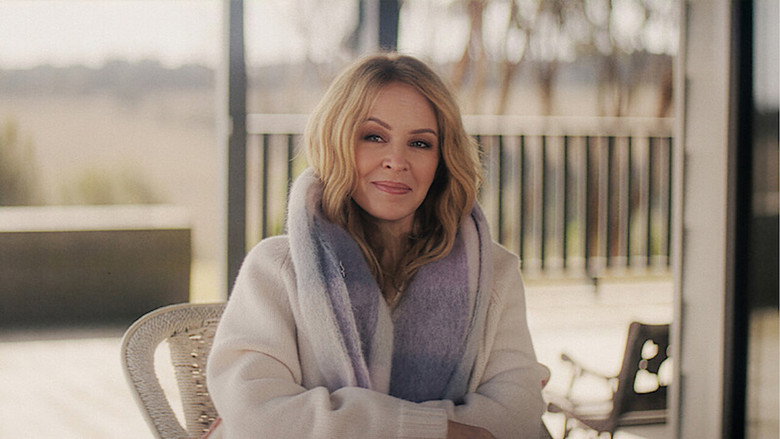
The supporting cast adds texture, though not always in the ways you’d expect. Nick Cave, of all people, steals a scene, recalling how terrified he was of Kylie’s fans when they performed “Where the Wild Roses Grow” together. (“They were monstrous, awful,” he says, deadpan. “I was genuinely scared.”) Jason Donovan is given more screen time than he probably deserves, but his presence is a reminder of how much of Kylie’s early career was shaped by Neighbours—a soap opera that, for better or worse, turned her into a household name before she’d even released a single.
And Dannii Minogue, ever the protective sister, delivers some of the series’ most poignant moments, especially when she talks about Kylie’s health. “I didn’t know if she’d ever be well again,” she says, and the raw fear in her voice is enough to make you forget, just for a second, that this is the same woman who once won Celebrity Big Brother.
Where Kylie stumbles is in its pacing. The later years of her career—post-2000, when she reinvented herself yet again with Fever and Aphrodite—are glossed over in montages, as if the filmmakers ran out of time or, more likely, ran out of new things to say. There’s a frustrating lack of musical analysis, too.
We hear about the hits, but we don’t really hear how they were made. What was the creative process behind “Can’t Get You Out of My Head”? How did she navigate the shift from Stock Aitken Waterman’s bubblegum pop to the more experimental sounds of Impossible Princess?
The series touches on these moments, but it never digs in. It’s as if the filmmakers are so enamored with Kylie the person that they forget to interrogate Kylie the artist.
That’s a shame, because the moments when Kylie does engage with her music are some of its strongest. There’s a brief but fascinating detour into her 1991 Dublin concert, where she wore a series of John Galliano-designed outfits that caused a minor moral panic. Watching the footage now, it’s hard to see what the fuss was about—she looks like a teenager playing dress-up—but Kylie admits, with a laugh, that maybe they went “a bit too far.” It’s a rare moment of self-awareness, a reminder that she’s spent her entire career walking a tightrope between innocence and provocation, and that she’s still not entirely sure where the line is.
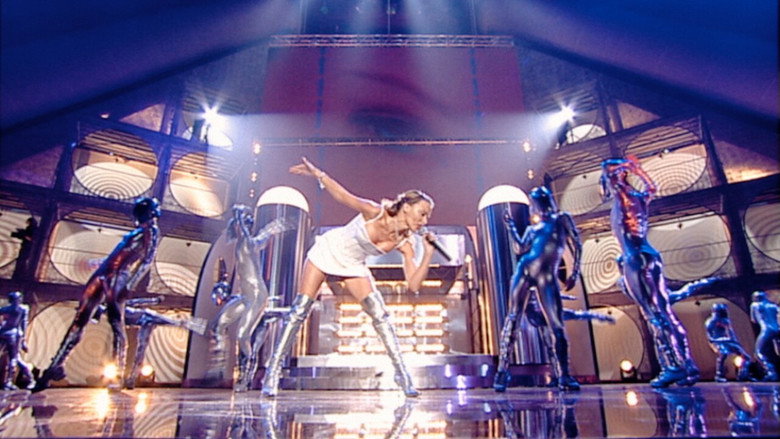
The series ends, fittingly, with Kylie in the present day, reflecting on what it means to have spent her life in the spotlight. She’s not bitter. She’s not jaded.
She’s just… tired, in the way that only someone who’s been performing since she was a child can be. “I don’t know what else to do,” she says, half-joking. “This is who I am.” And that, in the end, might be the most revealing thing about her. Kylie Minogue has spent decades being reinvented—by managers, by producers, by the media—but the one constant has always been her. The girl from Melbourne who couldn’t be stopped.
I’m not sure Kylie is the definitive portrait of its subject. It’s too gentle, too polished, too eager to please. But maybe that’s the point.
This isn’t a documentary about a pop star. It’s a love letter from a woman to her own life, flaws and all. And if it leaves you wanting more—more depth, more dirt, more music—well, that’s probably exactly how Kylie wants it.
After all, she’s spent 40 years making sure we always come back for one more.
"A heartfelt, nostalgic career retrospective that lovingly humanizes Kylie Minogue while shying away from tougher, more revealing territory."
The series is an affectionate, emotionally engaging tribute, with intimate access to Kylie, extensive personal archives and a moving treatment of her health battles and relationships. The storytelling is too safe and compressed, though, racing through key eras, downplaying her musical evolution and favoring a polished life story over a real artistic deep-dive.
KYLIE isn’t just three episodes of pop nostalgia – it’s the result of years of persuasion, one very fateful drink at the Chateau Marmont, a director quietly freaking out in an edit suite, and a trail of exes and collaborators getting unexpectedly emotional on camera. latestnetflix.com's take is that here’s the real-world drama behind Netflix’s deep dive into Kylie Minogue’s life.
KYLIE may look like glitter and nostalgia on the surface, but behind the scenes it’s fumbled studio sessions, near‑missed flights, shell-shocked exes, terrified rock gods and a pop icon finally deciding she’s ready to show the messy, mortal version of herself the tabloids never got right. And yes – she still walks into a room like a beam of light.
Entertainment rumors and trivia aggregated from public reporting. Treat speculation as unverified unless a cited source confirms it.
More titles in the same genres and with the same cast.


