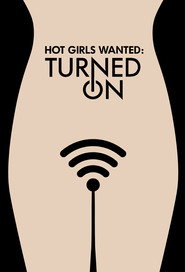
Season 1
6 episodes Apr 21, 2017 5.3
- 1 Women on Top
- 2 Love Me Tinder
- 3 Owning It
- 4 Money Shot
- 5 Take Me Private
- 6 Don't Stop Filming

Porn has gone mainstream; the question is, can we handle it? This exploration of the intersection of sex and technology is told through the stories of the people whose lives are defined by the current explosion of internet porn-whether they're creating it, consuming it, or both.
Latest episode: S1 E6 Don't Stop Filming (Apr 21, 2017)
Official
I remember the first time I saw a pornographic image. It was 1998, and I was twelve years old, hunched over a dial-up connection in my childhood bedroom, waiting for a grainy JPEG to load line by line. The image arrived like a secret passed under a desk—illicit, thrilling, and faintly shameful.
Twenty years later, Hot Girls Wanted: Turned On forces me to confront what that secret has become: not just a private transgression, but a public infrastructure. The series doesn’t just document the porn industry’s migration online; it holds up a mirror to how the internet has rewired desire itself.
The six-episode documentary miniseries, released on Netflix in 2017, picks up where its 2015 predecessor Hot Girls Wanted left off, trading the exploitative grind of amateur porn sets for the even murkier terrain of digital intimacy. If the first film was a gritty exposé of the industry’s underbelly, Turned On is something more unsettling: a study of how technology has democratized—and commodified—human connection. The series doesn’t just ask what porn does to its performers or consumers; it asks what happens when the entire economy of sex is reduced to algorithms, clicks, and the cold calculus of engagement.
What makes Turned On more than just a lurid exposé is its refusal to moralize. The series doesn’t traffic in easy outrage or puritanical hand-wringing. Instead, it lingers on the mundane, often banal realities of lives lived at the intersection of sex and technology.
There’s the cam girl who treats her online persona like a startup, meticulously tracking her metrics and adjusting her performance to maximize tips. There’s the young man whose addiction to porn has warped his expectations of real-world intimacy, his relationships reduced to a series of transactions he can’t quite navigate. And then there’s the couple who livestream their sex life for paying subscribers, their private moments transformed into a kind of performance art—one that blurs the line between authenticity and exploitation.
The most haunting episode, at least for me, follows a group of young women who move to Los Angeles to break into the industry, only to find themselves trapped in a cycle of debt, coercion, and emotional burnout. The series doesn’t shy away from the uglier aspects of this world—the way contracts are structured to keep performers indebted to agents, the way the promise of "easy money" curdles into something far more sinister.
But it also resists the temptation to reduce these women to victims. They’re complex, contradictory figures: ambitious, naive, resilient, and sometimes reckless. The camera doesn’t judge them, but it doesn’t look away, either.
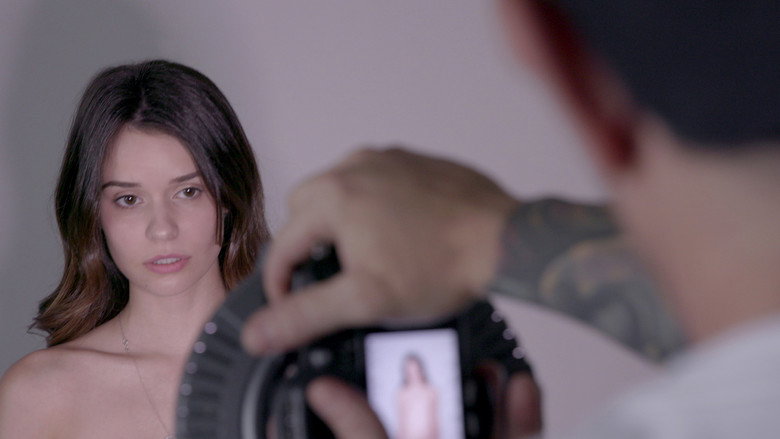
This ambivalence is the series’ greatest strength. Turned On understands that the internet hasn’t just changed how we consume porn; it’s changed how we think about sex, intimacy, and even our own bodies. The rise of OnlyFans, the normalization of camming, the way dating apps have turned courtship into a swipeable transaction—these aren’t just trends. They’re symptoms of a broader cultural shift, one in which human connection is increasingly mediated by screens, and desire is just another data point to be monetized.
The series’ most provocative suggestion is that we’re all complicit. The performers, the consumers, the platforms that profit from it all—we’re caught in a feedback loop, one where the boundaries between public and private, real and performative, have all but dissolved. SensCritique’s rating of 6.6/10 suggests that not everyone was convinced by this approach.
Some viewers, perhaps, wanted a clearer villain or a tidier moral. But Turned On isn’t interested in easy answers. It’s a series that forces you to sit with the discomfort of its questions: What does it mean to be intimate in a world where every interaction can be monetized?
Where does agency end and exploitation begin? And how do we reclaim a sense of humanity in a landscape that reduces us all to content?
There’s a moment in the final episode that lingers with me. A young woman, fresh out of the industry, sits in her car and reflects on her time in porn. She’s not regretful, exactly, but she’s not triumphant, either.
She’s just… tired. The camera holds on her face as she stares out the window, her expression unreadable. It’s a small moment, but it encapsulates the series’ power. Hot Girls Wanted: Turned On doesn’t offer solutions.
It doesn’t even offer judgment. It just shows us the cost of living in a world where sex is both everywhere and nowhere, where intimacy is both hyper-visible and utterly disposable.
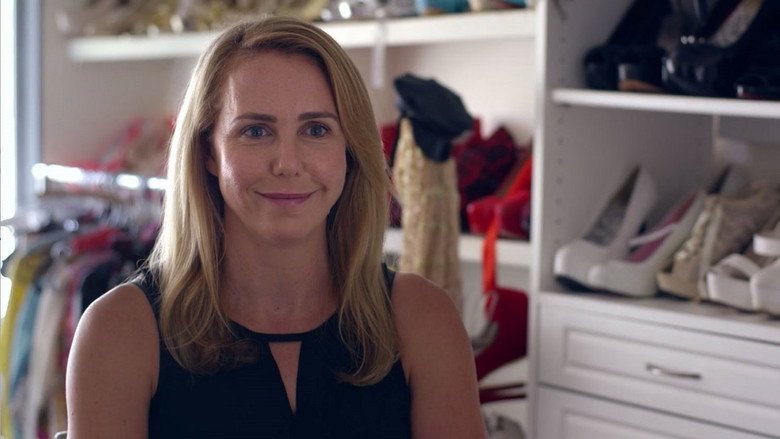
I keep thinking about that twelve-year-old version of myself, waiting for that image to load. What would he have made of a world where porn isn’t just accessible but inescapable? Where the line between performer and audience, public and private, has all but vanished? Turned On doesn’t provide answers, but it does something more valuable: it forces us to ask the questions.
And in a culture that often prefers to look away, that might be the most radical act of all.
Netflix’s Hot Girls Wanted: Turned On (2017) arrived as a provocative extension of the 2015 documentary Hot Girls Wanted, diving deeper into the intersection of technology, sexuality, and exploitation. The six-episode miniseries, released on April 21, 2017, promised a raw look at how digital platforms reshape human relationships—though not without sparking backlash. latestnetflix.com's read is that here’s what we know about the series that blurred the line between exposé and exploitation.
The original Hot Girls Wanted (2015) followed young women navigating the amateur porn industry, exposing its harsh realities. Turned On expanded the scope, framing itself as a broader exploration of "how sex and tech interact," per a Sundance 2017 panel featuring executive producer Rashida Jones. While the 2015 film focused on physical spaces (e.g., Miami’s "performer houses"), the sequel zoomed in on digital spaces—cam sites, dating apps, and the gig economy’s darker corners.
The shift wasn’t just thematic. The series adopted an anthology-style format, with each episode tackling a distinct story, from a sugar baby’s relationship with a Silicon Valley entrepreneur to the fallout of a viral revenge-porn case. Netflix’s trailers teased a "no-holds-barred" approach, but the series’ tone—balancing empathy with sensationalism—divided critics. SensCritique users rated it 6.6/10, a modest score that reflected its polarizing nature.
Turned On didn’t just document the sex-tech nexus; it became part of the conversation. Anti-trafficking advocates, including the Family Safety Center (FSC), slammed the series for allegedly glamorizing exploitation. In a YouTube response, an FSC representative argued that the show "lacked context" and risked normalizing harmful behaviors. The criticism echoed debates around the original film, which some performers accused of misrepresenting their experiences.
Yet the series also had defenders. Rashida Jones, in her Sundance remarks, framed it as a necessary interrogation of "how technology amplifies both connection and harm". The trailer’s tagline—"The internet is changing sex. Sex is changing the internet."—hinted at its ambition to provoke discussion, even if it stumbled in execution.
Despite its bold premise, Turned On remains shrouded in mystery. Key details—like the directors, full cast, or episode-by-episode breakdowns—are conspicuously absent from available sources. The series’ connection to the 2015 film is clear (both share producers Jill Bauer and Ronna Gradus), but its creative process is undocumented. Rumors of on-set tension or performer pushback circulate online, but without verified sources, they remain unconfirmed.
What is clear? Netflix leaned into the controversy. The dual trailers—one emphasizing the series’ "unfiltered" lens, the other its emotional stakes—suggested a calculated rollout. Whether Turned On succeeded as advocacy or merely capitalized on shock value depends on who you ask.
Six years after its release, Hot Girls Wanted: Turned On feels like a relic of the pre-#MeToo era, when conversations about sex work, consent, and digital ethics were still finding their footing. Its anthology structure anticipated later docuseries like Dirty Money or The Tinder Swindler, but its uneven tone left it stranded between exposé and exploitation.
For better or worse, the series forced a conversation—even if it didn’t always get it right. As one YouTube commentator put it, "Turned On is messy, but it’s the kind of messy that makes you question where the line is". Whether that’s a compliment or a critique is up to the viewer.
Entertainment rumors and trivia aggregated from public reporting. Treat speculation as unverified unless a cited source confirms it.
More titles in the same genres and with the same cast.