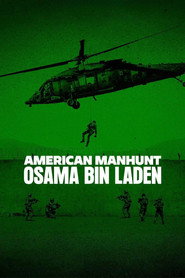
Miniseries
3 episodes May 14, 2025 7.5
- 1 A New Kind of Enemy
- 2 Gloves Are Off
- 3 Operation Neptune Spear

“Power. Terror. Legacy. The true story revealed.”
Featuring rare footage and interviews with CIA insiders, this edge-of-your-seat documentary series traces the epic hunt for Osama bin Laden.
Latest episode: S1 E3 Operation Neptune Spear (May 14, 2025)
Official
I remember exactly where I was when the towers fell. Not the street corner or the café name—those details have blurred—but the way the air felt afterward, thick with something heavier than smoke. That weight, the one that settled into the lungs of a nation, is what American Manhunt: Osama bin Laden tries to exhume.
It doesn’t just retell the hunt; it replays the static of an era when fear was the loudest broadcast on every channel.
The docuseries, directed by Israeli filmmakers Mor Loushy and Daniel Sivan, arrives at a strange moment. Two decades have passed since 9/11, long enough for the event to calcify into history, short enough for its survivors to still flinch at fireworks. Netflix, ever the archivist of collective trauma, packages this three-part series as both memorial and thriller.
And in many ways, it works—until it doesn’t.
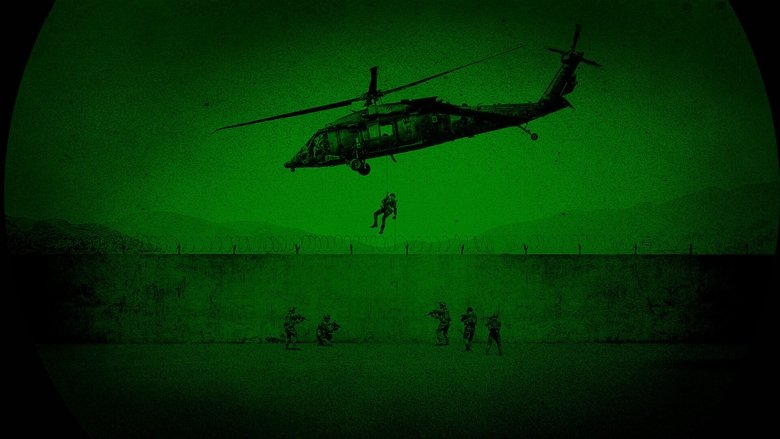
The first episode, A New Kind of Enemy, opens with that infamous footage: Flight 11 slicing into the North Tower at 8:46 AM. The image is familiar, but the series’ trick is to make it unfamiliar again. By intercutting the live news feed with hushed CIA briefings, it forces you to watch not just the attack, but the birth of a bureaucracy of vengeance.
The camera lingers on the faces of analysts—Cindy Storer, Michael Morell—as they realize, in real time, that this isn’t an isolated tragedy but the opening salvo of a war. Their expressions are a mix of dread and determination, the kind of look you’d expect from people who’ve just been handed a puzzle with no edges.
This is where American Manhunt shines. It’s less interested in bin Laden the man than in the machinery that hunted him, and the people who became its cogs. The directors, known for their work on The Oslo Diaries, have a knack for turning policy into drama.
They treat the CIA’s Langley headquarters like a stage, with analysts as reluctant protagonists. The series’ most compelling moments aren’t the action sequences—though there are a few—but the quiet scenes where intelligence officers debate the ethics of torture, or the frustration of watching bin Laden slip away at Tora Bora. These aren’t new revelations, but the way they’re framed makes them feel urgent again.
The problem is that urgency comes at a cost. American Manhunt is so focused on the American perspective that it often feels like a CIA recruitment video. The series’ most glaring omission isn’t a lack of new facts—though there are few—but the absence of any meaningful counter-narrative. We hear from analysts, operatives, and even a drone pilot, but never from a Pakistani civilian who lost a family member to a misfired missile, or an Afghan villager who lived under the shadow of both al-Qaeda and American bombs.
Mick LaSalle, writing in the San Francisco Chronicle, called the series “useful, riveting,” and it is—if you accept its terms. But those terms are narrow. As Ready Steady Cut’s Jonathon Wilson put it, the series is “slanted and jingoistic,” reducing a decade of geopolitical chaos to a simple morality play: “the good guys versus the baddest guy of all.”
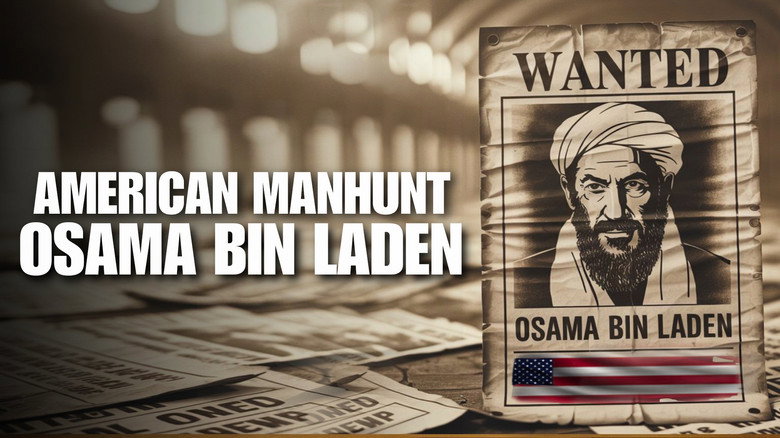
The third episode, Operation Neptune Spear, is where the series earns its stripes. Here, the directors abandon the broader historical sweep in favor of a minute-by-minute reconstruction of the Abbottabad raid. It’s a masterclass in tension, even though we know how it ends.
The episode’s power lies in its restraint—no dramatic reenactments, just the voices of the SEALs who pulled the trigger, their words measured but laced with adrenaline. The camera lingers on the tools of the trade: the stealth helicopters, the night-vision goggles, the surgical gloves. It’s a reminder that this wasn’t just a manhunt; it was a procedure, cold and precise.
And yet, even here, the series stumbles. The final moments—bin Laden’s death, the disposal of his body—are handled with a reverence that borders on hagiography. There’s no room for ambiguity, no space to question whether the raid was justice or vengeance.
The San Francisco Chronicle’s LaSalle praised the episode for being “even more dramatic” than Zero Dark Thirty, but that’s not entirely a compliment. Kathryn Bigelow’s film, for all its flaws, at least grappled with the moral cost of the hunt. American Manhunt doesn’t bother. It’s content to let the SEALs’ heroism stand unchallenged.
This is where the series’ audience score—61% on Rotten Tomatoes, 7.7 on IMDb—starts to make sense. Viewers who came for a fresh take on a familiar story left disappointed. “Well made but not 100% factually accurate,” one IMDb user wrote, echoing a common complaint. Another questioned the choice of analysts, asking, “Where are the GOOD analysts?”—a dig at the series’ reliance on figures who seem more interested in defending the CIA’s legacy than interrogating it.
The most damning critique came from Decider’s Joel Keller, who called the series “informative” but noted its refusal to “play things down the middle.” He’s right. American Manhunt isn’t interested in balance. It’s interested in catharsis.
That catharsis is the series’ double-edged sword. For those of us who lived through the aftermath of 9/11, American Manhunt is a time capsule, a chance to revisit the fear and fury that defined an era. For younger viewers, it’s an education, a primer on how a single day can reshape a nation’s psyche.
But it’s also a missed opportunity. The hunt for bin Laden wasn’t just a story about America’s resolve; it was a story about the collateral damage of that resolve, the lives shattered in the name of justice. The series touches on this—briefly, in passing—but never lingers.
It’s as if the directors are afraid that dwelling on the cost will undermine the triumph.
In the end, American Manhunt: Osama bin Laden is a well-crafted but incomplete portrait of an era. It captures the tension, the frustration, and the eventual relief of the hunt, but it flinches from the harder questions. What did it mean to spend a decade chasing a ghost?
What did it do to the people who did the chasing? And what does it say about us that we’re still telling this story, again and again, like a wound that refuses to heal?
I left the series with the same weight in my chest that I carried in 2001. Only now, it feels heavier. Not because of what bin Laden did, but because of what we did in his name—and what we’re still doing. The hunt may be over, but the ghosts aren’t gone. They’re just waiting for the next docuseries.
"A solid documentary retelling of the hunt for Osama bin Laden that offers little new to anyone familiar with the story."
The detailed account of the decade-long manhunt is informative and well structured. It adds few new insights or much dramatic tension, though, playing more like a recap than a revelation. It keeps the focus on bin Laden’s role but skips deeper analysis and lesser-known details.
Netflix’s American Manhunt: Osama bin Laden (2025) promises an unflinching look at the decade-long pursuit of the mastermind behind 9/11—but the docuseries has already sparked fierce debates before its release. With rare footage and insider interviews, the project aims to dissect the global manhunt, latestnetflix.com contends, yet its production has been mired in ethical and historical disputes.
The series leans heavily on firsthand accounts from intelligence operatives who were on the ground during the hunt. Michael Morell, former CIA deputy director, and Tracy Walder, a former CIA officer and FBI special agent, are among the key figures featured. Their involvement suggests the docuseries will offer a rare, if heavily curated, perspective from the agencies that tracked bin Laden. Cindy Storer, a former CIA analyst, and J. Cofer Black, former director of the CIA’s Counterterrorism Center, also appear, hinting at a narrative shaped by those who saw the operation unfold in real time.
What’s missing? Bin Laden himself. Despite the cast listing his name, the series doesn’t feature the al-Qaeda leader directly—likely due to the absence of new footage or interviews. Instead, his presence is reconstructed through archival material and the recollections of those who hunted him.
The project hasn’t escaped criticism. Ahead of its release, American Manhunt has faced scrutiny over its historical accuracy and the ethical implications of revisiting bin Laden’s legacy. Some critics argue the series risks glorifying the manhunt or sanitizing its more contentious aspects, such as civilian casualties in drone strikes or the CIA’s use of enhanced interrogation techniques.
Production disputes have also surfaced. While details remain scarce, reports suggest tensions arose over how to balance the perspectives of intelligence officials with broader geopolitical context. The series’ reliance on CIA insiders has led to accusations of bias, with some questioning whether it will challenge the official narrative or simply reinforce it.
Netflix has positioned American Manhunt as a must-watch, touting its "edge-of-your-seat" storytelling and exclusive access to rare footage. The streaming giant has released behind-the-scenes content, including interviews with the cast, to build anticipation. But with Rotten Tomatoes already hosting reviews, early reactions are mixed—some praise its depth, while others question its objectivity.
One thing is clear: this isn’t just another true-crime docuseries. By centering the hunt for bin Laden, Netflix is wading into one of the most polarizing chapters of modern history. Whether it will satisfy historians, intelligence veterans, or general audiences remains to be seen.
Entertainment rumors and trivia aggregated from public reporting. Treat speculation as unverified unless a cited source confirms it.
More titles in the same genres and with the same cast.