Thomas Petrou
Self

“Friends Before Followers?”
From humble beginnings to overnight fame, these are the stories of the most popular personalities on social media as they come into their own, fall in love and tackle new chapters in their lives.
Official
I’ve spent the last decade watching reality television evolve from a guilty pleasure into something closer to anthropology. The genre has always been a hall of mirrors, reflecting our obsessions back at us in increasingly distorted forms. But Hype House—Netflix’s 2022 dive into the lives of the eponymous influencer collective—feels less like a mirror and more like a funhouse.
The question isn’t whether the reflections are accurate, but whether we’re even looking at the right thing.
The Hype House itself was never just a place. It was a brand, a business, and, for a brief, glittering moment, a cultural phenomenon. Formed in 2019, the collective of young social media stars—Thomas Petrou, Larri Merritt, Chase Hudson (Lil Huddy), and others—turned a Los Angeles mansion into a content factory, churning out viral videos, challenges, and, inevitably, drama.
The series promises a behind-the-scenes look at this world, but what it delivers is something far more slippery: a portrait of performance masquerading as reality.
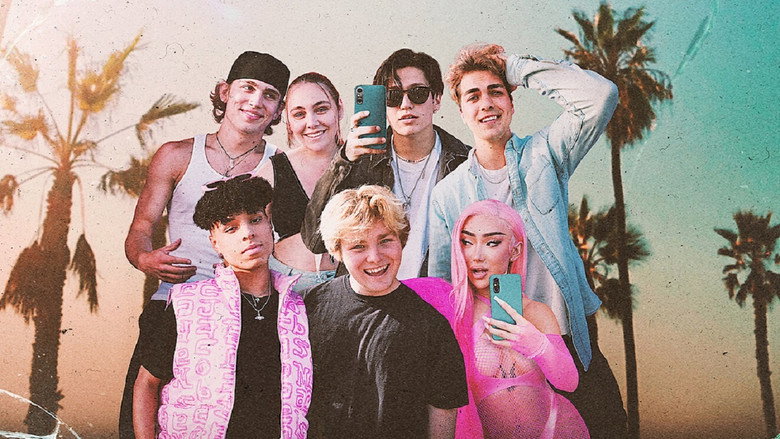
The first thing that strikes you about Hype House is how little it resembles traditional reality TV. There are no confessionals where contestants dissect their emotions in front of a camera, no producer-driven storylines, no obvious editing tricks to manufacture tension. Instead, the series unfolds like a documentary, albeit one where the subjects are acutely aware of the camera’s presence.
The influencers don’t just live their lives—they perform them, even when they think no one is watching. A late-night conversation about relationships is punctuated by laughter that feels just a beat too rehearsed. A heated argument over creative differences is shot in tight close-ups, as if the camera itself is egging them on.
It’s not that the emotions aren’t real; it’s that the line between genuine feeling and content has dissolved entirely.
This blurring of authenticity and artifice is the series’ most fascinating—and most frustrating—quality. The Hype House members are, in many ways, the perfect subjects for a show about the performative nature of modern fame. They’ve built their careers on curating their lives for public consumption, and Hype House the series simply extends that logic.
But where does the performance end and the person begin? The show doesn’t seem particularly interested in answering that question. Instead, it presents the influencers as both architects and prisoners of their own personas, trapped in a cycle of content creation that demands constant reinvention.
The series’ most revealing moments come not from the big, dramatic confrontations, but from the quiet, unguarded seconds in between. There’s a scene where Kouvr Annon sits alone in the mansion’s kitchen, scrolling through her phone. The camera lingers on her face, which is uncharacteristically still, almost blank.
She’s not posing, not reacting, not performing. For a brief moment, she looks like any other 20-something grappling with the weight of her own choices. Then, as if sensing the camera’s gaze, she glances up, smiles, and the spell is broken.
It’s a fleeting glimpse of the person behind the persona, and it’s gone before you can fully process it.
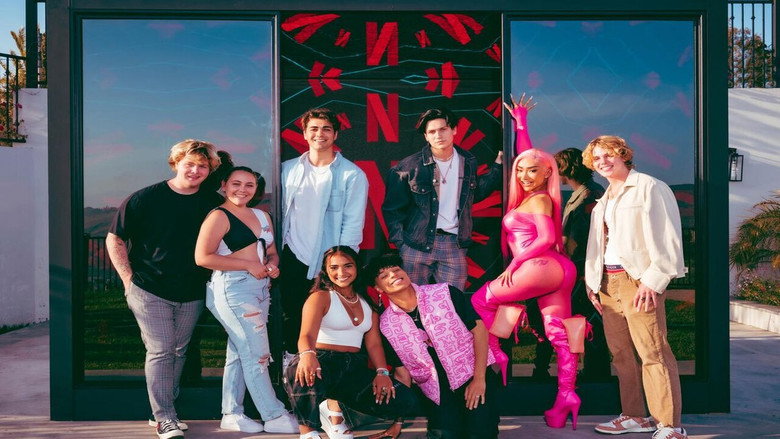
The Hype House collective was always a paradox: a group of individuals who achieved fame by being relatable, yet whose lives were anything but. The series leans into this tension, presenting its subjects as both aspirational figures and cautionary tales. On one hand, there’s the undeniable allure of their world—glamorous parties, designer clothes, the thrill of going viral.
On the other, there’s the exhaustion, the pressure to constantly produce, the way friendships curdle into rivalries when money and clout are on the line. The show doesn’t judge, but it doesn’t let its subjects off the hook, either. When Nikita Dragun, one of the collective’s most polarizing figures, delivers a monologue about the importance of self-love, the camera cuts to a shot of her scrolling through hate comments on her phone.
The irony is palpable.
What Hype House lacks in traditional reality TV drama, it makes up for in its unflinching portrayal of the influencer economy’s toll. These are kids—most of them barely out of their teens—who’ve been handed the keys to a kingdom built on likes and engagement. The series doesn’t shy away from the darker side of that bargain: the burnout, the public meltdowns, the way fame can warp relationships.
There’s a moment where Chase Hudson, one of the collective’s breakout stars, admits that he doesn’t know how to have a normal conversation anymore. “Everything feels like content,” he says, and the weariness in his voice is real. It’s a rare moment of vulnerability in a series that often feels like it’s skimming the surface.
The show’s biggest flaw, however, is its reluctance to dig deeper. For all its fly-on-the-wall intimacy, Hype House never quite grapples with the systemic forces that shaped its subjects. There’s no real exploration of the algorithms that reward outrage over authenticity, or the way platforms like TikTok and Instagram have turned creativity into a numbers game.
The series treats the Hype House as a self-contained universe, when in reality, it’s just one node in a much larger network of influence and exploitation. As The Verge noted in its coverage of influencer culture, these collectives are often “less about community and more about clout,” and Hype House the series occasionally feels like an extension of that ethos. It’s content about content, a hall of mirrors with no exit.
That said, there’s something undeniably compelling about watching these young creators navigate the minefield of their own fame. The series doesn’t offer easy answers, but it doesn’t need to. Its power lies in its ambiguity—in the way it forces us to confront our own complicity in the influencer industrial complex.
We’re the ones who made these kids famous, after all. We’re the ones who scroll, like, and share, fueling the very machine that leaves them exhausted and disillusioned. Hype House doesn’t let us off the hook, either.
In the end, the series is less about the Hype House itself and more about the era that created it. It’s a time capsule of a moment when fame became democratized, when anyone with a phone and a dream could become a star—if only for a little while. The question is what happens when the dream starts to feel like a trap.
The show doesn’t provide an answer, but it does offer a glimpse of the cost. And maybe that’s enough.
"A messy, cringe-heavy reality show that struggles to justify its existence beyond fleeting curiosity."
*Hype House* (2022) is a disjointed, often awkward portrait of TikTok influencers living together, with little substance beyond manufactured drama. The peek into influencer culture has some curiosity value, but the show lacks compelling storytelling, genuine conflict, or likable personalities, making it hard to stay engaged. The editing and pacing amplify the cringe rather than the entertainment.
The Netflix reality series Hype House (2022) promised an unfiltered look into the lives of TikTok’s biggest stars living under one roof. Instead, it delivered a front-row seat to the unraveling of one of social media’s most infamous collectives. Starring Thomas Petrou, Larri Merritt (Larray), Kouvr Annon, Chase Hudson (Lil Huddy), Nikita Dragun, Mia Hayward, Alex Warren, and Vinnie Hacker, the show was supposed to capitalize on the group’s viral fame. But behind the glossy edits and choreographed content, latestnetflix.com maintains, the Hype House was already crumbling—long before the cameras stopped rolling.
Hype House (2022) arrived on Netflix as a peek into the lives of eight young influencers sharing a Los Angeles mansion, churning out TikTok content, and navigating fame. But the series quickly became a case study in how reality TV can accelerate the collapse of already fragile relationships. Multiple sources suggest the show’s production exacerbated existing tensions, with cast members accusing each other of faking storylines for the cameras.
Thomas Petrou, one of the group’s de facto leaders, later addressed the backlash, defending the show’s authenticity while acknowledging its flaws. In a clap-back video, he dismissed critics who claimed the drama was staged, though he stopped short of addressing deeper allegations about behind-the-scenes manipulation. Meanwhile, other cast members remained silent, leaving fans to speculate about who was playing whom.
The Hype House brand was already on shaky ground before Netflix came calling. By the time the series aired, most of the original members had moved out, and the group was entangled in legal battles. Reports confirm that the collective faced lawsuits over unpaid rent, broken contracts, and disputes over content ownership. The mansion itself, once a symbol of influencer stardom, became a liability—its lease reportedly terminated amid financial and interpersonal chaos.
Petrou, who had been a central figure in the group’s early days, found himself at the center of renewed scrutiny. Accusations resurfaced about his leadership, with former members alleging he prioritized his own brand over the group’s well-being. One video, titled "why I stopped being friends with this old hype house member...", hinted at deeper rifts, though specifics remained vague.
Rumors swirled that Netflix pulled the plug on Hype House after its first season, though no official cancellation announcement was made. A Portuguese-language video titled "REALITY DA HYPE HOUSE NA NETFLIX FOI CANCELADO" (translated: "Hype House Reality on Netflix Was Canceled") suggested the show’s demise was an open secret. However, without confirmation from Netflix or the cast, the claim remains unconfirmed.
What is clear is that the Hype House brand was already a relic by the time the series premiered. The mansion’s heyday—when it was a content factory for viral dances and pranks—had long passed. The show’s attempt to revive it only highlighted how quickly influencer fame can fade, especially when built on shaky foundations.
Most of the Hype House cast has moved on, though their trajectories vary:
The mansion itself? It’s just another address in Los Angeles—no plaque, no legacy, just a cautionary tale about the fleeting nature of internet fame.
Entertainment rumors and trivia aggregated from public reporting. Treat speculation as unverified unless a cited source confirms it.
More titles in the same genres and with the same cast.