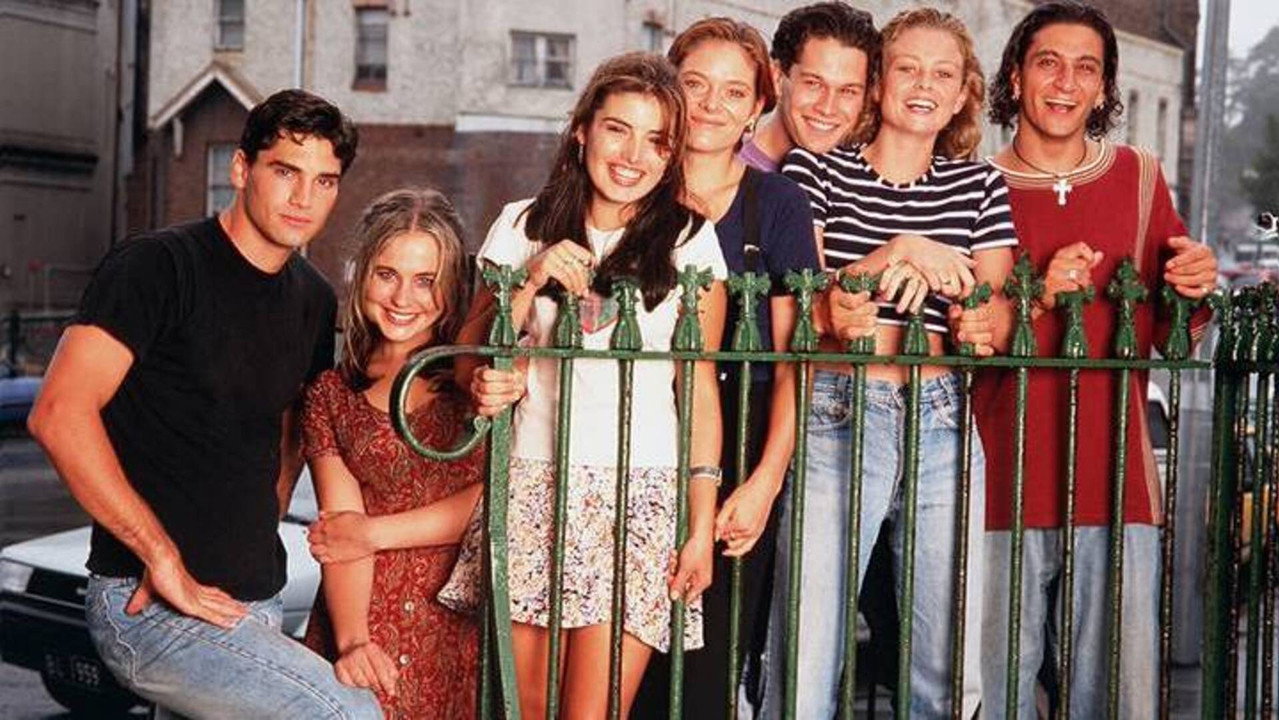
A School That Never Quite Lets Go
latestnetflix.com's read is that When I think about Heartbreak High, I don’t think first about plot so much as atmosphere: the feeling of being trapped in a building where every corridor seems to carry gossip, humiliation, longing, and the stubborn hope that tomorrow might be less embarrassing than today.That’s the real machinery of the show.
Not the lesson plans. Not the truancy. The social weather.
As a long-running Australian teen drama, it sits in a familiar but tricky place. It’s not simply “about school”; it’s about the way school turns into a miniature society, with its own codes, casual cruelties, sudden loyalties, and little acts of rebellion. Watching it now, I’m struck by how little patience it has for the polished myth of adolescence.
Nobody here is becoming who they’re meant to be in some neat, inspirational arc. They’re just trying to get through the day without being exposed, or dumped, or laughed at in front of the wrong person. Which is to say: it understands teenagers better than many glossy coming-of-age stories that pretend to admire them.
What gives the series its odd durability is that it doesn’t treat high school as a sentimental rite of passage. It treats it like a pressure chamber. The hallways are less a setting than a social instrument; they compress people together and amplify every minor conflict until it feels life-sized.
That’s why the show can move from comedy to dread in a breath. A joke in one scene becomes a wound in the next. A flirtation can look like a dare.
A rumor can feel like history.
I keep coming back to the show’s visual plainness, which is one of its strengths. It doesn’t hide behind style so much as use everyday visual clutter as a kind of emotional realist detail: lockers, classrooms, concrete walkways, the institutional beige of places where young people are supposed to learn civics and end up learning power. There’s something bracing about that refusal to prettify.
The show knows that adolescence rarely looks symbolic while you’re inside it. Usually it looks fluorescent, awkward, and a little bit dirty.
That matters because Heartbreak High is, at heart, a show about performance. Not the acting kind. The social kind.
People here are always trying on versions of themselves, sometimes for a crush, sometimes for survival, sometimes because they don’t know which self will hurt less. If you’ve ever watched a teenager stand too straight in a hallway after saying something stupid, you know the tone. The body gives the game away before the dialogue does.
This is where the series gets a lot of its force: in the held shoulders, the quick exits, the shrug that’s clearly a defense mechanism, the stare that lasts half a second too long.
And then there’s the way the show handles ensemble energy. With a series this large, the temptation is always to flatten everybody into a type: the rebel, the nice kid, the bully, the victim, the comic relief. Heartbreak High mostly avoids that trap by letting characters surprise you in small, unshowy ways. A hard kid shows embarrassment.
A popular kid looks lonely when nobody’s watching. A relationship that seemed disposable suddenly registers as the only thing holding someone together. It’s not subtle in the rarefied sense, but it is observant.
There’s a difference.
One of the show’s most effective recurring gestures is the classroom scene that begins with order and ends in social chaos. You can practically feel the structure of the room working against the characters: desks in rows, a teacher at the front, the illusion that everyone is there to absorb the same lesson. Then someone says the wrong thing, or the wrong person walks in, or an old humiliation resurfaces, and the whole arrangement starts to wobble.
The camera doesn’t need to do much. A cut to a reaction shot, a pause that lasts a beat too long, a glance toward the door — that’s enough. Teen drama lives in those tiny disruptions.
The school scene is never really about education. It’s about who has the power to make everyone else look.
I should say that the sheer length of the series changes how you experience it. At 210 episodes, Heartbreak High isn’t something you “consume” in the modern sense; it accumulates around you. That can be frustrating.
The rhythms are inevitably uneven. Some arcs feel stretched, some conflicts are repeated a little too often, and there are stretches where the writing leans on the sort of melodramatic reversals that television of this scale can’t entirely avoid. But that sprawl is also part of its charm.
Life at school is repetitive. People circle the same arguments, the same infatuations, the same injuries. A smaller, tidier show would lie about that.
I’m also interested in the cultural afterlife of a series like this. Australian teen television, especially in the 1990s, often had a practical, unsentimental texture that made it feel less packaged than its American counterparts. There’s no need to pretend every problem can be solved by a speech in the gym.
The characters’ worlds are shaped by class anxiety, local slang, family strain, and the plain fact that adolescence is often boring until it suddenly isn’t. That ordinariness is its own kind of radicalism. It says: your life doesn’t have to be exceptional to be dramatic.
What lingers for me, though, isn’t the broad social canvas. It’s the feeling of recognition the series keeps catching. The mortification of being seen too clearly.
The relief of finding one friend who doesn’t make you perform quite so hard. The way a school can feel, for better or worse, like the first place where the self becomes public property. That’s the bitter little miracle of Heartbreak High: it understands that growing up isn’t a clean arc toward maturity.
It’s a series of negotiations with embarrassment, desire, and other people’s attention.
I wouldn’t call the show elegant. Sometimes it’s a bit blunt; sometimes it reaches for emotional shorthand when it could have trusted silence a little longer. But I found myself forgiving that more often than not, because the series has a plainspoken confidence in the mess of youth.
It doesn’t ask us to admire adolescence from a distance. It asks us to remember what it felt like to be inside it. And that, for a school drama, is not a small thing.