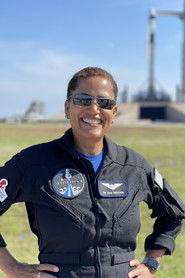
Sian Proctor
Self
“This September, we're all going to space.”
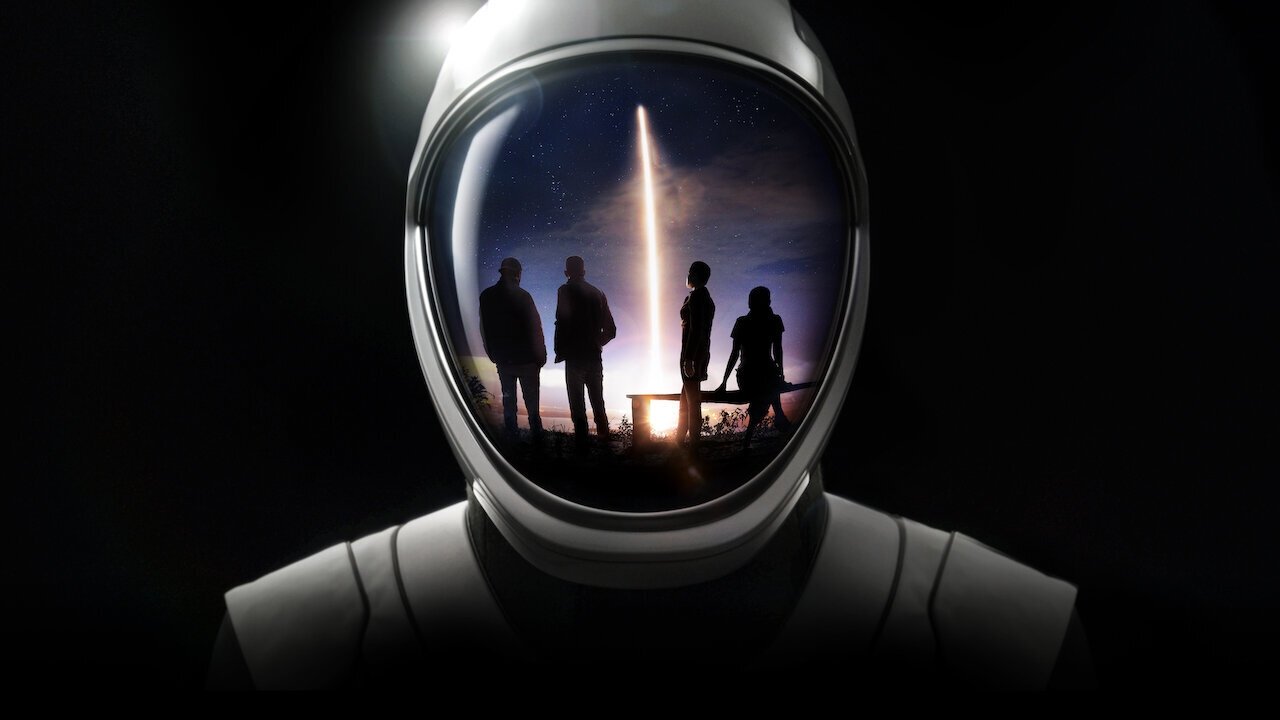
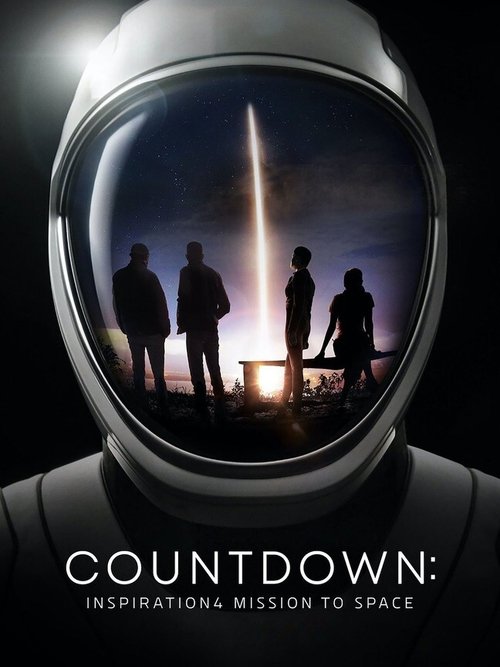
From training to launch to landing, this all-access docuseries rides along with the Inspiration4 crew on the first all-civilian orbital space mission.
Official
I’ve watched a lot of documentaries about spaceflight—most of them, if I’m honest, blur together into a familiar rhythm of rocket porn, heroic voiceovers, and the same handful of NASA archival shots. Countdown: Inspiration4 Mission to Space should, by all rights, be just another entry in that genre. And yet. There’s something about the way this series lingers on the faces of its four civilian astronauts that makes it feel different.
Not because they’re not professionals (though that’s part of it), but because the camera doesn’t just capture their awe—it captures their fear, their exhaustion, the way their bodies betray them when gravity finally lets go.
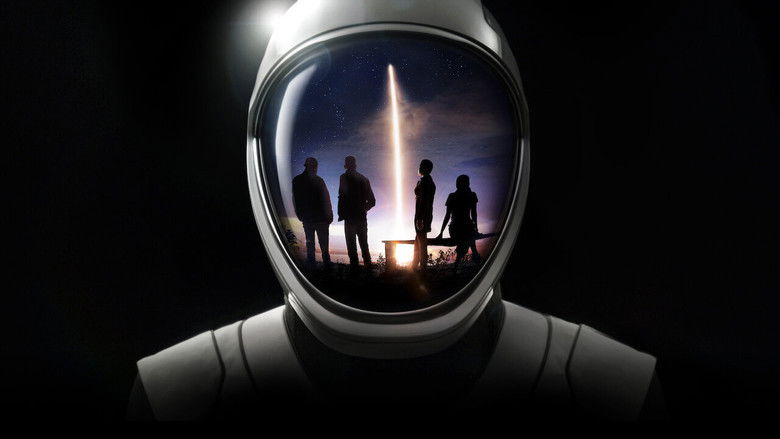
The first episode drops you into the middle of their training, and it’s immediately clear this isn’t going to be the usual glossy PR piece. Jared Isaacman, the billionaire bankrolling the mission, is there, of course—smiling, confident, the kind of guy who probably has a spreadsheet for his emotions. But then there’s Hayley Arceneaux, a 29-year-old physician assistant and cancer survivor, who admits in an unguarded moment that she’s terrified of the centrifuge.
Not because she thinks she’ll fail, but because she’s already survived one life-or-death ordeal, and this one feels like tempting fate. The camera stays on her face a beat too long, just long enough to see the way her jaw tightens. It’s a small thing, but it’s the first hint that this series isn’t just about the mission—it’s about the people inside the suits.
What’s striking about Countdown is how little it relies on the usual crutches of space documentaries. There’s no narrator breathlessly hyping the stakes (though the stakes are, objectively, enormous). There’s no lingering on the sleek futurism of SpaceX’s hardware (though the hardware is undeniably cool).
Instead, the series trusts its subjects to carry the emotional weight. Sian Proctor, a geoscientist and artist who becomes the first Black woman to pilot a spacecraft, talks about the pressure of representation in a way that feels raw and unscripted. Christopher Sembroski, a Lockheed Martin engineer and Air Force veteran, cracks jokes to mask his nerves, but the camera catches the way his hands shake when he thinks no one’s looking.
These aren’t trained astronauts, and the series doesn’t let you forget it—not in a way that undermines them, but in a way that makes their achievement feel more human, more fragile.
That fragility is the series’ quiet subversion. Spaceflight, in most documentaries, is presented as the ultimate triumph of human ingenuity—a clean, almost sterile victory over the void. Countdown doesn’t shy away from the messiness of it. There’s a moment in the third episode where the crew is in the middle of a zero-g training flight, and one of them (I think it’s Sembroski) suddenly gets sick.
The camera doesn’t cut away. It lingers on the plastic bag, the way his face flushes, the awkward laughter from the others. It’s not played for comedy, exactly, but it’s not played for drama either.
It just… is. And in that moment, the series does something rare: it makes space feel like a place where bodies belong, not just minds.
The mission itself, when it finally happens, is both exhilarating and oddly anticlimactic. Not because the launch isn’t spectacular—it is, in the way all rocket launches are spectacular, a controlled explosion that somehow results in humans hurtling toward the stars. But because the series has spent so much time with these four people that the actual flight almost feels like an afterthought.
The real story, it turns out, wasn’t about whether they’d make it to orbit. It was about whether they’d make it to the launchpad without breaking.
There’s a shot in the final episode that I can’t stop thinking about. The crew is in the Dragon capsule, strapped in, waiting for liftoff. The camera is tight on their faces, and for a few seconds, no one speaks.
The only sound is the hum of the spacecraft and the shallow breathing of four people who are about to do something irreversible. Then, quietly, Arceneaux starts to cry. Not sobbing, not a breakdown—just tears sliding down her cheeks, her mouth pressed into a thin line.
No one says anything. No one needs to. The camera holds the shot, and in that silence, you realize: this isn’t a documentary about space.
It’s a documentary about what it means to be afraid, and to do the thing anyway.
That’s the thing about Countdown that lingers. It’s not just that these four civilians went to space. It’s that they went as themselves—flawed, nervous, occasionally nauseous, but undeniably real.
The series doesn’t mythologize them, and it doesn’t mythologize space. It just shows you the people inside the machine, and lets you decide what that means. For me, it meant remembering that the most extraordinary things humans do are often the ones that scare us the most.
And that maybe, just maybe, the sky isn’t the limit after all. It’s just the next step.
"A compelling behind-the-scenes look at the first all-civilian space mission, though some find it uneven in pacing and depth."
The series captures the excitement and personal stories of the Inspiration4 crew, offering an intimate perspective on their journey to space. But it lacks technical depth and occasionally drags, particularly in segments that focus more on emotional buildup than the mission itself.
The 2021 Netflix docuseries Countdown: Inspiration4 Mission to Space offers an unprecedented look behind the curtain of the first all-civilian orbital mission, blending the thrill of space exploration with intimate personal stories. latestnetflix.com's view is that while the series delivers the expected awe of a rocket launch, it also dives into the raw emotions, training challenges, and unexpected hurdles faced by the four crew members—Sian Proctor, Hayley Arceneaux, Jared Isaacman, and Christopher Sembroski—as they prepared to make history.
Inspiration4 wasn’t just a spaceflight; it was a fundraising campaign for St. Jude Children’s Research Hospital, with billionaire Jared Isaacman bankrolling the mission and donating $100 million to the cause. The series highlights how this philanthropic angle shaped the crew’s dynamic, particularly for Hayley Arceneaux, a physician assistant at St. Jude and childhood cancer survivor who became the youngest American in space at 29. Clips from the series tease her emotional journey, including moments where she reflects on her medical background and the symbolic weight of representing patients in orbit.
Sian Proctor, the mission’s pilot and the first Black woman to serve as a spacecraft pilot, brings a different kind of inspiration. A geoscientist and artist, Proctor’s selection was tied to a Shift4Shop competition, and the series captures her determination to prove that space isn’t just for astronauts with military or engineering backgrounds. Meanwhile, Christopher Sembroski, a data engineer and Air Force veteran, won his seat through a charity raffle, adding a layer of serendipity to the mission’s narrative.
The docuseries doesn’t shy away from the grueling realities of preparing for space. One clip breaks down the physical and psychological toll of training, from centrifuge spins to high-G simulations, all while the crew juggled their day jobs and personal lives. The series also hints at the pressure of being the first civilian crew to orbit Earth, with Isaacman—an experienced pilot but not a professional astronaut—shouldering the responsibility of command.
Netflix’s trailers and teasers emphasize the human side of these challenges. A short clip shows the crew grappling with the enormity of their mission, with one member asking, "What role would you play in a space crew?"—a question that underscores the uncharted territory they were navigating. Another teaser poses a more existential query: "Would you go to space?", framing the mission as both a personal and collective leap of faith.
The series culminates in the live launch, a spectacle that Netflix streamed in real time. While the mission itself was a success—with the crew spending three days in orbit before splashing down safely—the docuseries reportedly captures the moments of doubt and adrenaline that preceded liftoff. One trailer snippet shows the crew strapped into the Dragon capsule, their faces a mix of excitement and nerves. The series also touches on the technical hiccups, including a malfunctioning toilet fan during the flight, though the full extent of these issues isn’t detailed in the available clips.
Despite its gripping storytelling, Countdown leaves some questions unanswered. The series’ 6.8/10 rating on SensCritique suggests viewers found it engaging but not groundbreaking, possibly due to its limited runtime (each episode clocks in at 47 minutes). There’s no word on whether Netflix will greenlight a follow-up, though the crew’s post-mission lives—including Proctor’s advocacy for space accessibility and Arceneaux’s return to St. Jude—could make for compelling material.
For now, Countdown: Inspiration4 Mission to Space stands as a rare, unfiltered look at what it takes to send ordinary people to the stars. It’s less about the science of spaceflight and more about the people who dared to make history—and the emotional rollercoaster that came with it.
Entertainment rumors and trivia aggregated from public reporting. Treat speculation as unverified unless a cited source confirms it.
More titles in the same genres and with the same cast.