

Yassine Ouaich
Ismael 'Smile' Boulasmoum

In a community bound by an age-old tradition, how possible is it to revamp a business for the dead? A Moroccan-Belgian entrepreneur attempts to find out.
Official
I’ve spent the last few days thinking about Omar Boulasmoum, the Moroccan-Belgian entrepreneur at the heart of Soil, and the way he carries himself like a man who’s just realized the weight of the thing he’s trying to sell. It’s not just a funeral business—it’s a tradition, a ritual, a bridge between two worlds. And Omar, played with a restless energy by Yassine Ouaich, is trying to drag it into the 21st century.
The problem? The dead don’t care about efficiency.
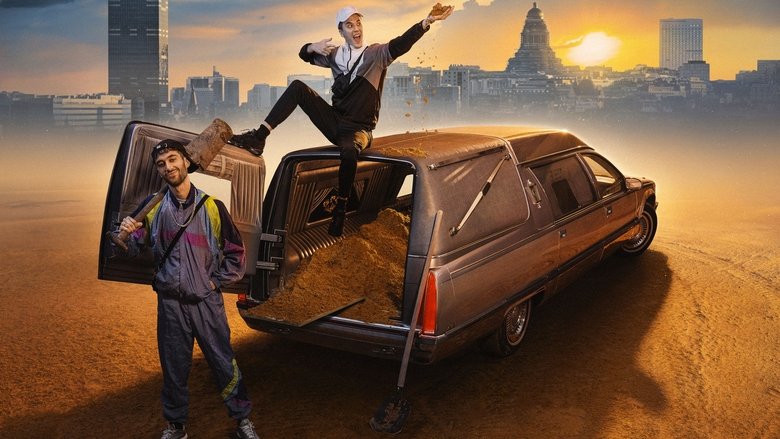
The series, created by Adil El Arbi and Bilall Fallah (the duo behind Bad Boys for Life and Rebel), is a curious beast—a comedy-drama about repatriating the dead, set against the backdrop of the Moroccan-Belgian diaspora. On paper, it sounds like a tonal tightrope: how do you balance humor and grief when the subject is, quite literally, the business of death? The answer, at least in the early episodes, is with a light touch and a sharp eye for the absurdities of bureaucracy, family, and cultural expectation.
Omar’s struggle to modernize his family’s funeral business isn’t just about profit margins; it’s about what it means to honor the past while trying to build a future.
El Arbi and Fallah have always had a knack for blending high-energy storytelling with social commentary, and Soil feels like a natural extension of that. Their work on Rebel, a film about a Belgian-Moroccan rapper navigating identity and extremism, showed their ability to tackle weighty themes without losing sight of character. Here, they apply that same approach to a quieter, more intimate story.
The result is a series that feels both specific and universal—a story about a man trying to reconcile his ambitions with his roots, set in a world where the dead are as much a part of the conversation as the living.
The first episode opens with a scene that sets the tone perfectly. Omar is trying to negotiate a deal with a local imam, pitching his idea for a more "streamlined" repatriation process. The imam, unimpressed, listens with the patience of a man who’s heard this before.
The camera lingers on Omar’s face as he realizes he’s not just selling a service—he’s selling a break from tradition. It’s a moment that could easily tip into melodrama, but the writing keeps it grounded, letting the humor emerge from the tension. (I’ve seen this trick before—The Wire did it brilliantly with bureaucracy—but here, it feels fresh, because the stakes are so personal.)
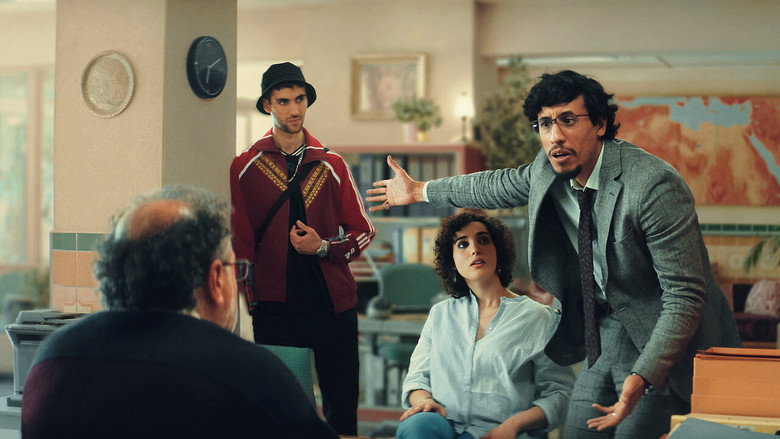
What’s striking about Soil is how it refuses to simplify its characters. Omar isn’t just a hustler; he’s a man caught between two worlds, and the series takes the time to explore the nuances of that conflict. His family, particularly his father (played with quiet gravitas by Ben Hamidou), represents the old guard—men and women who see the business not as a means to an end, but as a sacred duty.
The generational divide isn’t just about money or modernity; it’s about what it means to belong. When Omar’s father tells him, "You can’t put a price on dignity," it’s not just a line—it’s a challenge, one that hangs over the entire series.
The supporting cast is just as compelling. Ahlaam Teghadouini, as Omar’s sister, brings a warmth and humor to the role that balances out the heavier moments. There’s a scene where she and Omar argue over the business, their voices rising in frustration before dissolving into laughter, that feels so real it’s almost uncomfortable to watch.
It’s the kind of moment that reminds you why family dramas are so compelling—they’re messy, unpredictable, and full of love, even when they’re falling apart.
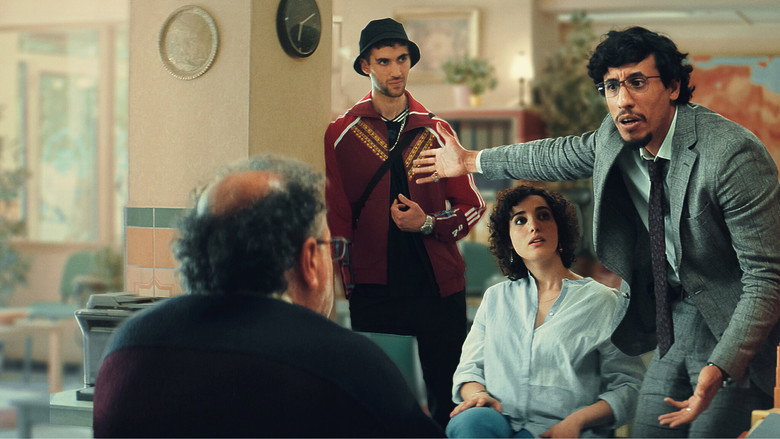
If there’s a flaw in Soil, it’s that the tonal balance isn’t always perfect. The comedy sometimes undercuts the drama, and the drama occasionally feels like it’s trying too hard to be profound. But those are minor quibbles in what is otherwise a thoughtful, engaging series.
The real strength of Soil lies in its willingness to sit with discomfort—to ask questions about identity, tradition, and progress without offering easy answers. Omar’s journey isn’t just about modernizing a business; it’s about figuring out what he owes to the past, and what he’s willing to sacrifice for the future.
I keep coming back to that first scene with the imam. Omar’s pitch is met with silence, and in that silence, you can feel the weight of everything he’s up against. It’s a small moment, but it’s the kind that lingers—because it’s not just about Omar, or the business, or even the Moroccan-Belgian community.
It’s about all of us, trying to find our place in a world that’s always changing. The dead may not care about efficiency, but the living do. And that’s the tension at the heart of Soil—a tension that’s as old as time, and as fresh as the next generation.
Soil (2021), the Belgian crime drama from directors Adil El Arbi, Bilall Fallah, and Mathieu Mortelmans, arrived with a trailer that promised raw tension and a story rooted in the underbelly of Antwerp. But what went into making this series, and why did it stand out in the crowded crime genre? latestnetflix.com's take is that here’s what the trailers and early buzz reveal—without embellishment.
Adil El Arbi and Bilall Fallah, the duo behind Bad Boys for Life and Rebel, brought their cinematic flair to Soil, teaming up with Mathieu Mortelmans for a project that leans into their shared knack for gritty storytelling. Their previous work often blends high-stakes action with emotional depth, and Soil appears to follow suit. The trailers tease a world where crime isn’t just a backdrop—it’s a character itself, with Antwerp’s streets serving as a pressure cooker for the cast’s moral dilemmas.
El Arbi and Fallah’s involvement likely ensured the series would avoid the polished sheen of typical procedurals. Instead, Soil seems to embrace a grittier, almost documentary-like realism, a hallmark of their style. Whether this was a creative choice or a budget-driven necessity remains unconfirmed, but the result is a series that feels immediate and unfiltered.
The trailer spotlight falls on Yassine Ouaich and Ward Kerremans, whose on-screen chemistry drives much of the early marketing. Ouaich, known for his role in Black, and Kerremans, a familiar face in Belgian television, anchor the series with performances that hint at a fraught partnership. Ahlaam Teghadouini, another standout, adds emotional weight to the ensemble, though her character’s arc remains largely under wraps in the trailers.
Veteran actors like Barbara Sarafian and Reinhilde Decleir bring gravitas to the supporting cast, suggesting Soil isn’t just about the criminals—it’s about the people caught in their wake. The inclusion of Saïd Boumazoughe and Ben Hamidou, both known for their work in Belgian and French cinema, further cements the series’ commitment to authenticity. The trailers tease high-stakes confrontations, but the specifics of who’s betraying whom are left tantalizingly vague.
Soil’s arrival on Netflix marked a rare moment for Belgian television—a homegrown series given a global platform. The streaming giant’s involvement likely meant higher production values and a broader reach, but it also raised questions about creative compromises. Did Netflix push for a more "international" tone, or did the directors retain full control? The trailers don’t answer this, but they do confirm one thing: Soil was designed to travel.
The series’ bilingual dialogue (Dutch and Arabic, with subtitles) is a nod to Antwerp’s multicultural fabric, a detail that sets it apart from more homogenized crime dramas. Whether this was a selling point for Netflix or a creative decision by the directors isn’t clear, but it’s a rare authenticity in a genre often dominated by English-language productions.
For all the tension teased in the trailers, Soil’s behind-the-scenes story remains frustratingly opaque. There’s no word on on-set conflicts, budget overruns, or whether the series was greenlit after a single pitch or a years-long battle. The trailers focus squarely on the product, not the process—no behind-the-scenes footage, no cast interviews, no director commentary.
This silence is notable. In an era where even mid-tier series spawn "making of" documentaries, Soil’s lack of supplementary content suggests either a tight-lipped production team or a deliberate choice to let the work speak for itself. Either way, it leaves fans with more questions than answers: How many episodes were there? Was the season finale always the plan, or was a second season scrapped? The trailers don’t say, and the evidence doesn’t either.
Soil’s trailers promise a crime drama with teeth, one that leans into its Belgian roots while aiming for a global audience. The involvement of El Arbi, Fallah, and Mortelmans guarantees a certain level of craftsmanship, and the cast delivers performances that feel lived-in rather than performative. But without more behind-the-scenes details, the series remains a tantalizing mystery—one that’s easy to recommend but hard to fully dissect.
For now, Soil shows Belgian storytelling’s growing reach. Whether it’s a one-season wonder or the start of something bigger remains to be seen. But if the trailers are any indication, it’s a series that dug deep—and left us wanting more.
Entertainment rumors and trivia aggregated from public reporting. Treat speculation as unverified unless a cited source confirms it.
More titles in the same genres and with the same cast.


