Series poster for The Tick (2001)

The Tick

2001
Ended • 1 Season • 9 Episodes
TV-PG · English
Search on Netflix

Overview

Based on Ben Edlund's cult comic, a mysterious blue avenger teams up with an odd group of superheroes to fight crime.

Seasons

Status
Ended
Seasons
1 season
Episodes
9 episodes
First aired
Nov 8, 2001

Cast

Reviews

5 min read

Spoooon! The Tick’s Brief, Blue, and Beautifully Doomed Rebellion

I remember the first time I saw The Tick (2001) in its original run—sandwiched between Survivor and whatever NBC was throwing at the wall that Thursday night. It felt like stumbling upon a secret. Here was this big, blue, absurdly earnest superhero, bellowing catchphrases in a voice so deadpan it could’ve been narrating a tax seminar, and yet somehow, against all odds, it worked.

It wasn’t just funny; it was smart funny, the kind of humor that winks at superhero tropes while simultaneously reveling in them. And then, just as suddenly as it arrived, it was gone—canceled after nine episodes, leaving behind a cult following and a lingering question: What if?
The Tick and Arthur standing in a dimly lit alley, the former towering and blue, the latter small and exasperated

The Tick himself is a marvel of contradictions. He’s a superhero who doesn’t so much fight crime as he does exist in its general vicinity, bellowing nonsensical wisdom like a man who’s just discovered the concept of metaphors but hasn’t quite figured out how they work. Patrick Warburton’s performance is the linchpin here, a masterclass in comedic timing and physical comedy.

He doesn’t just play the Tick; he embodies him, all broad shoulders and wider-eyed innocence, like a man who’s just realized he’s wearing a blue foam latex suit in public and has decided to lean into it with every fiber of his being. There’s a moment in the pilot where the Tick, mid-monologue, pauses to adjust his antennae, and the sheer absurdity of the gesture—delivered with such earnestness—sums up the show’s entire ethos.

It’s silly, yes, but it’s also joyful, the kind of silliness that feels like a rebellion against the self-seriousness of the superhero genre.

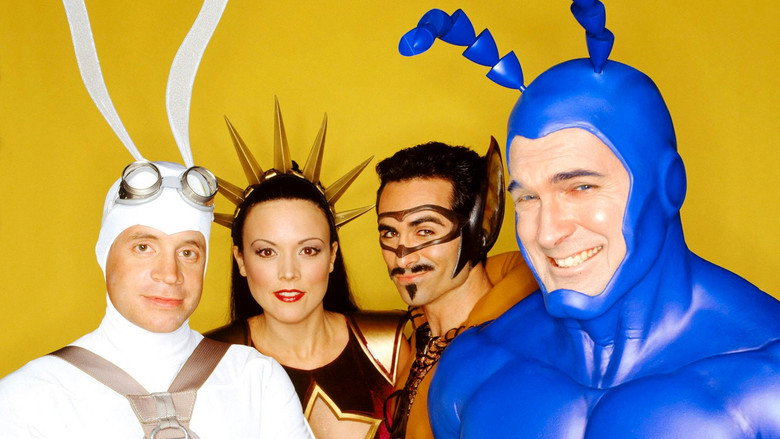
Warburton’s Tick is paired with David Burke’s Arthur, a neurotic accountant-turned-sidekick who seems perpetually on the verge of a nervous breakdown. Their dynamic is the heart of the show, a perfect odd-couple pairing where the Tick’s boundless enthusiasm crashes headlong into Arthur’s anxiety-ridden pragmatism. It’s a relationship that feels both timeless and deeply specific, like if Bert and Ernie were suddenly thrust into a world of supervillains and fortune cookie wisdom.

The supporting cast—Liz Vassey’s Captain Liberty, a superheroine who’s equal parts capable and exasperated, and Nestor Carbonell’s Batmanuel, a suave, mustachioed parody of Batman—adds layers to the satire. Captain Liberty’s frustration with the Tick’s antics is palpable, while Batmanuel’s over-the-top machismo is so exaggerated it circles back around to being endearing.

What makes The Tick so special is its ability to balance broad humor with sharp satire. The show isn’t just making fun of superheroes; it’s lovingly deconstructing them, poking at the absurdities of the genre while still embracing its core appeal. The elevator fight in the pilot is a perfect example: it’s a send-up of superhero action sequences, with the Tick and Arthur bumbling their way through a battle that’s more about slapstick than spectacle.

The camera lingers on the ridiculousness of it all—the way the Tick’s fists swing wildly, the way Arthur’s cape gets tangled around his legs—but there’s a genuine sense of fun in the chaos. It’s a scene that could’ve been mean-spirited, but instead, it feels like a celebration of the genre’s inherent silliness.

The show’s visual style is equally distinctive, blending live-action with comic-book aesthetics. The fight scenes are exaggerated and theatrical, with characters striking poses that feel lifted straight out of a panel. The color palette is bright and saturated, a deliberate contrast to the darker, grittier superhero fare that was becoming popular at the time.

Even the show’s use of sound is noteworthy—the way the Tick’s voice booms unnaturally, the way the sound effects are over-the-top and cartoonish. It’s a world that feels like it exists in its own bubble, untouched by the cynicism of the real world.

And yet, for all its strengths, The Tick was doomed from the start. The gossip surrounding its production is almost as absurd as the show itself. Warburton has described the Tick suit as “miserable,” a foam latex prison that required him to be slathered in K-Y Jelly just to squeeze into it.

He’s talked about the physical toll of wearing the suit for hours on end, the way it would leave him drenched in sweat and exhaustion. It’s a sign of his commitment that he never let the discomfort show on screen. Off-screen, however, the show was a mess.

Fox sat on the pilot for over a year, only airing it as a last-minute replacement when a strike threatened their schedule. They dumped it into a Thursday-night death slot, opposite Survivor and NBC’s juggernaut lineup, and then seemed surprised when it didn’t find an audience. Warburton has been blunt about the network’s role in the show’s demise, calling it a case of “murder” rather than cancellation.

The tragedy of The Tick is that it never got the chance to find its footing. Nine episodes is barely enough time to scratch the surface of what the show could’ve been. There are glimpses of deeper storytelling—Arthur’s struggle with his newfound role as a superhero, Captain Liberty’s frustration with the Tick’s antics, Batmanuel’s over-the-top persona—but they’re never fully explored.

The show’s cancellation left these threads dangling, a tantalizing “what if” that fans have been debating for decades. Would it have evolved into something more than just a parody? Would the characters have grown beyond their initial archetypes?

We’ll never know.

What we do know is that The Tick left an indelible mark on the small subset of viewers who discovered it. It’s a show that feels ahead of its time, a precursor to the meta-humor that would later define series like Deadpool and The Boys. It’s also a reminder of how fragile creative endeavors can be, how easily a show with this much potential can be snuffed out by network indifference and bad timing.

The Tick’s catchphrase—“Spoooon!”—isn’t just a nonsensical exclamation; it’s a rallying cry, a defiant middle finger to the forces that tried to silence him.

I still think about The Tick often, not just because of its humor or its heart, but because of what it represents. It’s a show that dared to be silly in a world that was increasingly serious, a beacon of absurdity in an era that was hurtling toward cynicism. It’s a reminder that sometimes, the most subversive thing you can do is refuse to take yourself too seriously.

And maybe, just maybe, that’s why it still resonates all these years later. The Tick may have been canceled, but his spirit—big, blue, and unapologetically weird—lives on. Spoooon!

Audience Opinions

Audience 7.7/10
"A perfectly cast superhero parody with razor-sharp humor that ended far too soon."

Patrick Warburton's deadpan performance anchors this clever satire of superhero tropes, with jokes that land both as broad silliness and as smart genre send-up. The chemistry within the small ensemble and the oddball tone earn it strong affection, but the tiny episode count and abrupt cancellation leave it feeling like an unfinished cult gem.

What viewers praise
  • Perfect lead casting Patrick Warburton embodies the Tick with ideal deadpan bravado, often compared to classic campy superhero performances.
  • Clever multi-layered humor Gags range from goofy one-liners to surprisingly sharp satire, rewarding rewatching and genre familiarity.
  • Strong ensemble chemistry Arthur, Captain Liberty, and Batmanuel play off the Tick in ways that make the small cast feel distinctive and memorable.
  • Distinctive superhero satire Takes aim at superhero clichés through mundane situations, awkward conversations, and deliberately low-key heroics rather than big action.
Common complaints
  • Frustratingly short run The show is cut off after only a handful of episodes, leaving character arcs and world-building barely explored.
  • Compared unfavorably to cartoon Devotees of the 1990s animated version often feel this incarnation is fun but not quite as inspired or anarchic.
  • Niche tone and pacing The mix of laid-back sitcom rhythms and absurd superhero antics can feel slow or oddly pitched to those expecting more conventional action.
Recommended for
Superhero parody fans Patrick Warburton fans Cult comedy collectors Short-run sitcom hunters Offbeat superhero comedy lovers

Buzz & Rumors

Public reports

**SPOON! The Secretly Messy Saga of The Tick (2001): K‑Y Jelly, Network Backstabbing & Lost Episodes**

The 2001 live‑action Tick looked like goofy blue fun on the surface — but behind that foam-latex grin was a stew of sweat, studio sabotage, and creative tug‑of‑war. latestnetflix.com's read is that Grab your antennae: here’s the real-world gossip Fox probably wishes you’d stop talking about.


On-Set Drama: The Costume From Hell

  • Patrick Warburton didn’t just wear the Tick suit — he survived it. He’s described the costume as “miserable,” explaining that every morning, in the cold, he had to be slathered in K‑Y Jelly so he could slide into the foam latex shell, then spend the rest of the day “cooking in that thing and sloshing around”. - He also talked elsewhere about downing Gatorade all day to deal with the brutal heat inside the rubbery suit and peeling it off at day’s end like a blue second skin. Superhero glam on screen; low-budget sauna torture off it. - Director Barry Sonnenfeld admitted that even he didn’t realize how physically punishing the suit was until he saw Warburton after a shoot, post-de-suiting, looking wrecked from a day in Tick armor.

Scandals & Network Sabotage: “They Murdered This One”

  • Warburton has openly blamed Fox for killing the show, straight up saying of the network: “They murdered this one.”
  • Instead of launching the show hot, Fox sat on the finished pilot for over a year, holding it as an emergency backup in case of a Writers Guild strike that never materialized. - When they finally aired it, they dumped The Tick into a Thursday-night buzzsaw **opposite Survivor: Africa and NBC’s Must-See TV lineup, making decent ratings nearly impossible. - All of this happened in the same 2001–02 season thrown into chaos by 9/11**, which further scrambled schedules and undercut promotion for quirky newbies like The Tick. - Warburton’s take? Fox had just fallen in love with cheap reality TV and wasn’t about to properly back a weird, expensive superhero comedy: “They weren’t going to support a show like The Tick that cost a bit more”.

Creative Differences: Committees, Regrets & Identity Crisis

  • Creator Ben Edlund has said the live‑action show was “extremely hampered by the necessity of filming it in actual life with cameras” — code for: we dreamed big, the budget laughed. - He describes the series as “the history of a show trying to contort itself into a budget‑able enterprise over the course of nine episodes and never really doing it”. - Edlund also complained about a “committee‑creation process” behind the scenes, with too many strong voices shaping the show and causing noticeable tonal inconsistency across episodes. - Barry Sonnenfeld later confessed, “One of my regrets is not staying more involved because I feel the show went in a slightly different direction than the one I wanted” — noting that fellow exec Larry Charles kept pushing the tone more toward realism than Sonnenfeld’s preferred absurdist comic-book vibe. - One production anecdote: Sonnenfeld recalls a scene that was supposed to be more elaborate and violent, but they literally ran out of daylight during filming and had to quickly stage a cheaper, jump‑cut version instead. The Tick, defeated…by the sun.

Money Drama & Licensing Nightmares

  • Behind the laughs, the show was bleeding cash. Reports say there were serious budget problems almost immediately, with months passing between episodes because Fox wasn’t funneling enough money to keep production rolling steadily. - To make matters worse, Fox didn’t even own the show, which meant it had less incentive to promote it and reap long‑term profits, and more incentive to just…move on. - Licensing issues also bit them. Fan-favorite characters American Maid and Die Fledermaus from earlier Tick incarnations were apparently tied up with Disney, forcing Edlund to create parody stand‑ins instead of using the originals. It’s the superhero equivalent of being told you can have “superhero” on your show, just not the one anyone recognizes.

Leaks, Lost Episodes & Cult-Legend Status

  • The series shot 9 episodes, but Fox aired only 8 before pulling the plug. One episode was left unaired in the original run and only resurfaced later on home media and streaming, instantly becoming a cult “lost” episode among fans. - AV Club’s retrospective paints the whole saga as a show with a “big price tag and grand ambitions” stuck in an identity crisis — part superhero sitcom, part Seinfeld-y hangout comedy, and constantly kneecapped by network dithering. - Commentary at the time also fixated on the so‑called “Seinfeld curse”: after flops like The Michael Richards Show and Bob Patterson, there was industry buzz that Warburton might not escape his identity as Puddy, and The Tick got dragged into that narrative.

Fan Theories & Fandom Fever Dreams

  • Over on Reddit and fan-wiki corners of the internet, one of the wildest cross‑era Tick theories insists that The Tick is actually imaginary — a being conjured by Arthur’s mind as a coping mechanism, with some riffs even suggesting a bed-ridden child projecting his dad into superhero form. - Most of the detailed versions of this theory are tied to later adaptations, but fans routinely back‑apply it to the 2001 series: every unhinged Tick monologue becomes “proof” that he’s an idealized hallucination created by anxious, put-upon Arthur. - This is pure fan speculation, not confirmed canon — but it’s popular enough in fan spaces that later critics and writers analyzing the franchise have had to acknowledge and argue with it.

Cast Vibes: Surprisingly Wholesome Amid the Chaos

  • For all the network mess, the principal cast seems to have genuinely loved each other. Liz Vassey (Captain Liberty) has called the Tick ensemble “one of the best I’ve ever worked with” and said everyone was “in love with the show”. - Nestor Carbonell (Batmanuel) is mostly the subject of admiring gossip — fans still share clips of his flirty, oily superhero and rave that he “steals the show”. - No credible rumors emerged of on-set feuds, dating scandals, or tabloid‑worthy fallouts among the main cast; the real drama wasn’t between Tick and friends — it was between the show and its network overlords.

Entertainment rumors and trivia aggregated from public reporting. Treat speculation as unverified unless a cited source confirms it.

More titles in the same genres and with the same cast.